Book Review: The Boy in the Striped Pyjamas by John Boyne

TL;DR – a Holocaust fiction novel told through the eyes of a German child who meets a Jewish child on the other side of a fence encircling a concentration camp. They become friends amidst a time of hatred.

Summary (warning: spoilers)

Set during World War II, nine-year old Bruno and his family move to Auschwitz because his father has been promoted to Commandant and assigned to oversee the concentration camp. Bruno does not want to leave their home in Berlin nor does he want to part from his best friends. Things are made worse when he arrives and sees the house they have to live in is nothing compared to their lavish Berlin home.

Miserable and lonely, Bruno ventures forth to a camp he has spied from his house and walks along the chain fence. There he encounters a boy named Shmuel who wears striped pyjamas (prison clothes) just like everyone else on that side of the fence. They strike up a friendship with Bruno not understanding what is going on in the camp, but smuggles food for Shmuel because he always looks so thin and hungry.

As time passes, their bond grows stronger even though Shmuel’s body gets weaker. Eventually Shmuel tells Bruno that his dad has gone missing, and Bruno wanting to help, agrees to sneak into the camp through a hole in the fence. Shmuel manages to find a spare set of striped pyjamas and Bruno puts them on to blend in. Before they can fully search the camp, soldiers round up a group of the prisoners with Burno and Shmuel among them. They are then led into a building, which Bruno thinks is a shelter used to protect from storms but is actually a gas chamber.

In his final moments, as they hold hands, Bruno says to Shmuel that he is his best friend. The door closes and the lights go out.

Bruno’s parents search for him, and it is only when Bruno’s father discovers his son’s clothes folded neatly next to the fence that he is able to piece together what has happened.

Review

John Boyne’s novel is a work of historical fiction. I am not going to delve into the accuracy or lack thereof regarding its setting and the depictions of the characters. There has been plenty of controversy around this novel. The concern around historical inaccuracies and the trivialisation of the Nazi regime has led to criticism and concern that this book will impact adversely on people’s understanding and education of the Holocaust. Again, I reiterate that The Boy in the Striped Pyjamas is fiction, so if your hackles rise because you’ll be upset by historical liberties taken in this story then I would suggest dropping this off your book list and reading a text book on the Holocaust instead.

There has also been criticism surrounding the main character, Bruno, who has difficulty pronouncing words like ‘The Fuhrer’ and ‘Auschwitz’ which he pronounces ‘The Fury’ and ‘Out-with’. This has been perceived by some as downplaying the significance and atrocities that occurred in Auschwitz. Given the story is told from the viewpoint of Bruno who is nine-years old, I have accepted Boyne’s capturing of a child’s perspective. If anything I believe it to be quite effective and not at all reducing the magnitude of the Holocaust.

The Boy in the Striped Pyjamas was a thoroughly engrossing read. Boyne was able to capture my imagination through his writing and insert me in a place that was vivid, horrifying and alien, and at the same time, made me care about Bruno even though I have the knowledge of the events at Auschwitz. Somehow Boyne is able to stay the underlying dread for long enough that you will see it through to the bitter end. This is in large part to capturing the eyes, mind and heart of a child that is Bruno. Though you want to ignore that deep down somewhere you know this whole thing will end in tragedy, you are tugged along anyway by this thread of hope that perhaps Bruno and Shmuel will somehow defy their situation and miraculously escape.

The fact that Bruno and Shmuel see each other as children and not German and Jew is the obvious moral and message that Boyne seeks to impart to readers both now and into the future. The moral imperative to treat each other as human beings, to care for one another, to show compassion is never more evident than in every interaction between the two children, whether that be Bruno saving food to give to Shmuel, their talks and sharing of stories, or in the final act when Bruno sneaks into Shmuel’s side of the fence to search for Shmuel’s father.

It is heart wrenching in its simplicity. The Boy in the Striped Pyjamas has been described as a cautionary tale and a fable. It is both these things and so much more. To me, it was not simply a fable to reflect the Holocaust but also a reflection on our world today and how hate and fear can divide us. This is never more evident than in the final words in this book where Boyne writes, ‘Of course, all of this happened a long time ago and nothing like that could ever happen again. Not in this day and age.’

4.5 out of 5.

Anime Review: Giant Killing (2010)

TL;DR – East Tokyo United is facing relegation in the Japan premier league. Enter ex-player and new head coach, Tatsumi Takeshi, who will look to turn around the club’s fortunes by unconventional means.

Review

No, Giant Killing is not some spin-off on Attack on Titan. There are no cable slinging, rocket shooting soldiers looking to defend a multi-walled city from titan attacks. This is an anime about soccer.

All the elements that make a good sports anime are present and accounted for in Giant Killing.

  • Team of underdogs? Check.
  • A team that has a history of greatness but is now falling down the ladder into mediocrity? Check.
  • Coach with unconventional approach to teaching? Check.
  • Players with various egos that don’t get along? Check.
  • Other players with no egos and no confidence? Check.
  • Animated action that reflects the sport accurately? Kind of.

As a seinen anime, Giant Killing does a decent job in delivering thrills and humour that should propel anime fans of soccer through to the final episode. Keeping in mind this was released in 2010, the animation itself is decent but not as sophisticated as more recent animes like the great volleyball anime series Haikyuu!! or even the popular basketball anime Kuroko no Basket. Still, there’s enough here that brings a certain level of excitement that is essential for a sports anime.

Probably what is more unusual is the focus is largely on new coach, Takeshi, who goes about transforming East Tokyo United (ETU) into a competitive group capable of success. It is more about his journey than the team, and the methods and strategies he employs to turn the club back to winning ways.

The matches are entertaining and you wonder whether ETU will get a win or come away with a loss. In true anime fashion, the opposing team players are examined and given background that adds the necessary layers to make the match more interesting.

However, what Giant Killing lacks is that one or two characters that you want to cheer on no matter what. For ETU, I think it is meant to be Daisuke Tsubaki, a young player who has come up from the reserve team. He’s a very fast runner but lacks confidence. Coach Takeshi utilises Tsubaki in many of his strategies to cause the opponents problems during matches. However, Tsubaki is not a well-rounded character and lacks depth.

In Haikyuu!! it is Hinata and Kageyama that you fall in love with. Their characters are wonderfully distinct and they convey in their own ways the love for the game of volleyball. This is an important ingredient in sports anime. You need characters that are interesting on their own (without the sport) but make the sporting games all the more interesting when they are involved.

In Kuroko no Basket, it is Kuroko and Kagami that you cheer on and the anime is made stronger by the focus on the opposing players who once played with Kuroko.

In Slam Dunk it is Hanamichi and Rukawa that are the primary characters that are intriguing. Arguably, Slam Dunk has multiple characters that are all interesting with their own backgrounds and this elevates the story ten-fold. To me Slam Dunk is the basketball apex to Haikyuu!! is with volleyball.

Giant Killing has nothing of the depth of character compared to those listed above. You do get to know all the players of ETU and their strengths, weaknesses and idiosyncrasies (if only at a surface level). You also get to know key players they compete against. But in reality, it is only the character of Coach Takeshi that comes close to the complexity and multi-layers of characters in Slam Dunk, Kuroko no Basket and Haikyuu!!

So, in this regard, it falls short of scoring the necessary goals.

7 out of 10

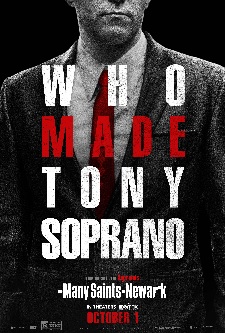
Movie Review: The Many Saints of Newark (2021)

TL;DR – Prequel story to the HBO crime drama “The Sopranos” following a young Tony Soprano and his uncle, Dickie Moltisanti during the 1967 Newark riots. Enjoyable for fans of the highly successful TV series.

Review (warning: spoilers)

From 1999 to 2007, viewers were gifted with one of the greatest TV series to hit our screens. The Sopranos followed the tumultuous life of Tony Soprano (James Gandolfini), father and head of a New Jersey-based Italian mafia. Gandolfini’s iconic role was so convincing, I believed that the actor had mafia ties. The HBO produced series was nominated and won so many awards that the list takes up its own Wikipedia page. From the cast, to the direction, to the camera work, to the costume design, to sound and music composition, The Sopranos set a platinum standard when it came to TV entertainment and demonstrated that small screen “cinema” could be as gripping, engaging and thoroughly engrossing as a feature length film on the big screen. But The Sopranos would be nothing without a story created and written (primarily) by David Chase. It is the writing that elevates The Sopranos into legendary status among the upper echelon of great TV drama.

Having watched all six seasons of The Sopranos, I almost fell off my chair when I read that David Chase and co-writer Lawrence Konner had penned a screenplay about a prequel. Directed by Alan Taylor, The Many Saints of Newark focuses on a young Tony Soprano’s childhood against the backdrop of the 1967 Newark riots that were sparked when a black taxi driver was arrested, beaten and killed by white police officers.

Played initially by William Ludwig and later by Michael Gandolfini, a young Tony Soprano tries to navigate his childhood and teenage years surrounded by a father, Johnny Soprano (Jon Bernthal), uncle Junior Soprano (Corey Stoll) and the rest of the DiMeo mafia family all involved in criminal activity. However, it is his mentor, Dickie Moltisanti (Alessandro Nivola), that he has the greatest respect and admiration, and the story primarily follows the pair.

The story shows that Tony never really stood a chance at choosing a life on the straight and narrow. At key points, Dickie attempts to get Tony to follow the rules and not get swallowed into a life with the mafia. But the things that Tony witnesses and the bond that comes being part of the mobster family burn indelible images into his brain and you know it is only a matter of time before Tony wants to learn the ropes to the “family” business.

By contrast, we follow Dickie and the life of a mobster and all the highs and lows that such a life entails. Dicke’s life reflects and prophesies what Tony’s life will be when we watch him in The Sopranos TV series. Dickie’s actions result in profound consequences that impact his conscience. Yes, he’s a mobster and thus you would think that his conscience would have been long ago seared to the point of no return, but there lies the complexity and horrifying beauty of the story. It is the fact that somewhere deep down (likely buried six feet under) is a piece of Dickie’s soul that still feels guilt and knows right from wrong. This manifests itself when he visits his uncle Sally (Ray Liotta) in prison. Sally also happens to be identical twins with Dickie’s father, and did I mention earlier in the film, Dickie kills his father? I didn’t? Well, this review did say spoilers.

Sally is the ‘therapist’ to Dickie’s conscience and is prophetic in nature because Sally comes to realise the blood on Dickie’s hands and tells him that he needs to stay out of Tony’s life (lest Tony gets sucked into a life of crime also). It is not coincidence that the first episode of The Sopranos has Tony talking to a psychiatrist.

These linkages are key to truly appreciating The Many Saints of Newark. Thus, if you haven’t watched the TV series, you will likely miss out on many of the connections with the prequel. The fun is in identifying all the characters in the prequel with those in the TV series and getting a glimpse into how they become who they become.

The final scene where Tony is at Dickie’s wake (yes, another spoiler, Dickie does not make it out alive in this film) and the camera focuses on young Tony, you can see in his eyes that his destiny is now set. This is confirmed when the song – “Woke up this morning” by Alabama 3 – starts playing. This song is as iconic as Tony because it is the opening credits song to The Sopranos. I honestly got goose bumps when that deep baritone voice and drum beat started playing.

8 out of 10

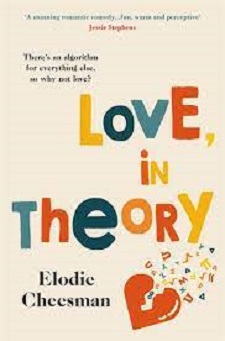
Book Review: Love, in Theory by Elodie Cheesman

TL;DR – a romantic comedy for the 2020s. Romy, not having seriously dated for two years, decides to jump back in using theories developed by psychologists, mathematicians and researchers to find love.

Summary (warning: spoilers)

Romy, an unusual, thoughtful 24-year old with a deep desire for rational thinking, decides to embrace science and statistics to find the ideal guy. She uses ‘optimal stopping theory’ to calculate that she is at the age where if she meets a guy that is better than all the previous men she has dated then he is likely to be the one she can build a life with.

She meets James who she has chemistry and spark with but ticks many of the boxes that are similar to her previous ex-boyfriends and doesn’t want to fall into the same trap of basing a relationship solely on a bonfire that will eventually flame out.

She then meets Hans who ticks all the relationship theoretical science boxes that she has set out for herself, but she can’t help noting that there is no initial bonfire that burns as deeply as what she experiences with James.

Who will she choose?

Review

‘Optimal stopping theory’ is a genuine mathematical theory that examines when it is an appropriate time to take an action to maximise reward or minimise cost. While the theory has been applied to statistics, finance and economics, it is with one particular problem that this novel is based on. The problem goes by many names including ‘the marriage problem’ and the ‘fussy suitor problem’.

In short, the problem surrounds when it is best to choose a partner and using the optimal stopping theory, one can calculate at what age based on your ‘expected dating life’ you should go about choosing a partner that you can live ‘happily ever after’ with. The magical number based on this formula is 37%.

This means, hypothetically, if you started dating at 18 years and wanted to settle down by 35 then that is a 17-year dating span. 37% of 17 is 6.29. Add 6.29 years to 18 and you get 24.29 years as the age that is your optimal stopping point.

It just so happens that Love in Theory‘s main character, Romy, is 24 years old and thus in theory, she should choose the next guy who is better than all the previous guys she has dated for the best chance of settling down with ‘Mr. Right’. Thus begins Romy’s dating escapades after not having seriously dated anyone for a couple of years. A different type of clock, not biological, starts inside her as she goes about finding someone based on the fact she has reached her optimal stopping point.

Whether you believe in the theory or not, Elodie Cheesman’s tale of finding the perfect match will likely propel young readers of romance (older readers who have experienced that relationships require work will probably not). Cheesman utilises all the current day mechanics that people use when they are trying to meet people (i.e. Tinder, Bumble, and other social networking or match-making apps). Romy’s introspection is reflective of a 24-year old who is a deep thinker, and the people she meets have a wide range of personalities that ensures she goes through the bores, the cringes, the narcissists in equal measure. Eventually her path crosses with two potential suitors: James and Hans.

In many ways, the character of Romy is deeply flawed. There is nothing wrong with this as characters that are flawed make for interesting reading. However, I do not know if certain flaws were intended by Cheesman. It certainly does not feel intentional. Romy comes off as an intellectual with a deep desire to scientifically analyse her love life and how she goes about searching for the ideal partner. She buys into the ‘optimal stopping theory’, attends an ‘intelligent dating’ class and is presented with research into relationships including a 2010 paper by mathematician Peter Backus entitled “Why I Don’t Have a Girlfriend”.

Backus calculated the odds of meeting someone who met all the traits that he was looking for in an ideal partner and came to the bleak probability of finding such a person on any given night out was only 0.0000034% chance. Through the ‘intelligent dating’ class, Romy is asked to identify three key traits (only three because the more traits you want ticked off in a partner will reduce the probability of finding someone dramatically. Just ask Mr Backus) and choose these three traits to create a relationship based on mutual liking (not lust or intense love, but liking).

Romy chooses the following:

  • ‘low novelty-seeking’ which means someone who is not always searching for something new. Romy reflects that her previous boyfriends were a combination of high extroversion, high openness and low conscientiousness, which made for a fun and spontaneous partner in the early days of the relationship, but also someone who was more likely to get bored and move on.
  • ’emotionally stable’ being someone who does not react intensely negative when things become difficult.
  • ‘agreeableness’ being someone who is ‘nice’. Nice people are generally kinder and better at intimacy.

From this approach, I felt strongly that here is a young woman who believes in rationality and using scientific research in finding the ideal partner (whether I agree with such an approach is beside the point, Romy’s personality is distinct and for the purposes of the story that is what matters). However, Cheesman then has two male characters in James and Hans that are Romy’s primary focus and while she reminds herself of the three traits she is looking for, it becomes apparent that for all her rationality she still wants the ‘magic’, the ‘spark’ or whatever other romantic trope you want to use.

Again, this is not necessarily an issue. Love in Theory, after all, is meant to be a romantic comedy. But I could not help rolling my eyes at how Cheesman goes about describing James and Hans.

Hans is tall, blonde, blue-eyed German with a ‘Statue of Liberty nose’, a strong jaw, wide smile with dimples. Might as well have described him as a ‘German prince’.

James is described at one point as wearing a white T-shirt and dark jeans that makes him look like James Dean or perhaps James Franco playing James Dean.

Look, I get it. We often judge books by their cover even if we say we don’t. First impressions make a difference, and I’m not saying Romy should date a guy she is not physically attracted to. But really no matter how much Cheesman tries to show the two male leads as having depth (and their own flaws), Romy still wants all the shine and physical sparkle as much as the rest of us. So, for all of her rationality, logic, and ‘scientific’ approach to finding someone, it was disappointing to me that the men she desires are Hollywood stereotypes in the looks department.

The fact Romy reflects deeply on her previous boyfriends, all charming, charismatic and good-looking and subsequently dates James and Hans who fit the same mould was disappointing. The only male character that presents themselves physically as flawed is Romy’s boss Graeme (for whom she is not attracted to in the slightest). Would it have detracted from the romantic comedy theme if the two male leads had physical flaws? I would like to think not. If anything I would have felt it would lend to a more authentic story and perhaps aligned better with the idea that Romy has learned from her past relationships and now applying her rational, analytical mind.

Was this intentional by Cheesman? I don’t know. But looks of the male leads aside, the story moves along to the conclusion we all suspect. That is, you can read all the science and statistics you want, but in the end love is more than this.

Romy is like a pendulum, she swings to the extremes applying theories to finding someone, she finds that person in Hans, and then swings to the other end, unable to deny her attraction to James and throws out all the theories. There is no balance in the delivery as the ending rushes in the final couple of chapters that has Romy having a supposed epiphany after being told by Alexandra (neuroscientist and Romy’s aunt) that the science of relationships can be cast aside if you feel that ‘magic’. She then rushes over to see James and confesses that she has been ignoring what they have and wants to be with him. And it should be noted that this is after things have ended with Hans through Romy’s own fault.

I found it a disappointing read because in the end, the book is lauded as being perceptive about love and relationships but ends up following a path well trodden. It’s Sleepless in Seattle where Meg Ryan’s character dumps Bill Pullman’s nice-guy character for Tom Hank’s character whom she feels the magic spark with.

Cheesman tries to offset this by describing two other important couples close to Romy: her parents and about-to-marry couple, Mara and Angus. We learn for both of these couples, their love blossomed from liking and the guy being ‘nice’ as opposed to a ‘love at first sight’ experience with explosions and fireworks.

Still, for all of her ruminations, thoughtful introspection, research and reading, her apparent belief in the science to create a relationship that will go the distance gets thrown out the window, and she ends up going with her gut in James as has happened with her previous ex-boyfriends. The book ends with her saying she has a ‘magnificent hunch’ that this time it will be different.

And perhaps it will be different, but as a romantic comedy it doesn’t say anything different. Listen to your heart instead of your head is the end message even though this book seeks to break out of all the Hollywood brainwash about ‘happily ever after’.

Had the inciting incident that wrecked Romy’s relationship with nice-guy Hans led to her actually trying to fight to get him back, and this in turn would lead to her choosing Hans over James… now that would have been different and broken out of the Hollywood rom-com mould. But alas, the formula has been set.

It is sad to think that hope fulfilled cannot stem as much from the head as it can from the heart (or at least, from a balance between the two). I guess that just doesn’t make as good a story and is not as sexy.

2 out of 5.

Anime Review: Yuru Camp Season 2 (2021)

TL;DR – The camping adventures continue for Rin, Nadeshiko, Aoi and Chiaki in season 2. Rin goes on a solo-camp to the sea but her attempts to return home are stifled when the weather turns bad. What was meant to be a two-day camp turns into a longer stay involving sight-seeing, more camping, visiting friends and family and discovering all the wonders of Japan.

Review (warning: spoilers)

Mid-way through season 2, Yuru Camp focuses on Rin’s friends Aoi, Chiaki and Ena. They have ventured to Cape Ohmama in winter and set up camp by Lake Yamanaka. Chiaki puts together two compact chairs and turns it into a hammock, which all three of them take turns in trying out. Each expresses how divine it feels and how they don’t want to move. The animated bliss on their faces says it all and you can’t help but feel how the simple pleasures can be the best. It is the little things that sums up this slice-of-life anime series, and it does it in fine form.

Enjoying the outdoors, drinking tea, the accomplishment of cooking one’s own dinner on a portable gas light stove, embracing the fresh air, and living in the moment are what makes this anime beautiful. The characters are cute, which I don’t think is particularly necessary, but their interactions lend to funny moments that add to the overall contented feel of this series.

All is not smooth sailing, however, as setbacks and unexpected problems arise that allow the viewer to learn quite a lot about what it takes to be a camper and what you should be mindful of. For example, the Cape Ohmama episode sees our trio of girls discovering it is much colder where they are than where they have gone on previous camps. Turns out the Lake Yamanaka campsite is 1000 metres above sea level. Their mobile phones have drained of power due to the cold, and by late afternoon it is already minus-two degrees Celsius. The girls thus have to figure out how to adapt, and it is an insightful and interesting look into the challenges of winter camping.

Campfires, hot pots, sleeping together in tents, using cardboard beneath their sleeping mats, and using hand warmer patches in their sleeping bags are all ideas the girls come up with. Some of these don’t come to fruition, however, and it is only with some luck that they don’t end up packing up all their things and heading home in the dark. Luck in this episode comes in the form of a couple of fellow campers who have properly prepared and invite the girls in to keep warm and eat with them. I don’t know how anime does it, but whenever they depict food, it always looks delicious.

The adventures still focus primarily on Rin and she is the quiet star of the show with the more gregarious Nadeshiko also getting decent air time. Rin has the most knowledge of camping and the places she goes to will make you want to explore Japan’s camping sites and have you jumping online to purchase innovative camping products and equipment. Either that or you will, at least, want to visit the hot springs Japan is famous for and lounge in these places without a care in the world.

Yuru Camp does a good job of being a tourist poster for the country even if it is unintentional. It is a lovely look into how we should all slow down and not get sucked up into the rush of busy lives. The age old adage of ‘stop and smell the roses’ never more evident than in Yuru Camp, or perhaps it is more ‘stop and cook yourself a winter curry while staring up at magnificent Mount Fuji.’ Doesn’t quite roll off the tongue as easily but definitely achieves the same end goal.

9 out of 10

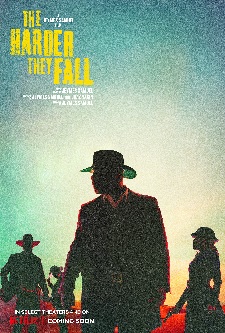
Movie Review: The Harder They Fall (2021)

TL;DR – a stylistic western revenge flick with a killer soundtrack that tells more of the story than the dialogue and visuals.

Review (warning: spoilers)

A husband, his wife and their son sit down at the table for supper. The husband says grace, thanking the Lord for their meal, but they are interrupted by a knock at the door. When the husband sees who it is, he whispers, ‘No.’

The husband backs away, looks longingly at the rifle perched on the wall out of reach. The stranger enters, spits on the floor and sits down at the table taking out two gold plated revolvers and puts them on the table. The husband sits down and asks the stranger to leave his husband and son out of this. He expresses that the quarrel is with him not with his family. The stranger calmly raises his two guns and points one each at the wife and son. The husband pleads to leave them alone. The stranger points both guns at the wife and fires killing her instantly. He then turns and shoots the husband. The son screams seeing his parents murdered before him. The stranger takes a razor out of his pocket and proceeds to cut the boy’s forehead while he continues to beg and scream. Thus is the opening of The Harder They Fall, a film by Jeymus Samuel in his directional debut.

Samuel is a singer-songwriter and music producer and clearly uses this strength in adding story-telling and atmosphere through the choice of songs (most of them original) designed for this film. A mix of reggae and religious sounds that is used extensively and, at times, compensates for lack of story.

After the opening violence, we fast forward and are introduced to Nat Love (Jonathan Majors), outlaw and leader of the ‘Nat Love Gang’ who rob from other outlaw gangs who rob from banks. Make sense? Basically, a robber who robs from robbers. But that is not his primary drive. His primary drive is hunting down the Buck Gang led by Rufus Buck (Idris Elba) who was responsible for killing Nat’s parents (yes, Nat is the boy we see screaming in the opening scene and has a cross cut into his forehead by Rufus’s razor blade).

Nat’s gang comprises of sharpshooter Bill Pickett (Edi Gathegi) and quick draw Jim Beckwourth (RJ Cyler) along with Mary Fields (Zazie Beets), Nat’s previous love who left him because she couldn’t bare not knowing if Nat would come back alive from each of his revenge kills.

The last one alive on Nat’s mission of revenge is, of course, Rufus Buck himself and the story that unfolds is largely linear with the mandatory twist in the final scenes. When a large number of bodies are scattered on the ground and Nat faces off against Rufus, it is then we finally get to see Rufus’s motive for killing Nat’s parents. In short, Nat’s father had a previous life as a violent outlaw who was married and had a son. That son was Rufus. Seems Nat’s father had the dark past of beating his first wife and son leading to one day killing Rufus’s mother who was trying to defend him. The father leaves and starts a new life as an honest man, remarries to another woman and has Nat.

So the twist is a revenge within a revenge or rather a cycle of revenge. Rufus didn’t kill his half brother, Nat, because he knew that Nat would want revenge and become an outlaw himself. To Rufus, it was the ultimate revenge on his father who killed his mother and left him to rot.

Another interesting mechanic used by Director Samuel is that while the story is entirely fictional, the characters are based on real people. And practically all these historical figures are of African American or Indian descent. But this is not a film about race. There’s only one scene where race is played out when Nat and his gang robs a bank in a town whose population is all white, but there is no particular narrative or message being said.

More subtly, Rufus has created a town called Redwood, which has a black population and there is inference that Rufus seeks to create a mecca or sanctuary for black people. However, again, this is just a by-product that is not examined in any significant detail. The story is simply about revenge and how revenge spawns more revenge (yes, there is a final shot where Nat having achieved his revenge rides off with his love, Mary, but we see the arm of someone holding a hat looking down on them from a cliff and if you’ve been following you will know that it belongs to a character named Trudy (Regina King) who was Rufus’s right-hand woman…) So, sequel perhaps?

Overall, I couldn’t help feel that the film was more style over substance. The reliance on the soundtrack and the solid cast unable to hide its flaws in the story. For example, Mary talks Nat into letting her “scout” Redwood, which doesn’t make much sense especially when she ends up simply trotting into town on her horse and trying to make a deal with Rufus (who does the logical thing of capturing her and using her as bait to flush out Nat). Bizarre move on both Nat and Mary’s part. At some points, I also felt the film was more about showcasing songs that fit into the narrative rather than the story standing on its own two feet with support from the soundtrack. By the end, there is not much to savour as all the shooting and killing feels templated and Rufus’s revelation (which admittedly is delivered with as much gravitas as Idris Elba can muster) is anti-climatic.

A case of buy the soundtrack but not the movie.

6 out of 10

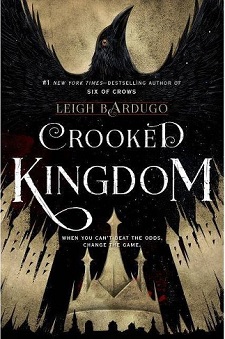
Book Review: Crooked Kingdom by Leigh Bardugo

TL;DR – The conclusion of the Six of Crows duology, which sees Kaz and his crew looking to rescue Inej from the clutches of Van Eck and take what is owed to them in order to start a new life.

Summary (warning: spoilers)

Go to my book reviews page if you wish to read my review of Six of Crows, the first book in this duology.

With Inej captured by the rich and corrupt merchant, Jan Van Eck, Kaz and the remainder of his crows – Jesper (sharpshooter & gambling addict), Wylan (demolition expert & disowned son of Van Eck), Matthias (Fjerdan witch hunter), Nina (Grisha heartrender) – must come up with a plan to free her without handing over Kuwei Yul-Bo, the son of Bo Yul-Bayur, the scientist responsible for creating jurda parem, an addictive drug that amplifies Grisha power but causes deadly side effects.

Van Eck lays a trap using Inej as bait, but Kaz does not fall for it as he blindsides Van Eck by kidnapping his pregnant wife, Alys. A furious Van Eck agrees to trade Alys for Inej but uses the opportunity and his influence over the Merchant Council to have the stadwatch (the Ketterdam police) nearby during the exchange. The tense exchange occurs, but Van Eck then shouts to the crowd (and nearby stadwatch) that the man before him is Kaz Brekker, the man responsible for kidnapping his son (Wylan). In truth, Wylan was not kidnapped, he joined Kaz’s crew and Van Eck actually wants his son dead. The stadwatch storm in but suddenly a series of explosions occur and Shu Han warriors appear seeking to capture Grisha. These particular Shu have been modified by Grisha fabrikators (high on the parem drug) to now have wings and armour beneath their skin. The Shu are just one of several groups after Kuwei Yul-Bo, seeking to take control of the only person who has knowledge of how to make the drug.

In the ensuing mayhem, Kaz and Inej escape and they meet up with the rest of the crew at their hideout; a large tomb on the Black Veil, an island that was once used as a cemetery for the rich and wealthy but is now abandoned due to a past plague that ran through Ketterdam. The Merchant Council decreed that no burial could take place within city limits and that those who died are cremated on the Reaper’s Barge.

While achieving their goal of rescuing Inej, Kaz is now faced with the fact that the millions owed to him and his crew from Van Eck will never materialise unless they take action. To make matters worse, he owes money to his most hated enemy, Pekka Rollins, and also his own boss, Per Haskell. The only ace up his sleeve is he has Kuwei Yul-Bo. His initial scheme to get their millions by ruining Van Eck involves buying up shares in sugar stock and destroying Van Eck’s silos containing sugar reserves. The scheme fails because Pekka Rollins reveals his hand and has joined forces with Van Eck. Together the pair has every man and his dog hunting down Kaz and company, and to make matters worse, contingents from Fjerda, Ravka and Shu Han are also hunting down Kuwei.

Kaz goes all-in and seeks to turn the tables by controlling the narrative and having Kuwei declare his indenture and services up for auction. Under Ketterdam law, any individual who puts themselves up for indenture, can thus auction their services to the highest bidder. This is considered sacred under Ghezen, the god of commerce and trade, for which the people of Ketterdam abide by. Kaz thus instigates a plan to take down Van Eck and Rollins through the auction where every foreign contingent will be present, along with the stadwatch and every Ketterdam gang and merchant. It is a dangerous game and Kaz has put the lives of his five crows and himself on the line. By Kaz going all-in, how much of his hand is legit and how much of it is bluff? Will all six crows survive? Or will casualties ensue? Whose dreams will become a reality and whose will turn to ash on the Reaper’s Barge?

Review

Leigh Bardugo has a way with words.

She is particularly adept at creating dialogue that is engaging and funny and full of sass that provides added dimensions to the Six of Crows cast. She also manages to deliver a plot that is both complex and cohesive. The many pieces on the chess board that Bardugo keeps track of and ensuring not everything is smooth sailing makes the Crooked Kingdom are marvellous read that will have you turning the pages.

It is a remarkable effort that reflects the many layers of all the characters but especially Kaz Brekker. He is not just the leader and the glue, but his mind generates schemes within schemes and fail safes within fail safes and even when all hope looks lost, he rises bruised and bloodied with crow-head cane in hand and an intellect that allows him to move what pieces he has remaining to achieve check mate.

As with all good endings, the conclusion to Crooked Kingdom is far from being tied up in a neat little bow. Enough happens that you will be more than satisfied and Bardugo is clever enough to leave a small enough crack in the door (e.g. the Council of Tides confronts Kaz with a little chat at the end) that will make you think that she will one day return to Kaz and the crows with another tale (even though she has gone on record saying she will not return to these beloved characters and that this particular story arc is complete).

Sigh. We can hope can’t we?

4.5 out of 5.

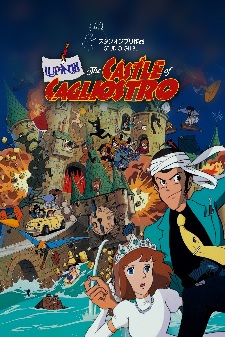
Anime Review: The Castle of Cagliostro (1979)

TL;DR – Lupin, renown thief and lady’s man, pulls a heist at a casino but discovers the money he has stolen is counterfeit. He wants to find out who is behind the counterfeit currency and how they are made (so he can steal it), which leads him to Cagliostro. But there he finds more than he planned – a princess wanting to escape an arranged marriage, a legend of a hidden treasure within the Castle of Cagliostro, and a Count wanting to establish a throne of power.

Review (warning: spoilers)

Hayao Miyazaki’s directional debut tells the story of Lupin III, a gentlemen thief, that performs heists more for the thrill of it then to get rich. He is joined by his right-hand man, Jigen, an expert marksman and Ishikawa, a renegade samurai. This eclectic trio are constantly being chased by Inspector Zenigata, who I expect enjoys the chase more than actually trying to arrest Lupin for his crimes.

Miyazaki’s sense of vision, animation and story-telling are laid out in full in the The Castle of Cagliostro and would establish him as a pioneer and leader in anime (and indeed the world over) for decades to come. The vast array of comedy, action, story, diverse characters and distinct animation elements in Miyazaki’s films have influenced many others including Makoto Shinkai (Director of ‘Weathering with you’ and ‘Your Name’) and John Lasseter (Disney/Pixar).

The opening scene where Lupin and Jigen rob a casino and are driving away in an Italian Fiat 500 overflowing with cash is immediately engaging and comical (reminiscent of something out of Looney Tunes but with much finer animation). When Lupin eyes the multitude of bills that are practically obscuring his windscreen while he is driving, he realises that they are counterfeit. Instead of being angry, he is excited and sees this as his next job to find out how the counterfeits are made and steal the technology. Lupin and Jigen then proceed to open the doors and roof window of the Fiat and releasing a stream of counterfeit cash on the freeway. From an animation point-of-view it is spectacular, and from a story perspective, you are immediately cheering on Lupin and Jigen even though they are crooks.

This leads them to the principality of Cagliostro, population 3,500; a small state that Lupin coins the ‘black hole of counterfeit bills’ because people who enter the principality to snoop around are never seen again. There they encounter the princess of Cagliostro, trying to escape from some henchmen who work for Count Cagliostro. Lupin finds out that the Count has arranged a marriage with the princess to cement his power. It also means that the count will be in possession of two ancestral rings – his own and the princess’s ring – which will supposedly unlock an ancient treasure within the castle of Cagliostro.

Lupin’s ‘job’ now expands to rescuing the princess because if there is anything more attractive than pulling a heist, it is rescuing a damsel in distress being held against her will by an evil Count.

Miyazaki’s stamp of approval comes through the story. For his first anime feature film, he does not treat his audience like a bunch of otaku, and delves into what really drives stories and connects them to the viewer through the wonderful dialogue between Lupin and his crew, Lupin and the Count, Lupin and the princess, and Lupin and Inspector Zenigata. These characters play out against a magnificent European backdrop that is Cagliostro along with a plot that has enough mystery and comedy that will leave your entertainment tank full by the time the credits roll. And if that is not enough, Miyazaki also throws in a beautiful soundtrack and sound effects that capture the atmosphere of this film in its entirety.

Still not enough? Then there is also Fujiko Mine, who happens to make a showing and is Lupin’s on-again off-again love interest who also happens to be… you guessed it… a thief.

Wonderfully intricate, visually engaging, and entirely fulfilling as an action adventure mystery. You have a magnificent mind, Hayao Miyazaki. Absolutely magnificent.

10 out of 10

Movie Review: Official Secrets (2019)

TL;DR – This is the story of British translator Katharine Gun who worked for the Government Communications Headquarters (GCHQ) and blew the whistle on her own government and the United States for attempting to blackmail UN diplomats of other nations to vote with the UK and US on the invasion of Iraq.

Review (warning: spoilers)

Anyone who has followed the events leading up to the 9/11 World Trade Centre terrorist attacks and the political aftermath will be aware of British whistle blower Katharine Gun, who in 2003 leaked a top secret memo in relation to an illegal operation between British and American intelligence services to spy on UN diplomats. The UN Security Council were looking to vote on a resolution supporting the invasion of Iraq. This operation sought to spy on those nations that could swing the vote to the US and UK’s favour by obtaining information they could use to blackmail those diplomats.

US President George W. Bush declared a war on terror after the 9/11 attacks. Bush together with UK Prime Minister, Tony Blair, sought to convince the rest of the world that Saddam Hussein held weapons of mass destruction in Iraq. Other countries opposed the invasion and held the position that there was insufficient evidence that Iraq had weapons of mass destruction. This in turn led to worldwide protests against the Iraq War.

Official Secrets is a no-frills drama of the conflict within the UK between anti-war advocates and government agencies waging war on terror. Katharine Gun (Kiera Knightley) is driven to act when she sees news reports regarding the US and UK government pushing to invade Iraq based on ‘intelligence’ she knows is not backed by solid evidence. It also looks into the machinations of the British newspaper, The Observer, and journalist, Martin Bright (Matt Smith) as he receives the top secret memo through a middle person who knows Katharine and seeks to authenticate the information.

In the film, the key scene is when Katharine sits down with Scotland Yard detective, TinTin (Peter Guiness) and is interviewed:

“What were you employed to do?” asks TinTin.
“Well, I can’t be specific,” responds Katharine.
“Be general then.”
“I translated signals intelligence and I report anything I thought might be of interest to my clients.”
“Your clients?”
“The Foreign Office. The Ministry of Defence.”
“So, you work for the British government.”
“No, not really.”
“No?”
“Governments change. I work for the British people. I gather intelligence so that the government can protect the British people. I do not gather intelligence so that the government can lie to the British people.”

Detective TinTin then drills down on Katharine that her work involves being a spy and as a spy it is her job to eavesdrop on private conversations regardless of who they may be (including UN diplomats).

Katharine’s response is calm and measured as she says, “I don’t object to being asked to collect information that could help prevent a terror attack. What I object to is being asked to gather intelligence to help fix a vote at the UN and deceive the world into going to war.”

What follows is the British Government charges her for breaching the Official Secrets Act and the pressure exerted on her to plead guilty in order to receive a more lenient sentence. Katharine hires lawyer, Ben Emmerson (Ralph Fiennes) to represent her and after going through the charges and the likely prosecutor’s case, they do their own research and discover that the Attorney-General Peter Goldsmith had written an advisory document stating that it would not be lawful to use force (and instigate a war on Iraq) without a new Security Council resolution. Further this document existed at the same time the GCHQ were emailed a memo to spy on UN diplomats. Goldsmith later reversed his position after going to Washington stating that the UN’s resolution of the 1991 Gulf War could be reactivated to legitimise a new war with Iraq (which the film depicts as a ‘fringe view’ at best).

Ben Emmerson then proceeds to try and put the legality of the Iraq War on trial and requests documents from the government. In a remarkable final scene, the prosecution drops all charges on Katherine as the documents in question would have shown that the government had deceived the British people into entering a war on Iraq.

Words are then shown on screen indicating in 2010, Goldsmith’s advice to Tony Blair was made public indicating it would be illegal to go to war without a Security Council resolution and this coincided with when Katharine leaked the memo. Statistics are then shown of the number of Iraqis killed and wounded during the four years of war, along with the number of US and UK soldiers that died. Real life footage at the end shows Katharine being mobbed by the press and being asked whether she would do it again and she indicated she would.

Overall, Official Secrets depicts another example of why people distrust and are disillusioned by politicians and governments. Sadly, the film does not attempt to show anything of the other side (other than news footage of Bush, Blair and Colin Powell urging the UN to vote for the invasion into Iraq). The 9/11 terrorist attacks created an atmosphere of global fear that still echoes on today and generated a need for governments to be perceived to be acting against terror threats. A time when emotions were so high that the need to act (even if those acts involved violation of human rights and privacy) was unbearable. It was an impossible time for political leaders, but arguably a time when political leaders needed to rise above the emotion and be the voice of calm.

If you want to learn what happened leading up to 9/11 and the events after, I recommend watching Turning Point: 9/11 and the War on Terror, a docuseries that shows much of humanity’s failings and the destruction caused by war and hate.

The cast of Official Secrets are all spot on especially Kiera Knightley and Adam Bakri who plays Katharine’s husband, Yasar Gun. Director Gavin Hood delivers a tight film that is worth the watch even if it doesn’t delve into the complexities of a time when the political climate was at a tumultuous high. In truth, if Hood decided to lump all that in as well you would have a running time over three hours. Better off watching the docuseries I mentioned above.

7.5 out of 10

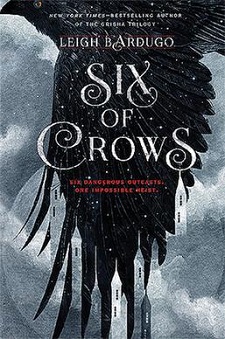
Book Review: Six of Crows by Leigh Bardugo

TL;DR – In the world of Grisha (individuals with magic powers), there is rumour of a drug known as Jurda Parem surfacing in Ketterdam. The drug enhances Grisha powers exponentially but at a terrible cost. The Grisha becomes addicted to Parem and will eventually die from it.

Summary (warning: spoilers)

Kaz Brekker (leader of the Dregs) is hired by merchant, Jan Van Eck, to rescue Bo Yul-Bayur, the inventor of jurda parem (an addictive drug that kills Grisha while temporarily amplifying their magical powers). Bo Yul-Bayur is being held at the Ice Court, the stronghold and capital of Fjerda. No one has ever breached the stronghold and lived to tell the tale, so Kaz demands an enormous sum to undertake the mission. He also trusts Van Eck about as far as he can kick him with his dodgy leg (Kaz uses a crow’s head cane), so he convinces Van Eck to have his son, Wylan, join his crew on this mission as Wylan has a talent as a demolitions expert.

Kaz and crew infiltrate the Ice Court and discover that Bo Yul-Bayur is dead. Instead, his son, Kuwei Yul-Bo is being made to make parem in his father’s shoes. Kaz and crew, along with Kuwei Yul-Bo, manage to escape and return to Ketterdam only to be betrayed by Van Eck who reneges on their deal.

The ensuing stand off reveals that Van Eck does not care that Kaz has his son because he has disowned Wylan from the family for being unable to read and could never run the family business. Van Eck thinking he has Kuwei Yul-Bo in his possession discovers that it is actually Wylan who has been made to look like the scientist through the use of Grisha magic. Enraged he captures Inej (Kaz’s assassin and expert spy for the Dregs) and gives Kaz a week to deliver the real Kuwei Yul-Bo otherwise he will torture Inej.

Thus ends book one of the Six of Crows duology. The story concludes in the Crooked Kingdom.

Review

While Shadow and Bone introduced us to the Grishaverse and the wonderful imagination of Leigh Bardugo, Six of Crows delves into characters that I found far more interesting. Don’t get me wrong, I enjoyed reading about Alina Starkov, Mal Orestev and the Darkling, and you can go to my book reviews page to see what I thought of Shadow and Bone. But in Six of Crows, Bardugo introduces us to a cast of characters that are a delight to read.

There is Inej Ghafa, a Suli spy known as the Wraith. She has acrobatic skills and a set of throwing knives that she names and uses with deadly accuracy.

Jesper Fahey is meant to be studying at a university funded by his goodwill farmer father, Colm Fahey. However, he develops a gambling addiction and falls into severe debt. He is an expert marksman and carries two pearl handled revolvers wherever he goes.

Wylan Van Eck is the son of a wealthy merchant, but is disowned by his father because he struggles in his studies and cannot read (turns out he’s dyslexic, but his father deems him a failure even though he is good at maths and music). Wylan also has an aptitude for making chemical bombs.

Matthias Helver is a Fjerdan witch hunter and has been taught to hate and kill Grisha. He is strong, muscular and reminds me of a Viking (which I am sure is where Bardugo drew inspiration when creating the country of Fjerda).

Nina Zenik is a Grisha Heartrender who has a complicated relationship with Matthias Helvar. She initially served the Ravkan second army but is captured by Matthias and his fellow drüskelle (Fjerda holy soldiers that hunt Grisha) and is thrown in a cage with other Grisha aboard a ship. The ship sinks during a massive storm and she saves Matthias from drowning using her Heartrender abilities. Forced to work together to survive, they slowly develop an attraction to one another though their world views often bring them into conflict. This is made worse when Matthias believes Nina betrays him and is sent to Hellgate (a prison) even though she did it to save his life.

This motley crew are the primary characters that make up the Dregs led by Kaz Brekker.

And it is Kaz that is the pièce de résistance. In Kaz, we have a multi-layered character that has a backstory as intriguing and complicated as the rest of the Dregs if not more so. Bardugo has created a lead that will have you wanting to digest every little detail to decipher what might be going through Kaz’s head.

The plans and safeguards he hatches, and how he uses the individual skills and talents of those around him is done with calculated brilliance. His motives and drive are slowly revealed throughout the book, and you will come to understand that he is a survivor driven to see the downfall of Pekka Rollins (leader of the Dime Lions and rival to the Dregs). Rollins used Kaz and his older brother, Jordie Rietveld, when they were younger and conned them out of everything they owned, leaving them to live a life of poverty on the streets of Ketterdam. Jordie later died of a plague that tore through the city, and Kaz sees Rollins as the man responsible for Jordie’s death.

Six of Crows builds upon the established world created by Bardugo in Shadow and Bone and will have fans eagerly awaiting for further tales from the Grishaverse. I devoured this book with a hunger that matches Kaz’s thirst for revenge on Rollins. Onto the Crooked Kingdom for the conclusion of this magnificent duology.

4.5 out of 5.