Anime Review: Babylon (2019)

TL;DR – what starts off as a crime thriller devolves into a philosophical mess where many threads are left unanswered and an ending that most viewers will find disappointing. You have been warned.

Review (warning: spoilers)

I will try to keep this short. My score of three out of ten is based on the first three episodes being quite engrossing and then the rest falling apart. There are actually twelve episodes in total and if I scored this out of twelve, I would still give it a three.

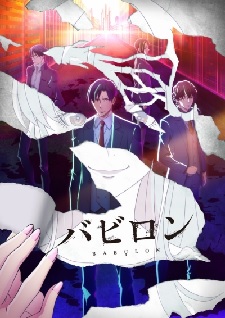
The setting for Babylon is in the fictional city of Shiniki, a district created next to Tokyo designed to trial new political policies, ideas and systems. Enter Zen Seizaki, a public prosecutor, investigating a dodgy pharmaceutical company, and in the process, discovering a dead anesthetist and a document stained with blood, hair and the letter “F” written repeatedly all over the page by an author who has clearly gone insane.

Further investigation leads to individuals involved in election tampering (the usual stuff such as bribes, prostitution etc. to secure votes for an upcoming mayoral election). However, when Zen’s fellow prosecutor, Atsuhiko Fumio, who has been helping Zen, commits suicide by hanging, the story takes a dark turn leading to Zen confronting their primary suspect, a beautiful woman named Ai Magase.

Ai has a mysterious power where she only needs to whisper into another person’s ear and they will want to commit suicide. This also happens to coincide with one of the mayoral candidates wanting to introduce a ‘suicide law’ that permits an individual to commit suicide if they want to.

Suicide is a hot button topic, especially in Japan, and I wonder if Mado Nozaki (author of the Babylon novels) came up with this story because he wanted to explore the topic in a meaningful way, or he wrote it for the controversy and knew it would get an audience. Either way the anime series made me regret investing my time beyond the third episode.

There’s a kind of Death Note feel to the beginning. Like the Death Note anime series, we have two characters that face off against each other. One character whose thinking is unconventional and criminal under standard laws, and the other character trying to catch them. It delves into what is considered right vs wrong, good vs evil in a way that does make you think. The scene where Zen interrogates Ai and how their roles reverse by the end with Ai asking philosophical questions of Zen is riveting and quite suspenseful.

But that’s all the praise I can laud. The story starts going off in too many directions: a political debate around the suicide law, election fixing, the ongoing hunt for Ai Magase who can change her appearance, other nations adopting the law, and a G7 summit where world leaders wax lyrical about what is ‘good’ and how do you define it. With the story being pulled into multiple threads, it all comes undone.

Ai becomes a one-dimensional character. Her motives never explored. For all intents, she is evil for evil’s sake and no other reason. The suicide law is never revealed as being accepted or not in Shiniki or anywhere else. And Zen’s fate is also left ambiguous, the climactic scene leaving it open as to whether he is alive or dead.

A post credit scene reveals Ai meeting up with Zen’s son, who returns her hat because it gets blown off her head. She smiles at him as he gives the hat to her and she says, “Good boy”. I’m sure there’s meant to be some deep meaning to this ending other than seeing what appears to be evil triumphant but it evades me. In the end, I can’t help feel that Nozaki tied his story in so many knots he was not able to undo them, so instead, he simply cuts all the threads in anti-climactic fashion and not giving a damn about the viewer.

3 out of 10

Anime Review: Tonari no Totoro (1988)

TL;DR – a father and his two daughters move to the country to be closer to their sick mother, who is in a hospital nearby. The two girls discover a world of nature, forest spirits and untold beauty.

Review (warning: spoilers)

Tonari no Totoro (translated to My Neighbour Totoro) is arguably Hayao Miyazaki’s greatest creation. Many subsequent films have garnered critical acclaim and awards including Princess Mononoke, Spirited Away, and Howl’s Moving Castle, but it is the magical creature that is Totoro that is Studio Ghibli’s flagship. The emblem of the Totoro represents all things Studio Ghibli has created and epitomises story telling and animation excellence among not only the anime-obsessed Japanese but also international audiences. This bulbous creature is instantly recognisable by all anime fans and is equivalent to Mickey Mouse for Disney, Spider-man for Marvel and Batman or Superman for DC.

The story of a professor and his two daughters, Satsuki and Mei, moving to rural Japan and into a post-war house that has seen better days is not the stuff of legend. It is merely a slice of life captured in animated form with rice paddy fields, lush forests, mountainsides and running creeks (the likes of which Monet and Van Gogh would be proud). There is beauty in every scene as we watch Satsuki and Mei explore their backyard and the various levels of their new house (which some of the local kids think is haunted). Miyazaki captures the curiosity that comes from being a child and everything is an adventure.

The introduction of the Totoro is pure magic, an “Alice in Wonderland” trip down a tree hollow into an underground cavern of greenery, flowers and butterflies where resides a very sleepy forest spirit named Totoro that is a cross between a very round, very large, egg-shaped bear and a cat. Only a child, in this case little Mei, would approach this creature without trepidation. The soft, pillow-like fur of the Totoro’s tail causing Mei to hug it like a plush toy before being lifted up on its belly because he turns over to sleep on his back. I imagine the Totoro is like cashmere, lying on his giant stomach, his warmth and breathing as you rise and fall, causing you to fall asleep as if you’re enveloped in soft down (which is exactly what happens to Mei).

How this movie has transcended cultural boundaries and become a cult phenomenon is beyond me because it doesn’t have the typical edge like Pulp Fiction, Blade Runner or Fight Club nor the so-bad-it’s-good cult status of films like Plan 9 from Outer Space or Who Killed Captain Alex? In this way, Tonari no Totoro, has achieved cult status in a unique way. There’s no twists, no violence, no shocks, and no complex plot. What this film does have is depth, or rather depth in simplicity. The ability to capture everyday life in a magical, non-ordinary way. Whether it’s walking home in the rain, or riding a bicycle, or exploring the attic of a house, there’s something about how Miyazaki presents these that keeps you spell bound.

The flourish of the fantastical is restrained and not done in a way that is heavy handed. Miyazaki’s other films like Spirited Away and Howl’s Moving Castle have the fantastical front and centre, but Tonari no Totoro moves because of its main two characters in Satsuki and Mei, and the relationship they have between each other. The scene where Satsuki has a sleeping Mei on her back (her hands giving her a piggy-back) waiting at the bus stop for their father to return from work, open umbrella over her shoulder as the light drizzle of rain persists, is animated magic. When the giant Totoro arrives with a big leaf on its head in a futile attempt to protect itself from the drizzle, it is nothing short of comical and engaging. The expression on Satsuki seeing the Totoro for the first time is priceless, and when she hands him a spare umbrella, which he manages to open and then finds the rain does not hit his head anymore is so moving, you will wish you had a Totoro at your bus stop too. The fact the Totoro is waiting for a cat bus needs to be seen to be believed.

There’s so much to fall in love with in this film that it warrants repeat reviewing. It’s a (cult) classic that is just as engaging decades on. And like I said, there’s a cat bus. If you ever want a movie to be elevated into greatness, then throw in a cat bus. For audiences of all ages, a must-see.

10 out of 10

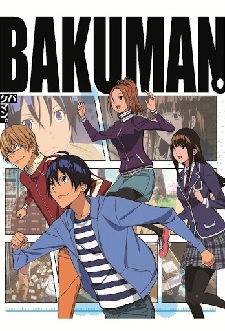
Anime Review: Bakuman Seasons 1-3 (2010-2013)

TL;DR – two high school students team up to try to break into the manga industry and discover making their dreams a reality is a large mountain to climb.

Review

Tsugumi Ohba and Takeshi Obata, creators of the highly successful Death Note series, teams up again to explore the manga and anime industry. It’s a far cry from the supernatural, suspense, cat-and-mouse Death Note and will be a surprise to fans expecting that Ohba and Obata would create another manga/anime in the same genre.

Instead, we have a slice of life anime that deals with the trials and tribulations of what it takes to set yourself apart in a market saturated by many other artist/writers looking to break into the same industry. This is a story that exemplifies that if you write about what you know then you can connect with your audience.

Moritaka Mashiro and Akito Takagi are the duo of artist and writer respectively that teams up. Moritaka is initially hesitant to undertake this endeavour because his uncle who was also a manga artist died from being overworked. But he commits to the idea when he discovers that Miho Azuki, the girl he has a serious crush on, reveals that she wants to become a voice actress for an anime series. Moritaka and Miho make a pact that only when they achieve their dreams will they then marry and until then they are not to see each other.

Yes, it’s far-fetched but a fantastical enough arrangement that still makes you cheer them on anyway.

More importantly, it then explores the machinations, meetings, deadlines, long hours, and the sacrifice required to have one’s manga serialised, and the challenges of what it takes to achieve enough popularity for the manga to then be turned into an anime.

The art is superb and the story engaging enough that the twenty volumes of Bakuman were then animated into three seasons. It won’t be everyone’s cup of tea, but if it does grab you, you’ll be drawn in completely. It’s inspirational, funny, and demonstrates the old adage about belief in one’s dreams and working hard to get there.

9 out of 10

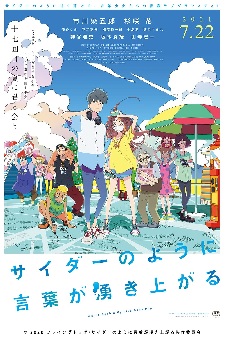
Anime Review: Words Bubble Up Like Soda Pop (2021)

TL;DR – a boy who only expresses himself through haiku and a girl who is a popular vlogger meet at a shopping centre over summer break. Slice of life, romance anime that follows a simple storyline that is well executed.

Review

Words Bubble Up Like Soda Pop has striking animation and colours that remind me a lot of the Great Pretender anime series also on Netflix. The introduction scene as the camera pans across a highway with endless fields of green on both sides and then onto a shopping mall within Oda city is so full of colour and life that I was instantly drawn in. The instrumental soundtrack that accompanies the opening scenes is light and bubbly like… well… soda pop and makes you feel like you’re floating in the sky looking down on the many lives going to and fro through the mall.

The story is straight forward. We have Yui Sakura (nicknamed “Cherry” because sakura means cherry blossoms), a teenage boy who constantly wears headphones as a means to not be overwhelmed by the outside world (and noise) and also signals to others that he doesn’t want to be disturbed because people think he’s listening to music. He has a passion for haiku as a way to express himself and posts the short Japanese poems he creates onto his social media platform. Cherry works at the welfare centre in the mall part-time in place of his mum who is recovering from back issues.

Then we have Yuki Hoshino (nicknamed “Smile”). She and her sisters uploaded a video based on the idea of cuteness and under the name “Smile For Me”. Yuki continues on as a solo artist and has obtained a substantial number of followers. The irony is she has self-confidence issues because of her buck teeth. When she was much younger, everyone thought her teeth were cute. But now that she’s a teenager, she doesn’t like her teeth and has undergone orthodontic work and obtained braces. As a result, she constantly wears a face mask so people can’t see her teeth. She continues to upload videos and streaming her adventures around the Oda city asking her followers to ‘like’ and ‘smile for her’.

Cherry’s headphones and Smile’s facemask are effective motifs to reflect the awkwardness and self-confidence issues of teenage youth. There is one particular scene where, after spending many weeks together, Smile discovers that Cherry is moving away. He had wanted to tell her earlier but every time he plucked up the courage, they were always interrupted. Cherry knows that he has hurt her and as she continues to walk home without him, his own heart breaks and the outside noise suddenly becomes too much and he puts his headphones on to block it out.

The supporting cast of characters are all eclectic and enjoyable to watch. The main story that pulls them along surrounds one of the elderly gentlemen at the welfare centre who owns a record store and has misplaced a record called “Yamazakura”, which contains songs from his deceased wife. Cherry and Smile go on a research hunt to try and find the record or details of where a copy can be obtained leading towards their growing affection for each other.

The climactic scene is nothing new, both boy and girl overcome their confidence issues to acknowledge their genuine connection. Counter to the headphones and mask motifs are the running themes of poetry and music that help Cherry and Smile evolve as individuals as well as a couple.

Unlike other more dramatic and heart-wrenching slice of life animes like Koe no Katachi (A Silent Voice) which deals with the bullying of a deaf girl or Tenki no Ko (Weathering With You) which tells a story of a runaway boy and orphaned girl struggling to survive in Tokyo, Words Bubble Up Like Soda Pop is effervescent with just enough emotional pull to make you stay on for the entire ride.

There’s nothing earth shattering here but it does not aim to be, which is perfectly fine to me when it still captures what is intended, a slice of life heart-warming tale that should appeal to all ages.

8 out of 10

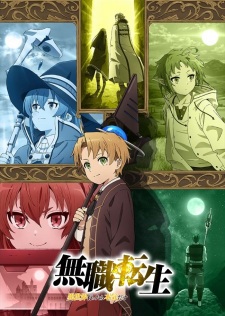
Anime Review: Mushoku Tensei: Isekai Ittara Honki Dasu Season 1 (2021)

TL;DR – a jobless recluse dies in an accident only to be born in another world where sorcery, warriors and monsters exist. He has a chance to live a second life. Oh and he also remembers his first life entirely so he has an adult mind in a child’s body.

Review

The story of an introverted, jobless Japanese man who undergoes some sort of transformation is a common trope in anime. For Mushoku Tensei, the transformation occurs when said character trope attempts a heroic act to save some teenagers only to be hit by a truck and dying in hospital. He then gets reincarnated into a world of might and magic as a baby but retaining all his memories and knowledge of his previous life.

Known as Rudeus Grayrat, this second chance at life leads him down a path where he learns to live with greater meaning and purpose than he ever did in his first life. He is nurtured and loved by his parents, Paul Greyrat (father and master swordsman) and Zenith Greyrat (mother and accomplished healer) and soon discovers that he, too, can conjure magic.

The anime is strong at the beginning as Rudeus, as a baby and toddler, has a mind of an adult. The inner monologue is amusing as he absorbs his new environment and learns the rules and mechanics of the world he has been born into. The fact, his parents and everyone around him, has no idea that he has already lived an adult life leads to some comic moments ripe for ecchi.

Through flashbacks you discover, he was bullied, oppressed and homeless, which traumatised him deeply. And through the bonds he forges with the new people he encounters, he learns to overcome those emotional scars.

The novelty of the beginning soon wears off. The episodes moving slower than I wanted. Episode five was a particular highlight when Ghislaine Dedoldia, a warrior beast woman, comes to rescue Rudeus who is trying to protect Eris Greyrat (his cousin) from being kidnapped.

After that the story unravels somewhat as a mysterious ball in the sky appears along with an increase in monster activity. The mysterious ball turns out to be a gathering collection of mana and then in episode eight, new characters are introduced with no clue as to who they are or what their purpose/motive is. There’s a guy who appears to be able to control dragons, a little horned demon girl who leads an army that we don’t see, a dude that lives in a castle that floats in the sky and ruminates that the ball of mana may be a spell seeking to break the seal imprisoning a demon-God named Laplace.

The ball of mana explodes engulfing Rudeus and Eris and teleporting them to a demon continent where they are saved by Ruijerd Superdia, an elite killer, who decides to help them get back home. Together the trio journey to the city of Rikarisu where they register as official adventurers and can take on quests to earn money.

As you can see I wasn’t joking when the story unravels into a disjointed mess. Events occur that I’m sure will tie in to later episodes but season one ends with no answers provided. The series becomes flat and lifeless and my investment in Rudeus and his friends hanging by a thread.

The animation is solid if not spectacular, and there’s really not enough provided in the story to keep me going. Season two is scheduled to be released in October 2021. It’ll be a coin flip as to whether I’ll watch it.

5.5 out of 10

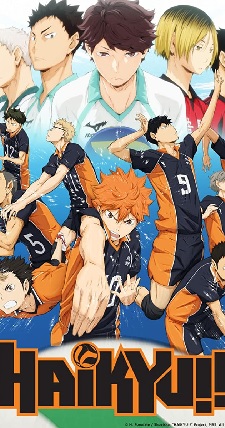
Anime Review: Haikyuu!! Season 1 (2014)

TL;DR – the best volleyball anime ever (drops microphone…)

Review

For a sports anime to be elevated into greatness, it has to tick a lot of boxes for me.

Firstly the accuracy, as much as the animation, needs to be spot on. Sports animes such as Kuroko no Basket (basketball) and Yowamushi Pedal (cycling) have elements that are unrealistic or border on the fantastical. The animation looks great but when the characters have almost superhuman powers (as in Kuroko no Basket) or defy physics/gravity (as Midousuji Akira does in Yowamushi Pedal by cycling around a corner leaning an inch from the ground) then it’s no longer a sports anime.

Secondly, the story needs to engage and have a narrative that is more than just the sport itself, otherwise you might as well watch a live sports match rather than an animated one.

Thirdly, and generally all sports anime do this well, the characters need to be explored and have depth. There is a balancing act to this as sports anime often goes into long-winded backstory flashbacks that can sometimes take up more than one episode before returning to the present competition at hand.

Lastly, how the sports anime progresses when they’re not competing in a game is as critical as the sports action itself. Filling the gaps between tournament games/matches allows for greater story and character development, but this is also a balancing act and can detract or enhance the series accordingly.

For Haikyuu!! Season 1, it ticks all the above boxes. The story primarily focuses on two characters – Shoyo Hinata and Tobio Kageyama – who face each other in a volleyball tournament in junior high school.

Hinata is short, got red hair that reflects his competitive spirit, and can jump great heights and loves spiking the ball. He puts together a team in his junior high school that can’t really play volleyball but his enthusiasm is infectious and he builds a positive environment for his teammates to play together even if they can’t play well.

Kageyama is tall, got black hair and has a win-at-all-costs attitude that is a detriment to this team. He is a gifted setter (the player in volleyball that sets the ball before it gets spiked) and can control who he sets to with incredible precision. Unfortunately, he demands his teammates to be quicker and stronger to meet his standards. Unlike Hinata’s team, Kageyama’s team is actually good at volleyball and their junior high school has a strong volleyball program, but his teammates soon despise Kageyama for his dictator-like attitude to playing and essentially sapping out any joy in the game.

In the first episode, Kageyama’s team crushes Hinata and his teammates but Kageyama sees the fire in Hinata and can’t understand why he isn’t playing on a better team. They are rivals but there is a begrudging respect for the competitive spirit in each other. Fast forward to the next year, and it turns out that Hinata and Kageyama have joined the same high school – Karasuno – much to their disbelief. What follows is a heated and humorous unfolding of their rivalry while also seeking to build chemistry with the rest of their Karasuno teammates.

If after 17 minutes and 30 seconds of the first episode, you aren’t grabbed by this anime then don’t bother watching the rest of the series. It was an adrenaline rush of the highest level. A build up leading to a moment of animation that I knew meant I was watching a sports anime that had the promise of greatness. The rest of season 1 delivers on this promise as we follow Karasuno and the trials they face on and off the court leading to a brilliant practice match against Aoba Johsai high school.

If you want to watch a sports anime, that isn’t just good but great, then this is the one.

10 out of 10.

Anime Review: Ano Hi Mita Hana no Namae wo Bokutachi wa Mada Shiranai (2011)

TL;DR – a group of six childhood friends drift apart after one of them tragically dies. Years later, as teenagers none of them have truly moved on and when the ghost of the one who died appears, they reluctantly come together to figure out what needs to be done in order for her to move on to heaven. Sometimes the most beautiful flowers bloom from tragedy.

Review

Aside from being the longest title I’ve ever seen for a TV series, this slice-of-life anime examines life, loss and friendships in a way that isn’t sentimental for sentimentality’s sake. The title translates to “We Still Don’t Know the Name of the Flower We Saw That Day.” For the purposes of this review, I will refer to it as Anohana.

The first thing to highlight is the music. Both the opening and ending theme songs are perfect. “Aoi Shiori” by Galileo Galilei and the cover version of “Secret Base (Kimi ga Kureta Mono)” by Ai Kayano, Haruka Tomatsu and Saori Hayami match the feel and atmosphere of this spectacular anime. If you take the time to find these songs on YouTube with English translations, you will also discover the lyrics fit the themes of Anohana.

The second thing to highlight is the animation itself. The backgrounds and settings are gorgeous to look at, and the character design is clean and distinct. I especially like how they switch between the characters as children in sixth grade and how they are older in high school. The subtle differences is a lovely contrast and you can notice this if you watch the opening credits as they switch between the cast in sixth grade to high school. Don’t miss noting the flower in the opening credits that replaces one of the main characters.

But neither the music nor the animation would be as effective if it was not for the story. The plot surrounds six childhood friends who grow apart after a tragic accident involving the death of one of their group, Meiko Honma (nicknamed ‘Menma’). As they age and lose touch with each other, the impact of the tragedy lingers on in their hearts in different ways; how they deal with it as they age and how it forms a part of who they are and what they become as they get older.

First there’s Jinta, who was the leader of the sixth grade group. Gregarious, excitable, and always seeking adventure. We are introduced to him now in a hermit-like existence, skipping school, eating ramen, and playing video games at home away from the outside world.

Naruko has bright red hair, is awkward, wears large square rimmed glasses, and always looks up to Jinta when they were in sixth grade. I found her adorable and of all the character designs, she’s my favourite of the six. As a teenager, she’s blossomed and is quite the stunner in high school but beneath the exterior, the anxiety and awkwardness remain.

Tetsudo (affectionately known as “Poppo”) is a shaved head little kid who enjoyed hanging out with Jinta and the others. He undergoes the largest transformation as he fills out to be a tall teenager, thick brown hair, who loves his food, and aims to travel to as many places around the world as he can. Of all the characters, his is the one who seizes his life and seeks to make the most of it.

Atsumu is a boy who had a crush on Menma when they were kids. In the current day, her death does not appear to have had any lasting effects. He seeks to leave the past in the past. He’s now grown into a handsome teenager, smart and athletic, and the eye of many of the girls in the elite high school he attends. This is all a façade, however, and as the series progresses it is revealed that he has never managed to move on from Menma’s death.

Chiriko is a long black haired girl who is shy and quiet. Her personality appears to remain the same from childhood to teenager. She attends the same elite high school as Atsumu and they often go to and from school together. It’s clear that Chiriko has feelings for Atsumu but has never expressed them because she has always known Atsumu was in love with Menma. While the quietest, she is the most astute of the group. She understands the position she is in, and acknowledges her own hope (foolish or otherwise) in waiting for Atsumu.

And last but not least is Menma, silver haired, doe-eyed, free-spirited. She hides her hurt behind smiles and is always considerate of others.

When Menma appears to teenage Jinta as an older version of herself, he think he’s just hallucinating. But as time progresses, he comes to believe that she has come to him in ghost form. Events unfold as the paths of the group reunite to fulfil Menma’s wish. Part of the mystery is figuring out what her wish is for even her ghost form doesn’t know what it may be. Jinta is convinced that if he can achieve her wish then she can move on to heaven. Little does he know that he and the others have never let Menma go themselves and only through coming together are they able to properly process their grief, guilt and previous actions.

A beautifully woven tale of childhood innocence lost, how scars when not treated with kindness can turn into hate, and ultimately how forgiveness and understanding can achieve freedom and hope. One of the best animes I’ve seen.

9.5 out of 10.

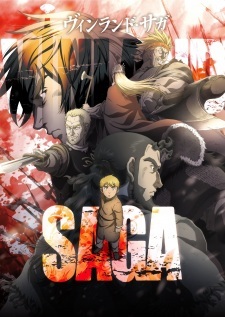
Anime Review: Vinland Saga Season 1 (2019)

TL;DR – During the era of Vikings, only the strong survive and if you’re after revenge then willpower alone will not get you far.

Review (warning: spoilers)

Thors Snorresson, a Jomsviking and considered one of the mightiest warriors ever, seeks an end to all the fighting and fakes his death during an epic sea battle. He flees to Iceland with his wife, Helga, and there they raise their son (Thorfinn) and daughter (Ylva) while living off the land as farmers. When you are known as “The Troll of Jom” and have spilled the blood of countless enemies, you know that becoming a pacifist and deserting your comrades goes against the Viking code. A code that is pretty simple: fight and kill until you are killed so that you can enter Valhalla.

In a sense, Thors is an aberration to all men who call themselves Vikings; who would want to be a farmer living in peace when you can go on voyages to foreign lands and kill, rape and pillage? Blood, valour and riches is all that matters. You can get peace when you’re dead.

Fifteen years later, the story unfolds during a time where war is being waged between Denmark and England. Floki, a former comrade, who discovers Thors is alive, goes to enlist him and the young men of the village by essentially threatening to wipe out the village otherwise. Thors agrees in order to protect his loved ones and the village folk. Little does he know that Floki still holds a grudge from the previous desertion and is secretly seeking Thors demise. Floki does this by striking a deal with Askeladd, a commander of a band of powerful Vikings, to ambush Thors ship at the Faroe islands.

Thors departs with the young men of the village, men that have never seen the true horrors of battle. They talk excitedly about achieving greatness, but Thors has secretly organised for the men to sail back to the village and he would go on ahead himself. This intention is reinforced when it is discovered that Thorfinn has stowed away on the ship against his father’s wishes and only reveals himself when they are at sea.

However, before Thors can navigate a return, the trap set by Askeladd is sprung. What proceeds is an exciting sequence of events where Thors methodically fights his way through Askeladd’s men without killing them. He then challenges Askeladd to a duel.

It should be noted here that Askeladd is no schmuck. His skill at sword fighting is unparalleled and he has a unique intelligence that makes him deadlier than any hulking Viking. The sword fight with Thors is one of the most breathtaking scenes in the entire anime. Thors defeats Askeladd but his son, Thorfinn, is captured by Bjorn (Askeladd’s right-hand man). Thors agrees to surrender so long as Askeladd promises to let Thorfinn and his men go. Askleadd agrees and Thors is slain by a volley of arrows.

This moment forever shatters Thorfinn’s innocence and turns his heart into a pit of despair that seeks revenge. What follows is Thorfinn following Askeladd and his men like an angry dog. Thorfinn challenges Askeladd to a duel but is easily defeated. However, Askeladd seeing Thorfinn’s potential agrees to duel him again if Thorfinn can prove himself in battle.

Much happens as Thorfinn becomes a vicious fighter that Askeladd uses in his schemes. Future duels occur between the pair but Thorfinn always loses (and Askeladd doesn’t take his life).

Vinland Saga is uncompromising, unforgiving and, at times, unbearable. The weak do not survive and the darkness that grows around Thorfinn is all-consuming. The emotional vacuum I found myself in ensured I watched all 24 episodes of the first season.

But the big question is did I enjoy it? Overall, it’s gripping and the animation is effective if not brilliant, but I wouldn’t say it’s one of my favourite animes. There were a few things that bothered me (not enough to make me stop watching it, but enough to down my enjoyment).

The first is Askeladd. He has a strange sense of honor. He agrees to the duel with Thors. If Thors wins then they go free, if Askeladd wins then he can do whatever he wants with them. Thors wins but Askeladd semi-reneges on the deal when Bjorn captures Thorfinn causing Thors to surrender and sacrifice his life. This, in itself, isn’t strange if Askeladd was a man without scruples but even though he orders his men to kill Thors, he still ends up letting the villagers live and return home (he could have killed them or captured them as slaves). And then the ongoing allowance to let Thorfinn duel him and live each time is what drives through the first season, and it’s clear that Askeladd allows this not just so he can use Thorfinn for his own ends but also because there is an underlying acknowledgement of guilt for having killed Thorfinn’s father. I get he’s not meant to be purely a villain (near the end of the series, he’s far from that), but as an elite warrior acknowledging another elite warrior in Thors, I found it puzzling that he went through with the cowardly execution.

The second is the story arc starts off with a focus on Thorfinn and his mission for revenge, but then it becomes clear that the main character isn’t him but Askeladd. His motives and personal history come to the forefront as the war between Denmark and England intensify. Thorfinn becomes a side character until the end of the season when Askeladd kills King Sweyn in an act of sacrifice (he kills the king but in turn gets killed by the king’s guards) to protect his homeland (Wales) from invasion. This sends Thorfinn into madness as he never gets to achieve his revenge. It is my understanding that the second season of Vinland Saga, like the manga, will now circle back to Thorfinn as the main character. But having the first season (and thus first story arc) focus on Askeladd, you can’t help feel that creator Makoto Yukimura did this because he found Askeladd a more interesting character while Thorfinn is just a one-dimensional moody ball of rage.

Lastly, it grated me that Askeladd never tells Thorfinn about Floki’s duplicity. If anyone should be the target of Thorfinn’s revenge, it’s Floki. But for the first season, there is never a glimpse that this will ever be revealed and Floki appears to have got away with his betrayal. I haven’t read the manga and with season two green-lit by Twin Engine, I’m hoping Floki will receive his comeuppance in some fashion.

6.5 out of 10.

Anime Review: Porco Rosso (1992)

TL;DR – flying pigs never looked so attractive

Review

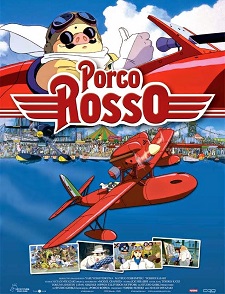
All lovers of Japanese anime must see this movie. A tale for all ages, I found this to be a wonderful surprise on a late Saturday night filled with adventure, beautiful animation, moving music, simple but intricately woven story-line and colourful characters that will delight both adults and children. Director Hayao Miyazaki is a magician and conjures a film that rivals his other great works such as Tonari no Totoro, Spirited Away and Kiki’s Delivery Service.

The story follows the adventures of Marco, an ex-WWI flying ace turned freelance bounty hunter who flies a gorgeous, bright red, single engine, fighter seaplane. Oh and he’s a pig, or rather an anthropomorphic pig, due to some strange, mysterious curse.

He encounters all sorts of delightful characters all helping or hindering him in his search for the meaning as to why he was a man who became a pig. Along the way the many forms of love and friendship (including between foes/rivals) are explored and by the closing credits I found myself wanting to see more but understanding that the conclusion was as it should be. In fact, I daresay the ending is near perfect.

Story-telling is an art form, and Miyazaki has it in spades. He also has an attention to detail that many viewers take for granted when watching an animated film. For example, the vapor trails from the airplane fight scenes, the architecture of the European cities Marco visits, the mood lighting when Gina sings her forlorn song in the bar at the Hotel Adriano, and the black and white film that Marco watches in a theatre where he liaises with Ferrarin (an old comrade). All these details lend to the feel and atmosphere that can be compared to real life films like Casablanca and Roman Holiday.

A movie to see with a great big bucket of popcorn or loads of ice-cream while buried under a doona or thick blanket. Wonderful to contemplate by yourself or watch with family or friends. I recommend this for people of all ages.

10 out of 10.

Anime Review: Beastars Season 2 (2021)

TL;DR – Beastars season 2 delves into unveiling who murdered Tem the alpaca, and how Legoshi the wolf seeks to achieve justice while navigating his own identity as a carnivore and his feelings for Haru the rabbit. Life is complicated no matter where you are on the food chain.

Review (warning: spoilers)

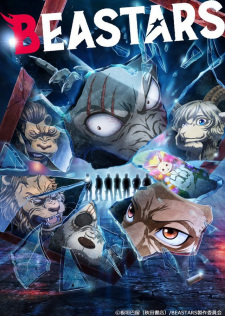
The first season of Beastars began with the bloody murder of a student (Tem) at Cherryton Academy. This was largely then put aside for twelve episodes and focused more on the relationships between Legoshi (the wolf), Haru (the rabbit) and Louis (the red deer). It was very much an examination on what it would be like to live anthropomorphic lives as a herbivore or carnivore, and the constant battle of one’s own animalistic instincts as either predator or prey.

It’s tough enough going through those teenage years and puberty without also dealing with the urge to devour or be devoured by your classmates…

Season 2 focuses on revealing the murderer and Legoshi’s desire for justice, and I feel picks up the pace much better than the initial season. As with real life, the decisions the main characters make demonstrate that nothing is ever truly black or white.

Unlike season 1 where the relationship between Legoshi and Haru was explored in depth, this season sees the lens turn to Legoshi and Louis.

The events that unfold once the murderer is known leads to a collision course that I expected would end in blood and violence. I felt the impact of each episode wanting to know what fate lay in store for each character, and the anime ramps up the tension demanding I watch the next episode immediately. In this way, I found season 2 far more gripping.

However, while there was blood and violence, this did not lead to death. In this way, Beastars delves far deeper into what it means to be a carnivore or herbivore (or indeed how it reflects on being human) by showing how strength can come from sacrifice, and understanding can be achieved from forgiveness.

For many anime watchers who enjoy shows like Dragon Ball, My Hero Academia, and Naruto, they will likely find themselves puzzled by the events that unfold in the final episodes. There is a stop-start with the action scenes which some will find strange, but Beastars is not about powering up for the sake of defeating evil (even though Legoshi does indeed go through a power up phase). As I wrote above, nothing is ever truly black or white, nor is it clearly good or evil.

In the end the murderer does go to jail, but he is left with a sense of understanding of what he has done and hope that he can change his ways. Likewise Legoshi and Louis both come to their own understanding and acceptance of what it means to be carnivore and herbivore respectively.

Again, the adult characters are all on the periphery. The only adult characters of note are Gohin (a giant panda) that trains Legoshi and Ibuki (a lion) that acts as a sort of father figure to Louis. It still bothered me that the adults are otherwise nowhere to be seen and the students are left to figure out their own way.

Nevertheless, season 2 builds on the first season in admirable fashion. The animation is consistently stunning and the plot, while odd and at times perplexing, gets you thinking about the bigger questions of life, love and friendships.

7.5 out of 10.