Anime Review: Yuru Camp Season 2 (2021)

TL;DR – The camping adventures continue for Rin, Nadeshiko, Aoi and Chiaki in season 2. Rin goes on a solo-camp to the sea but her attempts to return home are stifled when the weather turns bad. What was meant to be a two-day camp turns into a longer stay involving sight-seeing, more camping, visiting friends and family and discovering all the wonders of Japan.

Review (warning: spoilers)

Mid-way through season 2, Yuru Camp focuses on Rin’s friends Aoi, Chiaki and Ena. They have ventured to Cape Ohmama in winter and set up camp by Lake Yamanaka. Chiaki puts together two compact chairs and turns it into a hammock, which all three of them take turns in trying out. Each expresses how divine it feels and how they don’t want to move. The animated bliss on their faces says it all and you can’t help but feel how the simple pleasures can be the best. It is the little things that sums up this slice-of-life anime series, and it does it in fine form.

Enjoying the outdoors, drinking tea, the accomplishment of cooking one’s own dinner on a portable gas light stove, embracing the fresh air, and living in the moment are what makes this anime beautiful. The characters are cute, which I don’t think is particularly necessary, but their interactions lend to funny moments that add to the overall contented feel of this series.

All is not smooth sailing, however, as setbacks and unexpected problems arise that allow the viewer to learn quite a lot about what it takes to be a camper and what you should be mindful of. For example, the Cape Ohmama episode sees our trio of girls discovering it is much colder where they are than where they have gone on previous camps. Turns out the Lake Yamanaka campsite is 1000 metres above sea level. Their mobile phones have drained of power due to the cold, and by late afternoon it is already minus-two degrees Celsius. The girls thus have to figure out how to adapt, and it is an insightful and interesting look into the challenges of winter camping.

Campfires, hot pots, sleeping together in tents, using cardboard beneath their sleeping mats, and using hand warmer patches in their sleeping bags are all ideas the girls come up with. Some of these don’t come to fruition, however, and it is only with some luck that they don’t end up packing up all their things and heading home in the dark. Luck in this episode comes in the form of a couple of fellow campers who have properly prepared and invite the girls in to keep warm and eat with them. I don’t know how anime does it, but whenever they depict food, it always looks delicious.

The adventures still focus primarily on Rin and she is the quiet star of the show with the more gregarious Nadeshiko also getting decent air time. Rin has the most knowledge of camping and the places she goes to will make you want to explore Japan’s camping sites and have you jumping online to purchase innovative camping products and equipment. Either that or you will, at least, want to visit the hot springs Japan is famous for and lounge in these places without a care in the world.

Yuru Camp does a good job of being a tourist poster for the country even if it is unintentional. It is a lovely look into how we should all slow down and not get sucked up into the rush of busy lives. The age old adage of ‘stop and smell the roses’ never more evident than in Yuru Camp, or perhaps it is more ‘stop and cook yourself a winter curry while staring up at magnificent Mount Fuji.’ Doesn’t quite roll off the tongue as easily but definitely achieves the same end goal.

9 out of 10
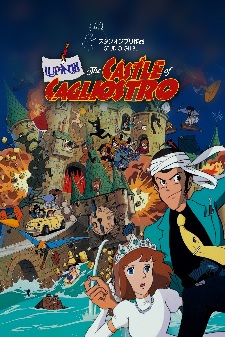
Anime Review: The Castle of Cagliostro (1979)

TL;DR – Lupin, renown thief and lady’s man, pulls a heist at a casino but discovers the money he has stolen is counterfeit. He wants to find out who is behind the counterfeit currency and how they are made (so he can steal it), which leads him to Cagliostro. But there he finds more than he planned – a princess wanting to escape an arranged marriage, a legend of a hidden treasure within the Castle of Cagliostro, and a Count wanting to establish a throne of power.

Review (warning: spoilers)

Hayao Miyazaki’s directional debut tells the story of Lupin III, a gentlemen thief, that performs heists more for the thrill of it then to get rich. He is joined by his right-hand man, Jigen, an expert marksman and Ishikawa, a renegade samurai. This eclectic trio are constantly being chased by Inspector Zenigata, who I expect enjoys the chase more than actually trying to arrest Lupin for his crimes.

Miyazaki’s sense of vision, animation and story-telling are laid out in full in the The Castle of Cagliostro and would establish him as a pioneer and leader in anime (and indeed the world over) for decades to come. The vast array of comedy, action, story, diverse characters and distinct animation elements in Miyazaki’s films have influenced many others including Makoto Shinkai (Director of ‘Weathering with you’ and ‘Your Name’) and John Lasseter (Disney/Pixar).

The opening scene where Lupin and Jigen rob a casino and are driving away in an Italian Fiat 500 overflowing with cash is immediately engaging and comical (reminiscent of something out of Looney Tunes but with much finer animation). When Lupin eyes the multitude of bills that are practically obscuring his windscreen while he is driving, he realises that they are counterfeit. Instead of being angry, he is excited and sees this as his next job to find out how the counterfeits are made and steal the technology. Lupin and Jigen then proceed to open the doors and roof window of the Fiat and releasing a stream of counterfeit cash on the freeway. From an animation point-of-view it is spectacular, and from a story perspective, you are immediately cheering on Lupin and Jigen even though they are crooks.

This leads them to the principality of Cagliostro, population 3,500; a small state that Lupin coins the ‘black hole of counterfeit bills’ because people who enter the principality to snoop around are never seen again. There they encounter the princess of Cagliostro, trying to escape from some henchmen who work for Count Cagliostro. Lupin finds out that the Count has arranged a marriage with the princess to cement his power. It also means that the count will be in possession of two ancestral rings – his own and the princess’s ring – which will supposedly unlock an ancient treasure within the castle of Cagliostro.

Lupin’s ‘job’ now expands to rescuing the princess because if there is anything more attractive than pulling a heist, it is rescuing a damsel in distress being held against her will by an evil Count.

Miyazaki’s stamp of approval comes through the story. For his first anime feature film, he does not treat his audience like a bunch of otaku, and delves into what really drives stories and connects them to the viewer through the wonderful dialogue between Lupin and his crew, Lupin and the Count, Lupin and the princess, and Lupin and Inspector Zenigata. These characters play out against a magnificent European backdrop that is Cagliostro along with a plot that has enough mystery and comedy that will leave your entertainment tank full by the time the credits roll. And if that is not enough, Miyazaki also throws in a beautiful soundtrack and sound effects that capture the atmosphere of this film in its entirety.

Still not enough? Then there is also Fujiko Mine, who happens to make a showing and is Lupin’s on-again off-again love interest who also happens to be… you guessed it… a thief.

Wonderfully intricate, visually engaging, and entirely fulfilling as an action adventure mystery. You have a magnificent mind, Hayao Miyazaki. Absolutely magnificent.

10 out of 10

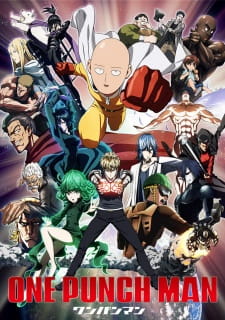
Anime Review: One Punch Man Season 1 (2015)

TL;DR – Saitama wants to be a hero and achieves his goal becoming practically omnipotent and capable of defeating any enemy he faces with one punch. This results in an unexpected consequence where his life is incredibly boring…

Review (warning: spoilers)

One Punch Man is an absurdly funny take on the hero genre. Saitama is a hero but you would be forgiven if first impressions told you otherwise. He wears a yellow superhero outfit with a white cape that makes him look like he has sewn it himself. He has lost all his hair during his training and now looks like a shiny cue ball. His physique is one that looks more sickly child than Hercules. He is so non-descript in every way that neither friend nor foe would give him a second glance.

The absurdity of how he became a hero is made all the more hilarious when he reveals his training involved doing one hundred push-ups, one hundred sit-ups, running ten kilometres, and one hundred squats every single day for three years. Now that will make you an incredibly fit person but a hero that is nigh indestructible and can defeat the most powerful villains in the universe with one punch, it will not.

Yet, that is Saitama’s transformation; an ordinary fellow with extraordinary strength, speed and power. The initial thrill of defeating the bad guys quickly turns to outright boredom as Saitama experiences an existential crisis involving the inability to feel any excitement when he battles.

The world of One Punch Man is familiar in that the city Saitama lives in looks like every other crowded metropolis in Japan. However, Saitama’s world is filled with super powered monsters and villains ranging from a giant lobster man to evil geniuses to aliens.

Thus the Hero Association was born to defeat all this evil. The association is made up of heroes that are ranked and do not get along happily together. Saitama joins the association in order to achieve some level of recognition as well as the hopes of meeting a monster or villain that will be able to challenge him properly. He also takes on an apprentice named Genos who tries to figure out how Saitama became so powerful.

The interactions between the deadpan Saitama and other heroes and villains is what makes this anime refreshingly engaging and totally enjoyable. The animation itself rivals other action packed animes such as Dragonball, My Hero Academia, Naruto etc.

Season one culminates in Saitama facing off against Boros, leader of a group of alien invaders known as the Dark Matter Thieves. Boros is so powerful that he, too, experiences an existential crisis where he believes no one can defeat him or give him any sense of excitement during battle. He journeys to Earth in hopes of finding a hero that can battle him toe-to-toe. The climatic final episode is a ripper and though you know Saitama will be victorious, you still want to watch to see how it will unfold.

It is an achievement that a storyline involving a character that is seriously too powerful can still have you cheering him on. This is because the story is rich in characters (both hero and villain) and Saitama’s actions are both jaw dropping and comical.

9 out of 10

Anime Review: Voices of a Distant Star (2002)

TL;DR – Mikako is recruited into the UN Space Army to battle an alien race that is waging war against Earth and the rest of the solar system. She boards the spacecraft, Lysithea, to chase down the aliens, and she leaves behind her closest friend Noboru. The pair communicate via email, but as the Lysithea travels deeper into space, the emails take longer to reach each other.

Review (warning: spoilers)

Long before there was Your Name, Weathering With You, and The Garden of Words there was Voices of a Distant Star. Director, Producer, Writer and Animator Makato Shinkai created this sci-fi original video animation (OVA) that is a heart-rending tale of a long-distance relationship taken to the extreme. The production of this OVA is made more impressive by the fact that Shinkai created it basically by himself using off-the-shelf software packages on his personal computer (he even voiced the male character with his girlfriend doing the voice of the female character in the original version. Professional voice actors were used in the DVD release). It is a testimony to his vision, patience and skill that he has created a film that rivals larger studio production efforts.

The story follows Mikako Nagamine and Noboru Terao, close high school friends who grow up during a time when aliens known as Tarsians are at war with humans. Mikako becomes a pilot of the Tracer robotic mecha and joins the UN Space Army corps aboard the Lysithea spaceship. Noboru remains on Earth, though he wishes to join the UN Space Army and reunite with Mikako.

They communicate using mobile phones sending emails that take longer to send and receive as the Lysithea journeys further into the dark reaches of space. The film opens with Mikako in her Tracer orbiting a planet in the Sirius Solar System. She sends a message to Noboru knowing it will take almost nine years to reach him.

The mecha animation and the vastness of space is captured in stunning detail by Shinkai. I have read it took him seven months to create Voices of a Distant Star, which is remarkable given the quality of the end product (I envisage he sacrificed all manner of sleep to accomplish this and drank lots of coffee).

What he has also managed to do is not simply deliver eye candy, but explore the emotional depth and connection of human relationships. It is this depth that sets this film apart from other mecha animes.

The growing despair between Mikako and Noboru, the heartache of whether they will ever see each other again, and the reaction every time Noboru’s mobile buzzes to indicate receipt of an email culminates magnificently in a final scene where we see Mikako face off against one of the Tarsians.

Though it is not entirely clear, the Tarsian she faces appears to have the ability to be a doppelganger and transforms into a mirror image of Mikako. This triggers memories for Mikako and has her pleading with the doppelganger to allow her to see Noboru again and confess her love for him.

The doppelganger appears to show her a life that she could have lived. For those with an astute eye, you will see the doppelganger version of Mikako wears a wedding ring.

When the alarms on Mikako’s Tracer go off, the spell is broken and Mikako battles the Tarsian one-on-one before rushing back to the Lysithea and the rest of the human spaceship armada, who are being attacked by a large Tarsian force. The final battle scene is accompanied by beautiful piano music and an ongoing imaginary dialogue between Mikako and Noboru.

“Noboru, we are so far apart,” says Mikako. “But maybe thoughts can overcome time and distance.”

“You mean, do I think something like that can happen?” asks Noboru.

“One thought,” says Mikako. “Yes.”

“One thought, what would it be?” asks Noboru.

“It would be…”

“I am here,” says Mikako and Noboru together.

Brilliant stuff. Now if you’ll excuse me, I have a bit of dust in my eye…

8 out of 10

Anime Review: Usagi Drop (2011)

TL;DR – When Daikichi discovers that his deceased grandfather has left behind an illegitimate daughter, he is thrown out of his bachelor life comfort zone and learns about a greater purpose in life (i.e. taking care of a child) and the challenges and rewards that comes with that responsibility.

Review (warning: spoilers)

Imagine you have a stable job, currently single, and you hit thirty without quite knowing where all the time went. Your life is not entirely fulfilling but you are also not unhappy with where you are and what you are doing. There is a simplicity to your life that is not bad, even though every now and then there is that little niggle that you want to do something more.

Now, imagine you receive the news that your grandfather passes away. You attend the funeral and return to the family home to pay your respects only to discover a six-year old girl who is being shunned by the rest of the family. You initially have no idea who this girl is or why she is being looked like some sort of blight, but you soon discover that she is the illegitimate child of your grandfather. The family debates who will look after the child (seen as a constant reminder of the shame your grandfather has brought onto the family), yet you realise it is not the girl’s fault that she was born. Why should she be ostracised when her very existence was beyond her control? Do you take the step and be this girl’s guardian and parent?

This is what confronts Daikichi Kawachi in this delightful, funny, emotionally touching anime series Usagi Drop. When Daikichi takes that step (much to the surprise of his other family members), he knows he does not have the faintest clue of what it means to be a parent.

The little girl, Rin, embraces the kindness shown by Daikichi and starts living with him. The series showing the day-to-day interactions between the pair with both hilarious and poignant results. What makes this work is how Daikichi evolves from an individual who only thinks of himself to an individual who has a loving, nurturing parent-child relationship with Rin. The way the anime conveys Daikichi seeing through the eyes of a child and thus learning from Rin (as much as Rin learns from Daikichi) is marvelous.

Whether it is the simple act of holding hands, buying Rin clothes, and making onigiri rice balls, or dealing with the more challenging situations such as Daikichi juggling work with life, Rin entering elementary school, and wetting the bed due to her fear of death, these are all examined in thoughtful ways that will connect the viewer to this story.

If you have a heart of stone then this anime will not be for you. For everyone else, it is pure magic.

10 out of 10

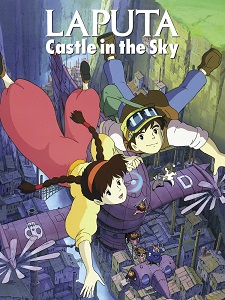
Anime Review: Laputa: Castle in the Sky (1986)

TL;DR – Sheeta owns a mystical amulet that contains the power to levitate. She is targeted by both government agents and air pirates seeking the power of the stone. With the help of a boy named Pazu, the pair go on an adventure to find the flying castle, Laputa, and the origins of Sheeta’s amulet.

Review (warning: spoilers)

Before there were big furry creatures and cat buses (Tonari no Totoro), before young witches tried to make their mark (Kiki’s Delivery Service) and pigs flew seaplanes (Porco Rosso), before forest gods and girls that rode on giant wolves (Princess Mononoke), there was Laputa: Castle in the Sky. Hayao Miyazaki’s masterpiece brought steampunk fantasy to the masses and spawned numerous steampunk anime and manga to follow including the likes of Fullmetal Alchemist and Miyazaki’s later work, Howl’s Moving Castle.

I have said in my previous anime reviews of Miyazaki’s work that the man is a storyteller of the highest calibre and has an attention to detail that creates worlds that are full of depth. In anime (and indeed animation) circles, Miyazaki’s ability to capture the little things on the screen while depicting multi-layered characters and fascinating story plots is second to none.

Laputa: Castle in the Sky follows young orphan Sheeta aboard an airship who has been captured by government agent Muska. The airship is attacked by pirates led by Dola, and Sheeta attempts to escape only to lose her footing scaling the outside of the ship and plunges to her death. Or so we think…

Instead, a glowing blue light bursts forth from an amulet around Sheeta’s neck slowing her descent. We are then introduced to Pazu, a boy who works in a mining town, who sees an unconscious Sheeta floating down from the skies. The animated physics of the characters grabbed me immediately and the scene where a confused Pazu opens his arms to “catch” Sheeta and as soon as she is in his arms the power of the amulet turns off is both funny and charming. Pazu’s legs buckle as Sheeta’s full weight has been released by the stone and he strains to lift and carry her to safety.

He takes her to his home to recover. His home, an odd construct of wood and stone with several floors connected by ladders, reminded me of a cross between a castle tower and a hobbit house. The scene where he wakes the next morning to release doves into the valley and play his trumpet to greet the new day is divine.

But their peace is short lived as Sheeta reveals to Pazu those seeking to hunt her down, a race between government agents and pirates to get a hold of Sheeta first. When action is triggered, it is thrilling and filled with complexities that boggles the mind when you think this was done all through traditional cell animation techniques back in the 1980s (way before CGI became common place). One such sequence is when Pazu and Sheeta are escaping on a train and being chased by the pirates and army. The explosions and collapsing of bridges where the train tracks run is nothing short of brilliant. Like something out of Looney Tunes Road Runner cartoon but with way more detail and care.

Through the twists and turns, Sheeta is eventually captured again by Muska while Pazu joins forces with Dola and her pirates. They manage to rescue Sheeta but at the cost of the amulet which falls into Muska’s hands. The climatic final act involving the discovery of Laputa (a giant floating castle that has at its centre a giant levitation crystal) and a series of sentinel robots that can be activated to defend the castle or wage war. This is Muska’s end game. He wants to take control of Laputa and its robot army and take over the world. It is only through Sheeta and Pazu’s actions that they prevent this from happening, and watching the disintegrating Laputa is horrifying, mesmerising and truly epic.

An adventure film that is essential viewing. One to be watched and re-watched.

10 out of 10

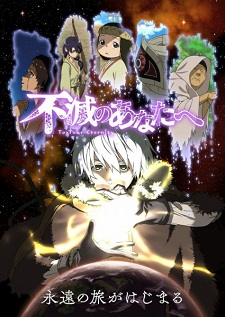
Anime Review: Fumetsu no Anata e (2021)

TL;DR – a powerful being creates an orb. The orb is featureless and emotionless. As it interacts with other creatures, it takes on the form of that creature and slowly learns what it means to be alive.

Review (warning: spoilers)

The series opens with a narrator known as the Beholder, who creates an orb that can capture the reflections of many things and can transform as a result. The Beholder releases the orb onto the Earth to observe it. The orb initially turns into a rock, then a wolf (achieving consciousness), then a boy, then a bear, then a girl… you get the idea. It receives the name Fushi (meaning ‘undying’) and slowly acquires speech and feelings. This includes pain, so while he is immortal, if he gets stabbed by a knife he will feel it.

Why Fushi is released to experience the world does not become apparent until later in the series when the Beholder reveals himself and tells Fushi that its purpose is to preserve the world and that there are creatures that are looking to destroy it.

Fumetsu no Anata e is an existential journey that sees Fushi learn about the things that living creatures experience and being taught that growth comes from suffering. His ability to transform only occurs when the subject Fushi develops a connection with dies. As such, you better grab the tissue box because practically all the story arcs involve suffering and death among the spattering moments of love and joy.

Each story follows an individual that Fushi develops a connection with. Each individual is young and have their lives cut short in tragedy. By the time you reach the final story arc, the formula is set and nothing that happens will be a surprise. Thus, in my opinion, Fumetsu no Anata e gets weaker as the series moves on. I struggled to complete the final story arc because the gravitas of the earlier episodes becomes diluted. By the time, I see Fushi befriending a group of kids on a prison island, I had lost empathy.

Even the primary enemy to Fushi is abstract. The creatures that are seeking to destroy the world rather than preserve it is a plant like creature, called Nokkers, that can steal Fushi’s forms and memories. It can also invade both living and dead human beings and turn them into violent zombies. In its natural form, it looks like an orbital brain and if killed in that form, it perishes. Why the Nokkers exist or how they came to exist is not revealed in this first season, which added to the feeling of dissatisfaction rather than anticipation.

Fushi’s other enemy is a female character named Hayase. She has no qualms in killing others if it means she can get her hands on Fushi. Her goal is much clearer, she wants Fushi all to herself. I assumed she wishes to acquire his immortality, but I find out later that she supposedly loves him. She is one sandwich short of a picnic because on one hand she confronts a Nokker and tells it that it can not bend Fushi to its will through brute force, yet she uses brute force and slays the people Fushi cares about to get closer to him. This is not love, this is a psychopath, and thankfully Fushi knows better and stays away from her.

Season one ends without resolution with season two slated for release in October 2022. At this stage, I do not know if I will go to the effort of investing into the second season. For all of its emotional pull, I did not enjoy this anime as much as I had hoped. The lack of direction and the formulaic cycle that Fushi experiences with each person he meets, left me feeling flat and disengaged. I also found the Beholder (narrator) initially interesting but then obtuse; he is more an observer who decides to interject in Fushi’s life when he see fit (why he acts the way he does is not revealed). Perhaps, all the answers will be given in season two but I am not holding my breath.

6.5 out of 10

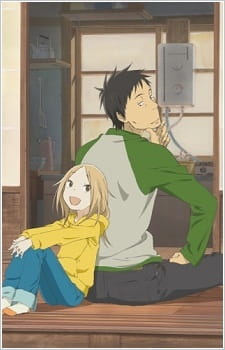
Anime Review: Non Non Biyori (2013)

TL;DR – it is not just the characters are too cute, it is also all those wonderful moments that can be experienced in childhood that are captured in this slice-of-life anime.

Review (warning: spoilers)

There is something about how anime captures the country. The picturesque mountains, rolling green fields, lush forests, running creeks and clear blue skies. Non Non Biyori is just such an anime, set in the little country town Asahigaoka and shows a landscape beauty that had me wanting to live there.

And then you get to meet a cast of characters that are unbelievably cute. The most adorable of these is Renge, a first-grade student whose every action makes you want to pick her up and cuddle her. Then you have sisters, Natsumi and Komari. Natsumi (first-year middle school) is the younger sister, gregarious, flighty, and taller than her older sister. Komari (second-year middle school) is a bit more serious and does not like being teased by her younger sister about her short stature. The fourth and final main character is Hotaru, a fifth grade student, who has transferred from Tokyo.

Because Asahigaoka has so few people and kids, the school has only one class whereby all four of our main cast attend with a third-year middle school boy named Suguru (the older brother of Natsumi and Komari).

Each episode of Non Non Biyori captures the innocence of youth, and the simplicity of living in a small country village compared to city life. From the first episode where Renge uses a stick to draw a line in the dirt path to ensure she does not get lost, you know exactly what you are watching. An anime about childhood games and adventures, a place where technology has not infiltrated every nook and cranny, and the joy of friendships. Non Non Biyori is a place where you can breathe in the fresh air and take your time, where you can stop and smell the cherry blossoms, and take a stroll without fear of getting mugged.

The charm and humour exudes in every episode. For example, how an anime can make a kid’s game involving knocking rulers back and forth enjoyable is beyond me but somehow Non Non Biyori succeeds in doing just that. Another example is watching our foursome go about cleaning a pool during a hot summer day, the sound of cicadas in the background, and the things they do to try and make the job more enjoyable. Their antics are both funny and innocent in equal measure. And that is the key to this anime’s appeal. Only those who have a heart of stone would find Non Non Biyori unenjoyable.

8 out of 10

Anime Review: Kuroko no Basket Season 1-3 (2012-15)

TL;DR – basketball sports anime that requires you turn off the ‘sports accuracy’ part of your brain in order to enjoy it.

Review (warning: spoilers)

In the 1990s, the penultimate basketball sports manga to me was Slam Dunk written and illustrated by Takehiko Inoue. I had never seen a manga (or comic) depict the physics of a sport so accurately. The game of basketball illustrated in every panel of Slam Dunk felt and looked so realistic that even if you could not read and understand the Japanese dialogue, the pictures allowed you to follow what was happening in the game. The manga was adapted into an anime and released also in the 90s and now looks dated when compared to the anime sophistication being pumped out by studios today. I would love nothing more than Slam Dunk to be rebooted as an anime series using today’s artists and technical skills, but this may never become a reality.

Kuroko no Basket could have been the Slam Dunk for the 2010s. Arguably to fans it is. The animation is excellent and the characters are as engaging as the ones in Slam Dunk, but what Kuroko no Basket seeks to do is go up a level. This is not a bad thing, but the way Kuroko no Basket ‘levels up’ is not done through plot but instead through the game physics itself. Imagine this basketball anime series being like Goku in Dragon Ball going Super Saiyan mode.

The end result are characters that defy basketball logic. In junior high school, there is a team of miracles. Five players that have supernatural gifts when it comes to basketball. They dominate the junior high competition so thoroughly that they get bored and decide to go to different high schools in order to compete against each other. Kuroko is the sixth man of this team of miracles. There is nothing special at all about his physical basketball skills but his talents on and off the court lie elsewhere and were an essential part to keeping the starting five in junior high together.

This generation of miracle basketball players comprises of the following:

  • Ryota Kise is a blonde-haired small forward who has the ability for a specified period of time to copy exactly the moves of other players. This includes the ability to use his photographic skills to copy his other generation of miracle teammates.
  • Shintaro Midorima is a green haired shooting guard who can shoot three-pointers and never misses (if he gets the shot up untouched). This includes shooting from the opposite end of the court.
  • Daiki Aomine is a dark haired ace and arguably the greatest of all the generation of miracles players. He has the best all around game and plays with a ‘street-ball’ style that is unpredictable. He can make shots by throwing the ball at ridiculous angles and does not need to do a conventional jump shot.
  • Atsushi Murasakibara is a purple haired centre who rebounds, blocks, and dunks with such ease that he finds the game boring (he only plays because he is so good at it). He hates players who have a passion for the sport and this includes Kuroko.
  • Seijuro Akashi is a red haired point guard. He has an ability through his eyes called “Emperor Eye” that allows him to defeat whoever is guarding him. He sees victory as absolute and guaranteed through his eyes.

Kuroko joins a high school separate to his former teammates and seeks to combine forces with Taiga Kagami (an athletic basketballer returning from playing in the United States). Kuroko, Kagami and the rest of his teammates go up against high school teams starring one of the generation of miracle players. Kuroko, in his own way, seeks to show each of his former teammates the joy of basketball and the need to play with teammates (it is a team sport after all).

On one hand, as a basketball fan, I found this series contrived and ridiculous when it comes to the games themselves. Even Kuroko, as episodes progress, acquires ‘skills’ that are superhuman (or Super Saiyan) in nature.

On the other hand, as an anime fan, I can see how this series has been a success. The enjoyment comes from turning off your basketball brain otherwise you will pick it apart for failure to follow any basketball physics logic. Midorima shoots better than Steph Curry, Kise can do more than Kobe Bryant, Aomine is greater than Michael Jordan, Murasakibara makes Shaq look like a toddler and Akashi would run rings around Magic Johnson. It is all silly but still enjoyable.

When Kuroko helps Kagami get into the ‘zone’, there is a genuine thrill. The interactions between all the characters are interesting and fun. You find yourself cheering on Kuroko and his team even under the ridiculous circumstances they face. I found I had to laugh when they broke down basketball plays and explained how certain players do the seeming impossible.

But like I said before, turn off your sports brain and you will still enjoy this anime.

Now can someone please pick up Slam Dunk again and animate it like what happened when Full Metal Alchemist Brotherhood was the second adaption of Full Metal Alchemist?

7 out of 10

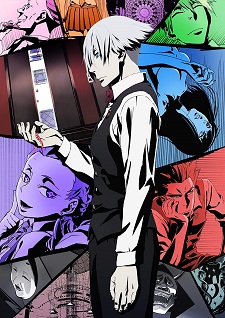
Anime Review: Death Parade (2015)

TL;DR – There is no heaven, no hell, there is only a bar where souls end up playing games to decide if they get reincarnated or sent into the void.

Review (warning: spoilers)

Bartender Decim is the emotionless judge and arbiter at the Quindecim bar, a place where two souls arrive to play games that decide whether they enter an elevator that leads to reincarnation or the void. The souls do not realise they have died, nor do they remember what type of life they lived. It is through the game they play that their memories come back.

First off the animation in this series is excellent. There’s a style and detail that is reminiscent of Cowboy Bebop and it has a funky soundtrack that contrasts with the sombre material.

Each pair of souls that end up in Quindecim are more complex than what they first appear. As in real life, they have secrets, regrets, and experiences both happy and sad. Through playing various games such as darts, bowling and air hockey, they regain their memories and react accordingly. What becomes evident is that the pair of souls always have a connection in some way, they are not chosen randomly. And always, it is this connection that is the pivotal point that triggers their actions/reactions when memories come flooding back. Decim passes judgement on these interactions and the souls get sent into an elevator that either goes to the void or leads to reincarnation.

The stories of the souls and the events leading up to their death and appearance at Quindecim are interesting and clever. Nothing is ever black and white and there are always shades of grey. If the anime focused solely on this, it would still be an enjoyable series.

But it becomes far more cerebral when a black-haired girl arrives and becomes Decim’s assistant. The world opens to reveal there is more than one bar, and there is a system of arbiters dishing out judgement on souls. When Decim’s assistant starts raising complexities around humans and their motivations/actions/emotions, it leads to Decim to question whether some of his judgments are wrong.

The ambiguity leading to Decim wanting to understand more about human suffering and what drives people to extremes of behaviour. Ultimately, the series does not tell you what is “right” or “wrong”. As the viewer, it is up to you to come to your own conclusions, and that is fine by me. It becomes a fascinating exploration into what makes us who we are. Not black and white, not even varying shades of grey, but actually a multitude of colours.

9 out of 10