Movie Review: Death on the Nile (2022)

TL;DR – Kenneth Branagh gives Agatha Christie’s crime sleuth classic a 21st century makeover.

Review (warning: spoilers)

“There is a reason the heart is the organ given to love, you know. If it stops to rest, we die. And I won’t die alone, you can be sure of that.”

This line is spoken by Jacqueline de Bellefort (Emma Mackey), one of the many characters that has a motive to be hostile towards Linnet Ridgeway-Doyle (Gal Gadot).

Hostile enough to commit murder? Many have done so in the name of love. And it is this fine line that is the central theme in Death on the Nile based on the book of the same name by the Dame of crime fiction, Agatha Christie.

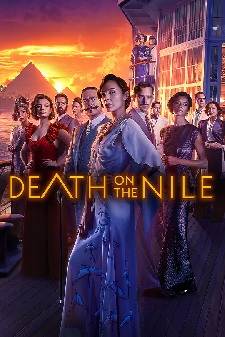
Kenneth Branagh directs and stars as the titular detective, Hercule Poirot, and from the outset, it is clear, that Branagh dives into the role of Poirot with gusto and is passionate about the body of work generated by Christie. You would have to be, given this is the third adaption of Death on the Nile to the screen (the previous two being a television series in 2004 and a 1978 movie version directed by John Guillerman).

Enough time has passed that a revival of the material was due and though Branagh stays mostly true to the source, there is enough cinematic flair and a solid cast to allow the casual viewer to be enveloped by Poirot’s world of logic and deduction.

The tweaks that Branagh does in the film when compared to the novel add an element of noir that I found refreshing though others may view as taking some of the fun out of the Poirot story.

To point, we get to see a more human side to the Poirot character. From the opening scenes, a young Hercule is with a Belgian infantry unit in the trenches in No Man’s Land during World War I, and he is able to deduce the best time for a surprise attack. The attack succeeds but an explosion causes damage to his face. We then watch as he recovers in a camp with his fiancé nurse, Katherine, and we witness the love she has for him even though he is horribly scarred. She suggests he can grow a moustache to hide his scars, and thus the famous whiskers were born.

This sets the tone for a much deeper emotional Poirot portrayal as we then move forward to 1937 and have Poirot sitting in a London club watching a jazz-blues singer perform and being quite mesmerised by her.

This leads to another tweak in the form of Salome Otterbourne (Sophie Okonedo) who in the movie is a jazz-blues singer but in the novel was a romance novelist. Her singing and the music enhances the noir feel as we watch a couple on the dance floor: Jacqueline and her fiancé Simon Doyle (Armie Hammer). Their passion for each other is evident as their dirty dancing creates such heat between the pair that it is amazing that they don’t rip each other’s clothes off right then and there.

The owner of the club is the wealthy heiress, Linnet, who happens to be a childhood friend of Jacqueline. When Linnet comes waltzing in all femme fatale and Jacqueline introduces Simon to her, Jacqueline is initially oblivious to the magnetism between Linnet and her fiancé. That changes when Jacqueline encourages Simon to have a dance with her, and she suddenly sees that all the heat has transferred from her to Linnet.

Fast forward again and we’re now in Egypt. We learn that Simon has broken up with Jacqueline and is now marrying Linnet. Along with the newlyweds are a mixed assortment of characters who all ‘love’ Linnet , but also secretly harbour envy or jealousy in some form or another towards her.

This assortment includes:

  • Linus Windlesham (Russell Brand) – a doctor who was previously engaged with Jacqueline before she broke it off to marry Simon.
  • Andrew Katchadourian (Ali Fazal) – Linnet’s cousin, who manages her accounts and has been embezzling her funds.
  • Louise Bourget (Rose Leslie) – Linnet’s personal maid, who was going to marry a man and subsequently quit her employment, but Linnet saw to breaking the engagement.

Several more characters round off the wedding party and all have a motive to dislike Linnet in some form or other.

To make matters worse, Jacqueline has been stalking Linnet and Simon. And though she has not shown any inclination to hurting Linnet, she keeps appearing wherever the couple are and watching them.

Poirot is brought on board primarily to try and keep Linnet safe. And as they board the Karnak, a luxurious paddle boat, to take the wedding party down the Nile river, you know it is only a matter of time before poor Linnet turns up dead.

The cinematography goes a little askew when everything is set in Egypt, but Branagh ensures your focus is on the characters and trying to piece the puzzle together as to who murdered Linnet.

What surprised me was Hercule Poirot’s normally cold calculations are taken an emotional hit in a couple of unexpected ways. The first comes from Salome’s adopted niece, Rosalie (Letitia Wright), during a confrontation that reveals Poirot’s appearance in Egypt was not solely at the request of Linnet. The second is from Bouc (Tom Bateman) who is Hercule’s friend and is in love and dating Rosalie.

This adds a much needed complexity to Hercule Poirot and Branagh is allowed to show an emotional range that normally would be walled off from the viewer.

While far from flawless (for example, Annette Benning plays the part of Euphemia, a famous painter and mother to Bouc and is sadly under utilised), Death on the Nile still has enough substance and style for mystery buffs to enjoy the ride. In the process, demonstrating that Agatha Christie’s work will stand the test of time.

7.5 out of 10
Book Review: Project Hail Mary by Andy Weir

TL:DR – Ryland Grace is on a suicide mission to save Earth.

Summary (warning: spoiler)

Ryland Grace wakes up in a bed with tubes connected to him and has no idea why. Nothing in the room is familiar, and a computerised voice asks him what is “two plus two”. His motor skills aren’t functioning fully, but he does manage (with difficulty) to respond with the correct answer.

Slowly, memories and events start coming back to him while he pieces together his location. He’s a junior middle school science teacher. Check that, he’s a passionate and devoted science teacher who worked previously as a molecular biologist and has an inquisitive and sharp mind, and he observes that when an object falls in the room he is in, it strikes him as unusual. He starts using his understanding of physics and does a series of tests and calculates that the gravity in his room is greater than that of Earth’s gravity. However, Earth’s gravity is constant, which means only one thing: he isn’t on earth.

As he gathers more information, along with returning memories, he realises he has been in an induced coma, undertaking interstellar travel to Tau Ceti (another solar system). Why? Because he is on a mission to solve the mystery behind an alien microbe called Astrophage that is absorbing the sun’s light energy. If Astrophage continues unchecked, it will spell the doom of Earth as the sun will die out and all life will enter an ice age that will lead to extinction.

He and two other astronauts are flying to another solar system because they have detected Astrophage around the Tau Ceti sun there. The difference being that the Tau Ceti sun is not dimming. If they can figure out why then perhaps Earth’s sun and humanity can be saved.

Oh, and along with piecing his memory back together, Ryland Grace has another problem… his two fellow astronauts are dead.

Review

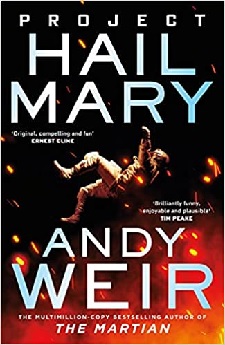
Okay, I’ll say it outright. Project Hail Mary is the best book I have read so far this year. Andy Weir has done something that I can only dream of doing as a writer. Not only has he written an engrossing, page-turning science fiction novel, he has made me dream of becoming a scientist. Regardless of whether all the scientific concepts and ideas he conveys in Project Hail Mary is plausible (and I believe that they are), he does something that few authors are able to do.

One, he balances science talk with the plot. While there is a lot of science talk, he makes it accessible and conveys it in a way that we can understand even if we don’t have a degree in theoretical physics, or molecular biology, or any of the other science specialties explored in this story.

Two, caring about the characters is critical in any story, and Weir does that beautifully. But he also makes you care about the science, which is a rare feat. Because it is the science that becomes its own ‘character’. Science is the connection between Ryland Grace and Rocky (more on Rocky in a moment), and it is science that drives the suspense and tension in the story rather than spaceships blasting lasers at each other.

Three, throughout Project Hail Mary there is an infusion of humour that makes a considerable impact and elevates a read that could have been a depressing slog mired in tragedy.

The story mixes flashbacks of how and why Ryland ends up on the Hail Mary ship and while the basic premise is that he is humanity’s last hope for survival, the true joy of the novel is his interactions with Rocky.

So, who is Rocky? He is an alien from another planet, and his home world is orbiting a sun in another solar system also infected by Astrophage. He is on the same mission as Ryland and appears like a spider-type creature. Weir does a wonderful job making their initial interactions believable, and as they learn to communicate (which in itself is a clever bit of writing by Weir), they develop a friendship that transcends well… species.

Rocky is a genius engineer on his planet and combined with Ryland’s scientific know-how, the pair seek to unravel the mysteries of Astrophage and why it is attacking their respective home world suns. As their communication becomes more sophisticated, their banter is truly laugh out loud at times, and you want both of them to survive by story’s end.

And this is the driving force of the story. Yes, the extinction of humanity hangs in the balance. Yes, unraveling the mystery and finding a solution to the Astrophage invasion is critical to the plot. But it is the friendship between Ryland and Rocky, and the question mark as to whether they will survive that will make you turn every page.

Project Hail Mary is a story launched into the stratosphere and scores a touch down for all readers.

5 out of 5

Anime Review: Tokyo Godfathers (2003)

TL;DR – When three homeless citizens of Tokyo discover an abandoned baby in a back alley, a chain reaction of events is triggered revealing their lives and regrets. And quite possibly a path to redemption.

Review (warning: spoilers)

Like many of the largest cities in the world, Tokyo is a place where those that wish to disappear can do so with barely anyone batting an eyelid. And if you’re the homeless then you end up invisible and forgotten trying to survive on the streets.

Stories about the homeless are generally sombre affairs, so I was somewhat hesitant to pick up Tokyo Godfathers. If you ever watched Grave of the Fireflies, then you will understand what I mean. But I have to say that Satoshi Kon’s film is not only full of surprises, but it also conveys a sense of hope that is not mired in saccharine ideas of what constitutes a ‘happy family’.

To point, there is no such thing as a ‘happy family’. Families are messy, relationships can be filled with emotional struggles that can result in drastic (and often tragic) choices. But families can also be filled with a sense of love, understanding and forgiveness that comes about through genuine connection (and often struggle).

Such is the story in Tokyo Godfathers which introduces us to Gin (an alcoholic), Hana (a transgender woman), and Miyuki (a runaway teenage girl). Their humanity, flaws, idiosyncrasies, and histories of how they ended up living on the streets of Tokyo are slowly brought to light for the viewer as the film progresses.

Set on Christmas Eve, our trio are rummaging through garbage only to discover an abandoned baby that they name Kiyoko. The elements of dark humour, mainly through the banter and interactions of our trio, will draw you in as we watch them fumble and debate what to do with baby Kiyoko. The sensible decision is to deliver the baby to the police, but instead Hana insists on keeping the newborn and finding her parents.

The story moves along through a series of coincidences that one can only construe as fated and results in many revelations about our trio’s past.

We learn that Miyuki ran away because her policeman father was overbearing, and when her cat went missing, she believed it was her father that got rid of it. This resulted in a violent altercation where Miyuki stabbed him and then ran away. She now feels she can never return home.

Hana used to work at a club as a singer and became violent towards a drunken patron when he criticised how awful her singing was. She then quit and left with her lover, Ken, but when he died from slipping on a bar of soap (I kid you not) she found herself on the streets.

Initially, Gin tells Hana and Miyuki that his wife and daughter are dead. This turns out to be a lie. He had a gambling problem and drove his family into debt. Ashamed he ran away even though his wife and daughter tried unsuccessfully for several years to find him.

Along with our trio, we learn about the many broken lives and families that are somehow intertwined with them or with baby Kiyoko. This becomes a central motif. Tokyo Godfathers is not only a film about people without homes but also people without families. And how Gin, Hana and Miyuki come to be a family unit in their own right even if they argue, bicker and, at times, hate each other.

Coincidences throughout this film are intentional, and a way to show that whether we know it or not, we are all connected in some way by the thinnest of threads.

The funny and dark comic moments (the scenes where Hana gets a taxi driver to pursue a truck stolen by a woman who has Kiyoko is hilarious) are offset by depictions of humanity’s failings towards the homeless. For example, there is one scene where Gin gets beaten up by a bunch of teenagers just for kicks. Another where the three are on a train and all the other passengers are holding their noses because of the stink and attempting to ignore them.

The story is packed full of threads that all eventually tie together in the end, even if its a ragged tapestry as opposed to a beautiful quilt. In a way, the film is all the better because of its imperfections.

As I watched Tokyo Godfathers, there’s a real Cowboy Bebop feel to the animation. The characters especially are not your stereotype big-eyed anime characters but are grounded more in realism. Yet, there are scenes that are distinctly anime and are very well done. For example, when Hana lets loose at Gin in front of his estranged daughter about all his lies, her expressions are priceless. Viewers have to pay attention as much to the background and surroundings as they do the main characters.

Complex, rich in detail in both plot and animation, and a totally quirky Christmas tale that will have you believing in miracles that aren’t shaped as sugar cubes or tied up in a bow. It has been a while since an anime flick has surprised me as much as this one.

9.5 out of 10

Movie Review: Stowaway (2021)

TL;DR – Three astronauts on a mission to Mars discover an accidental stowaway. This wouldn’t be a problem except the stowaway permanently damaged the CO2 scrubbers on the ship. Without the scrubbers there isn’t enough oxygen to support all four crew.

Review (warning: spoilers)

There are no aliens aboard the ship looking to kill the crew. There is not an artificial intelligence that becomes ‘evil’ and starts manipulating the humans to turn on each other. There are no lightsabers, and this is not the Millennium Falcon that can hyperjump from one planet to another. If you are expecting any of these sci-fi elements then Stowaway is not the movie for you.

Instead, Stowaway seeks to be grounded in actual science (or at least, theoretical science) and uses all the real threats of outer space to demonstrate the dangers of space travel. A suitable balance is achieved between plot progression and explaining the mechanics of the crew’s ship and the physics of space to allow the watcher to be absorbed.

Our intrepid crew is comprised of Commander Marina Barnett (Toni Collette), biologist David Kim (Daniel Dae Kim) and medical researcher Zoe Levenson (Anna Kendrick). The purpose of their mission is to make the two-year round trip to the colony on Mars to cultivate David’s algae and plants on the red planet before returning home.

The opening scene throws us right into the thick of it as we sit in the cockpit with the crew as they lift off. The turbulence and the amount of g-force they experience is captured on screen and on the crew’s expressions as they climb altitude and eventually break the earth’s atmosphere. It is an absorbing bit of film making as you will feel every rattle of your bones inside your body and find it difficult to keep your breath steady.

A lovely bit of physics and aeronautical engineering is then shown as the main rocket booster known as the ‘Kingfisher’ detaches with 450m long cables that are connected to the ship’s main hull and a tethered gravity spin is initiated. I’m no physicist but I understand the basic premise is that to achieve artificial gravity in space, the ship containing the crew is spun around a central axis (i.e., the main hull) and a counterweight (i.e., the Kingfisher) spins on the other end. Again, the cinematography of this sequence is brilliant and even experienced astronauts can succumb to the inertia as depicted by David who proceeds to throw up extensively into his vomit bag.

Everything goes smoothly until Marina discovers an engineer, Michael Adams (Shamier Anderson) unconscious inside a part of the ship that houses the CO2 scrubber. How he managed to survive take-off is anyone’s guess, and it’s not clear how he could have been unaccounted for before the launch.

The movie could have then gone one of two ways. It could have turned into a dark psychological thriller with the audience unsure if Michael stowed away intentionally and is looking to sabotage the mission for reasons only he knows. Or it could be a genuine accident and now the crew of four have to figure out how to move forward. Thankfully, it is the latter (I didn’t want to watch another Event Horizon horror sci-fi unfold), and the driving dilemma that they confront is the CO2 scrubbers have been damaged beyond repair and there is only enough oxygen for three people.

Check that, there is only enough oxygen for two people to make the journey to Mars. But an unreliable solution is created to support three when David sacrifices all his algae and plant research to try and have them act as ‘scrubbers’. The story then becomes one of sacrifice and the varying views of the crew on what to do. They have ten days (which in itself is a margin of error and puts the entire crew at risk) to figure out if there is a way to save Michael.

Zoe and David have differing, but no less empathetic, views. When Michael is told by David the full situation, Michael understands that he needs to be the one to make the sacrifice. However, Zoe convinces him to hold on to hope.

In a last ditch effort, Zoe and David risk traversing the tethers to the Kingfisher to try and salvage oxygen from the tanks contained within. Commander Marina can’t do it because earlier in the film when she discovers Michael in the ceiling, he falls on her arm breaking it. So, now she’s in a cast and has no way of doing the job herself.

Zoe and David manage to get one tank of oxygen. They need two to have enough for all four of them to survive the trip to Mars, but a solar flare warning sounds and they are forced to rush back before the storm hits them with its deadly radiation.

In their haste, Zoe’s descent back to the ship is too fast and she loses the one tank of oxygen. It’s a devastating moment as they are now back to square one. Whatever oxygen is in the Kingfisher is now leaking out, and no one knows how long the solar flare storm will last.

The crew sit together, emotionally wrung dry and distraught, and mentally willing for some sort of miracle. But there is none. In space, there cannot be mistakes, and unfortunately, this mission has been riddled with them.

Zoe makes the ultimate sacrifice and ends up traversing the tethers once more to get one remaining tank of oxygen knowing it’s a suicide mission. The scene is almost magical as solar rays rush over her in waves, but we know in fact that Zoe is being bombarded by enough radiation that she cannot possibly survive.

The film ends with her depositing the oxygen tank for the other three and then sitting outside the ship, her breathing becoming more shallow, her suit slowly being burnt by the rays, and her sight focused on the tiny red dot that is Mars.

The audience has to make their own conclusion as to whether Marina, David and Michael make it as the credits roll. It is all a dire affair and more a shoestring sci-fi film than a full blown story such as The Martian or Interstellar.

I enjoyed the film primarily because of the stunning cinematography and special effects along with the humanity of the characters. This is a story of survival and when viewed from that lens, it delivers.

8 out of 10

Book Review: Sin City (Volume 7) – Hell and Back by Frank Miller

TL;DR – Wallace makes the most of a cool night by getting out of the city and heading for the hills. Driving along the empty roads, top down, wind in his hair, it’s as close to serenity as he has felt in a while. But it’s all cut short when he spies a woman atop a cliff looking very much like she’s going to jump without a parachute.

Summary (warning: spoilers)

Go to my book reviews page to read reviews of previous volumes of this Eisner award winning series.

Esther stands overlooking the ocean, beneath the moon and contemplates suicide. Her attempt at ending her life is foiled by a good Samaritan named Wallace after he dives into the waters to rescue her. Wallace takes her back to his apartment and there she recovers, the pair developing an instant connection through one saving the life of the other.

They head to a bar to bond over a drink. Esther learns that Wallace is an ex-Navy SEAL and was awarded a medal of honour. Esther no longer contemplates suicide, not when her knight in shining armour is right in front of her. And even though a part of Wallace wants to know why she tried to kill herself, she holds him back with her allure and her lips.

As they kiss, a shot rings through the night and hits Wallace square in the neck, not a bullet but a tranquiliser. Before he falls unconscious, he sees Esther taken away kicking and screaming by two men in an ambulance.

When Wallace wakes up, there’ll be hell to pay.

Review

Sin City (Volume 7) – Hell and Back is the final volume in Frank Miller’s epic Sin City collection. As a book end that completes the series, Frank Miller thanks his readers by creating a dense volume full of his signature black and white art and a story with enough mystery and tension to take you to the final page. A suitable end that testifies to Miller’s mastery of the crime noir genre.

His previous works, Sin City (Volume 6) – Booze, Broads & Bullets was a much slimmer volume, but if you paid attention to the short stories in volume 6 then they tie in brilliantly with volume 7.

Specifically, the hitwoman, Delia seen in several short stories in volume 6, plays a key role in this one as a femme fatale looking to seduce Wallace before slicing his throat. But I’m getting ahead of myself…

After Wallace wakes up from the tranquiliser, he spends a night in a jail cell when cops pick him up thinking he’s a drug addict. When Wallace gets out, he starts piecing together his memory and gathers clues to hunt down Esther.

The story flips between the two as we see Esther confronted by the Colonel, a captain within the Wallenquist organisation, and who trains women to become assassins including blue-eyed Delia.

The Colonel wants to transform Esther into one of his hitwomen as well. But the Colonel receives word that Wallace is on the hunt, so he sends Delia and his men to take him out.

Wallace discovers Delia in Esther’s apartment. Delia pretends to be a struggling actress who lives with Esther sharing the rent. When the hitmen come calling, they give the appearance that they’re after Delia (just as they kidnapped Esther) but Wallace makes short work of them, and thus finds himself now protecting Delia while trying to find Esther.

It creates wonderful tension as you, the reader, will be screaming at Wallace not to trust Delia. And for once, Delia’s succubus charms fail to work on a man, and Wallace sees through her façade.

As the body count racks up, Wallace is put through a number of ordeals including being injected with a cocktail of drugs. Only his Navy SEAL training allows him to work through the hallucinations. Miller breaks his modus operandi by illustrating the hallucinogenic events extensively in colour. Previously, he would use colour only sparingly to identify certain characters (e.g. yellow for Roark Junior’s skin in Sin City (Volume 4) – That Yellow Bastard and blue for Delia’s eyes).

In my opinion, the coloured pages do not work, and this is probably the biggest criticism I have for volume 7. It was a brave move by Miller, but it doesn’t come off and detracts from the artwork overall. When finally Wallace gets the drugs out of his system and the world is viewed again in black and white, it is far more effective.

The story, while containing enough momentum to see you through to the end, also flags a little in the final third. Wallace discovers that the Colonel is also operating an organ harvesting ring, and this is meant to add an additional layer of shock to the story.

Miller could have punched us in the gut by making Wallace discover true hell and have the Colonel end up killing Esther and harvesting her organs. But then Wallace would have been to hell and never come back, which would go against the volume’s title. Suffice to say, it is enough that Wallace uncovers this horrific operation and inflicts enough collateral damage that the Colonel agrees to handover Esther in exchange for Wallace’s silence.

Of course, Wallace knows it’s all a setup and the Colonel will betray him, so the necessary fail safes are put in place to ensure Wallace and Esther escape unharmed and the Colonel gets his final comeuppance.

Mind you the Colonel’s timely demise comes from an unexpected quarter. The man who ends up disposing of the Colonel is Commissioner Liebowitz, the head of the Basin City police department, who is introduced as the Colonel’s puppet and initially betrays Wallace who reports Esther’s kidnapping.

As Wallace and Esther drive off into the sunset, Esther finally reveals why she attempted suicide. The simple reason was that she felt alone. Wallace makes one final remark about Basin City (aka Sin City):

“That rotten town: those it can’t corrupt, it soils. Those it can’t soil, it kills. That rotten town. Miles behind us now. Fading into memory. A bright day dawns…”

Thus, closes the final chapter on Frank Miller’s Sin City.

The pick of the bunch for me is still Sin City (Volume 1) – The Hard Goodbye and Sin City (Volume 4) – That Yellow Bastard.

And while Sin City (Volume 7) Hell and Back doesn’t punch you in the gut, it is still good to know that even Frank Miller has a sense of hope.

3.5 out of 5.

Anime Review: Komi Can’t Communicate (2021)

TL;DR – Komi enters high school and immediately is the admiration and envy of every school student and teacher. She exudes an aura that causes everyone to be put in awe simply by walking into a room. The only problem is she suffers from severe social anxiety disorder.

Review (warning: spoilers)

Hitohito Tadano is average in every way. All he wants to do is get through high school without causing waves. But when he discovers in class, he is sitting next to Komi Shouko, a female student that has everyone enraptured, he becomes the lightning rod for jealousy as everyone vies for Komi’s attention.

However, Komi has her own inner struggle. She freezes and is unable to speak whenever anyone tries to talk to her or gives her attention. People interpret her social anxiety in different ways. All of them wrong.

Some interpret her silence as an ice queen views her subjects, they adore her stoic beauty and serve her willingly. Others view her silence as they are not even worthy to be in her presence and suitably scamper away after attempts at conversation with her. In virtually all circumstances, she is viewed as a goddess beyond the reach of mere mortals, and this is humorously reinforced in one episode where initially she is nominated for class president, but then everyone in her class interprets her silence that the title of class president being beneath her and instead coin her as ‘god’.

The only person that is able to get to the heart of the matter is Tadano. In the first episode, after class has finished, Tadano and Komi find themselves as the last to leave, and what starts off as an awkward exchange by writing messages on the blackboard with chalk, ends up being a confession by Komi explaining her extreme social anxiety, and how deeply she actually wants to make friends and be able to communicate.

Tadano vows to help her make one hundred friends.

As a comedy, the series reaches the point of ludicrous due to the exaggerated reactions from Komi and her classmates. Each character has extreme traits, which downplays Komi’s social anxiety disorder. A sample of the outlandish cast includes:

  • Ren Yamai whose obsession with Komi borders on the pathological, and at one point, she kidnaps Tadano who she believes is getting to close to Komi and looks like she is going to kill him and bury him in the woods.
  • Himiko Agari who is also an anxious girl like Komi but has a masochistic side to her and wants to be Komi’s pet ‘dog’. She also has a didactic (almost religious level) of knowledge when it comes to ramen (i.e. the best places to eat it, the rules and etiquette to ramen etc.)
  • Makeru Yadano who sees Komi as her rival and wants to best her in all things. This includes an eye sight test where Yadano believes Komi is cheating because she is not answering out loud (Yadano doesn’t realise that Komi is using hand gestures and can’t see them because she is standing behind Komi).
  • Najimi Osana who actually attempted to be Komi’s friend during childhood but interpreted her silence as standoffish. Najimi has a tendency to switch genders. Flashbacks show Najimi wearing boy clothing but in high school wears a girls uniform.

The only ‘normal’ person is Tadano in that he is average in every way. But we learn that this is intentional because in junior high he pretended to be a ‘cool kid’ but realised that everyone thought it was cringey.

All in all, Komi Can’t Communicate has some touching moments but does not go as deep as some of the more magical slice-of-life animes that I have seen such as Usagi Drop, Non Non Biyori, and Ano Hi Mita Hana no Namae wo Bokutachi wa Mada Shiranai.

It seeks to insert more humour at the expense of depth, which I found watchable if silly. The end result is that this anime could have explored social anxiety disorders with much more emotional punch but instead takes a safe route to be more comic.

6.5 out of 10

Book Review: Sin City (Volume 6) – Booze, Broads & Bullets by Frank Miller

TL;DR – Ever wondered what the characters of Sin City do in their spare time? This volume will present a smorgasbord of Sin City’s finest.

Summary (warning: spoilers)

Go to my book reviews page to read reviews of previous volumes of this Eisner award winning series.

A collection of short stories that cover the many characters explored in previous volumes of Sin City.

Review

Sin City (Volume 6) – Booze, Broads & Bullets is an eclectic collection of yarns that taps into the crime noir with varying emotion and dark humour. If you have read the previous volumes, then you’ll obtain a greater sense of satisfaction as characters featured previously are each given the limelight for a brief number of pages in this volume.

As with any short story collection, some pack a punch while others only tickle, and like any creative work, readers will enjoy some more than others.

For example, “Just Another Saturday Night” and “Silent Night” both star Marv (probably my favourite character in the entire Sin City series).

“Just Another Saturday Night” tells the story of Marv on the night John Hartigan comes into the bar to reunite with Nancy from Sin City (Volume 4) – That Yellow Bastard. It’s a straightforward telling that doesn’t do much to expand on Marv’s character. His desire to hunt down a bunch of teenagers dousing drunks in petrol and setting them alight is in line with Marv’s sense of duty to defend the weak. The extreme punishment dished out to the teenagers by Marv is nothing shocking if you have read Sin City (Volume 1) – The Hard Goodbye.

Likewise, “Silent Night” sees Marv hunting down a bunch of bad people involved in child prostitution and in the process saving a young girl named Kimberley. Marv dishes out his punishment with extreme prejudice as you would expect.

However, “Silent Night” is a far greater piece of work in my eyes than “Just Another Saturday Night”. The first thing that stands out is that “Silent Night” has almost no dialogue. Miller’s brilliant black and white illustrations tell the tale, and the panels showing Marv walking with his trench coat, hunched over, through a blizzard is truly breathtaking. “Silent Night” packs a punch to the gut that you will feel at night before you go to sleep, while “Just Another Saturday Night” is more like a slap to the shoulder that is easily forgotten.

Other colourful characters that make an appearance in their own telling include:

  • Fat Man and Little Boy in an explosive affair that imitates something you’d see out of a Looney Tunes cartoon.
  • Dwight McCarthy who investigates the death of his friend, Fargo, who was working with a private eye on a drug trafficking exposé.
  • The Colonel who takes on a hitwoman named Delia. Several short stories within this volume follow Delia.

Overall, Sin City (Volume 6) – Booze, Broads & Bullets is a satisfactory dive in getting a glimpse into the denizens of Sin City, but if you want to experience a greater roller coaster, Frank Miller’s previous volumes are the ones you should pick up first.

3 out of 5.

Anime Review: Ousama Ranking (2021)

TL;DR – Boji is known as “The Useless Prince” by his own people. Standing barely two feet tall, deaf and practically mute, no one believes he should be the next king. No one believes he is capable of anything.

Review (warning: spoilers)

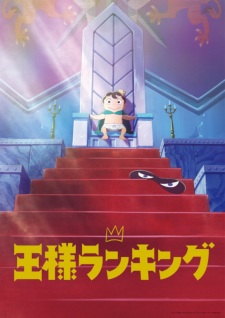
Ousama Ranking (aka ‘Ranking of Kings’) performs a magic trick that is surprisingly effective. Initially, it presents you with a story that appears like a textbook fairy tale.

There’s the strong and giant king, Bosse, who rules his realm with a steady hand and defends his people from outside threats. He has a son, Boji, who is deaf, tiny and weak. Bosse has established his realm to provide for Boji and give him everything he needs. A kind and loving father indeed.

Boji is trained to defend himself by Domas, a great swordsman who cares and loves Boji almost as much as the king. Boji aspires to be as great as his father and has an empathy toward others that is both optimistic and naïve.

The initial tensions are between Boji and his younger half-brother, Daida, who also desires the throne. The usual brotherly rivalry is on full display.

Boji’s stepmother, Hiling, wants Daida to be the next king as she deems Boji not suitable to protect the kingdom.

There’s even a magic mirror that influences both Bosse and Daida in mysterious ways.

Everything points to a pretty straight forward fairy tale, and the show is reinforced by the animation, which looks like it was taken from a children’s picture book.

And then the magic trick happens…

As the episodes progress, everything is not what it seems. There are only two constants, Boji and his only friend, Kage. Kage is a shadow assassin from a nearly extinct clan of assassins and appears like two ink blots with eyes and a mouth like a claw. He survives as a thief, and initially takes advantage of Boji by demanding his clothes, which Boji gives to him freely. Eventually Kage sees that Boji is pure of heart and his compassion and kindness penetrates the jaded view Kage has of the world. Kage swears to be Boji’s faithful friend and together they navigate the many changes and revelations that occur around them.

Revelations that include the following:

  • Bosse is not the noble king we are led to believe at the beginning. He has made a pact with a demon to steal the power from his first son, Boji. He has established the kingdom for Boji out of guilt.
  • Queen Hiling, the ‘evil’ stepmother, turns out not to be ‘evil’ at all. We learn that she made great efforts to become close to Boji (including learning sign language) after Bosse’s first wife and Boji’s biological mother died. She loves Boji but sees the only way to protect him is for his half-brother, Daida, to assume the throne.
  • Daida, initially, appears one-dimensional in his pursuit to take his father’s place as ruler, and he wants to rank himself as one of the greatest kings in the land. However, he is taught certain lessons by his mentor and tutor about what true strength is all about. Further, Bosse ends up using Daida as a vessel to keep on living resulting in Daida’s soul being trapped. Daida comes to empathise what Boji must overcome in order to be a king.
  • Domas teaches Boji and learns to care for him, but his loyalty to Bosse causes him to do the unthinkable, he seeks to murder Boji.

These are just a sample of the layers beneath the surface of all the characters, and it is held together by the strength, hope and resilience of the friendship between Boji and Kage.

Boji is the ultimate underdog, and his true strength comes from his ability to transform hearts through his own determination, kindness and understanding.

With so much anime to choose from, stories are the most critical aspect in ensuring viewers will sit through an entire series. At 23 episodes, Ousama Ranking has the story to back it, and you’ll be cheering and crying in equal measure as you follow Boji through his growth.

9 out of 10

Movie Review: Nightmare Alley (2021)

TL;DR – Stan Carlisle is damaged goods. He’s not asking, “To be or not to be?” He’s asking, “To be damned or not be damned? That is the question.”

Review (warning: spoilers)

With acclaimed cinematographer Dan Lausten, and a star studded cast, director Guillermo del Toro has delved into the film noir storytelling with his distinctive style and vigour. Based on the novel of the same name by William Gresham, Nightmare Alley is about the duplicity of human nature and how some individuals who are damned, flirt with the idea of redemption, but ultimately embrace their own undoing.

Stan Carlisle (Bradley Cooper) is damned. Through flashbacks, he was abused by his alcoholic father and consumed with hatred. A hatred that reached the point where Stan kills his father and burns his body and their home to ashes.

Living as a vagrant, Stan stumbles upon a carnival and manages to secure some work. He meets an assortment of individuals that carry their own scars, and becomes a carny himself looking to fleece patrons and customers with their shocking acts and shows of deception.

One of these shocking acts that Stan witnesses is the geek show, where a deranged man eats a live chicken. The resident carnival barker, Clem Hoatley (Willem Dafoe), explains that geeks are found and made. Clem goes around finding drunks and offers them temporary employment while giving them opium-spiked alcohol to get them to stay. The geeks essentially are drug addicted, starving, emaciated men kept in cages and become animals for the ‘entertainment’ of carnival patrons. Stan swears he will never become a geek.

Instead, he starts learning the tricks of the trade to become a mentalist. The clairvoyant act at the carnival is conducted by Madame Zeena (Toni Collette) and her alcoholic husband, Pete (David Strathairn), and Stan discovers they have a secret code and cold reading tricks to discern the histories, characteristics and traits of patrons. He endeavours to master these techniques.

Stan also falls in love with Molly (Rooney Mara), who is the carnival’s electric girl (her act involves pretend electrocution). He eventually convinces Molly to leave the carnival with him, and they go out on their own performing psychic shows.

They achieve a level of success, and while Molly is satisfied, Stan is not. During one show, he is confronted by a psychologist, Lilith Ritter (Cate Blanchett), who attempts to reveal him for a fraud but fails. Stan is intrigued by Lilith and finds out that she holds a treasure trove of dirty secrets with regard to the social elite because of her job. Lilith agrees to share information she has on a judge Kimball (Peter MacNeill) in exchange for some background truth about Stan. The exchange is made, and Stan successfully swindles Kimball and his wife of a considerable sum of money.

Molly begs Stan to stop, but Stan can’t help himself and goes back to Lilith to get more dirt. Lilith suggests a former patient of hers named Ezra Grindle (Richard Jenkins), a rich recluse who, in his past, forced a woman named Dorrie to have an abortion. The abortion was botched and Dorrie died.

Stan manages to convince Ezra that he can talk to Dorrie and have her materialise in front of him, so he can ask her for forgiveness. Stan wants Molly to act as Dorrie’s ghost. Initially, she refuses but eventually relents indicating to Stan this would be the last time she would be a part of his deception and that she intends to leave him.

The ruse goes smoothly up to the point where Molly (pretending to be Dorrie) appears and Ezra gets close enough to her to realise he has been swindled. Ezra threatens to destroy Stan and hits Molly. Stan launches himself at Ezra and beats him to death much to Molly’s horror.

Stan orders Molly back to the carnival. He seeks out Lilith and discovers that she has betrayed him. Or rather she has been playing her own game of deception, stolen all the money he has swindled and made him the fool. In anger, he tries to kill her but security comes and he flees.

Everything comes full circle as Stan is now a vagrant once more and with the added bonus of being an alcoholic like his father. The final scene sees him arrive at a new carnival searching for work. The carnival barker turns down his offer to work as a mentalist but offers him a drink. Stan downs the alcohol, and the barker pauses and says there is one job that Stan could do. He could temporarily be the carnival geek, to which Stan responds with maniacal laughter that he would be perfect for the role.

Like I said damned.

Overall, the film keeps you engaged even though you will struggle to find redeeming values in any of the characters. Molly is the only character with any integrity, she represents Stan’s hope for redemption but ultimately he fails. Guillermo del Toro draws faithfully from the source material and the cast show off an ability to portray characters in a multi-layered way that will have a tiny part of you saying they are interesting even though you don’t want them to be.

Stan is a tragic figure and trapped in a spiral where he figures if he is going to go down, he might as well go down fighting and rich. But even then it is all an act of futility as he is undone by those who are even more damaged than he is.

His path to self-destruction was brutal, visceral and completely ironic, and I was glad that Molly didn’t get dragged down with him.

In the hands of lesser men, this film could have been so bleak and dark that it would have been too bitter a pill to swallow, but Guillermo del Toro does the noir genre justice and when you have the acting talents of Cate Blanchett oozing femme fatale, Bradley Cooper striving for some end to the tunnel (even if that end is insanity), Willem Dafoe ruthlessly delicious as the carnival barker, and Toni Collette born to be a psychic hustler, you’ll have enough of your favourite spirit to wash that bitter pill down.

8.5 out of 10

Book Review: Sin City (Volume 5) – Family Values by Frank Miller

TL;DR – Dwight and deadly Miho are on a mission. A mission that revolves around the powder keg tensions between Sin City’s mob (led by Wallenquist) and mafia (led by Magliozzi). You will want to read this just to see Miho in action. Who knew roller skates could be so deadly?

Summary (warning: spoilers)

Go to my book reviews page to read reviews of previous volumes of this Eisner award winning series.

Herr Wallenquist (aka The Kraut) is the mobster leader of a powerful criminal organisation in Sin City. Through his manipulations, he gets one of his main men, Bruno into politics. Prior to this political elevation, Bruno was one of Wallenquist’s hitmen and did a job in killing a snitch, who happened to be in bed with a beautiful woman at the time by the name of Andrea. Bruno, ever the professional and enjoying his work a little too much, ensured there were no witnesses resulting in Andrea being collateral damage.

Turns out Andrea is the beloved niece of Giacco Magliozzi, the Don of the local mafia. Magliozzi becomes consumed with the desire for revenge, and after several fruitful years, eventually obtains proof that Bruno (now in politics and espousing ‘family values’) was the man who murdered his niece. Magliozzi orders the hit on Bruno, knowing this will break the truce between him and the Kraut, and the hitman-cum-politician gets gunned down at a diner by Vito, one of Magliozzi’s nephews.

Dwight McCarthy is sent in by Gail (leader of the prostitutes in Old Town) to investigate Bruno’s death. With the help of deadly assassin, Miho, he discovers the circumstances and the individuals involved.

And it all leads to Magliozzi. So, when Dwight and Miho pay him a visit, he’s confused as to why the women of Old Town have gotten involved. Initially, he thinks that the Kraut has sent Dwight and Miho to kill him. But Dwight tells Magliozzi that that’s what they want everyone on the outside to think.

While Miho wanders around (on her roller skates) finishing off the Don’s associates, Dwight then sits down with Magliozzi at gun point to tell him a story

It’s a story that Magliozzi should understand. After all it’s all about family. And there is nothing more valuable than family.

Review

Frank Miller’s fifth instalment in the Sin City graphic novel series is, by far, the slimmest compared to previous volumes. In terms of artwork, the ‘less is more’ approach is in full effect. Miller’s panels are all crammed with the glorious black and white art of its predecessors that any astute reader will pore over, but Miller ensures he doesn’t indulge too much in the art at the expense of moving the story along.

And don’t be deceived. While the pages are less, the story written in it is no less compelling. The story of two criminal organisations banging heads is made intriguing by the fact that Dwight, Miho and the working women of Old Town enter the scene for reasons hidden to us.

If you’ve read Sin City (Volume 3) – The Big Fat Kill, then you will know that Old Town is a law onto themselves. The women there have no interest in the mob or the mafia, and so long as you respect their rules, you can explore Old Town for as much fun as you want (assuming you have the cash to pay for it).

Why they have got themselves in-between Magliozzi and Wallenquist is a mystery, and it is this unknown that will compel you to read to the final pages of Sin City (Volume 5) – Family Values.

And while the reveal is not anything earth-shattering, it does fit perfectly in its central theme of ‘family values’. Miller doesn’t attempt to be too clever. He stays true to the crime noir genre and delivers an enjoyable yarn.

Though I will sound like a broken record, the character Dwight McCarthy is one that Miller returns to and continues to tell stories about even though I do not find Dwight that interesting.

The character Marv in Sin City (Volume 1) – The Hard Goodbye and John Hartigan in Sin City (Volume 4) – That Yellow Bastard are far more engrossing, and the stories in those volumes are more intricate and pack more emotional punch.

However, this is small quip, when considered against the overall body of work Miller has generated. He has justified himself as a master storyteller and artist.

So, grab a coffee, hunker down with these graphic novels and enjoy the ride.

4 out of 5.