Book Review: Chew (Volume Twelve) “Sour Grapes” by John Layman and Rob Guillory

TL;DR – To prevent the end of the world, Tony Chu has to make the ultimate sacrifice.

Summary (warning: spoilers)

Go to my book reviews page to see what has happened in previous volumes of this award winning graphic novel series.

By committing suicide, Mason Savoy forces Tony’s hand and results in him having to cannibalise Savoy in order to uncover the truth behind the alien fire writing and the avian flu that previously killed millions and resulted in the prohibition of chicken.

Using his cibopath powers and slowly, painfully acquiring all of Savoy’s knowledge and experience, Tony learns that the avian flu was triggered by Senator David Hamantaschen who hired the specialist services of three food-powered individuals to “broadcast” a contagion that would target any individual who consumed chicken. The reason for the Senator unleashing the mass murder of millions was in response to the fire writing in the sky. Hamantaschen deciphered the writing was from a highly advanced, alien race of chickens that have the technology to destroy planets. The writing is a warning that the denizens of a planet must stop eating chicken lest it be blown into oblivion.

Unfortunately, Hamantaschen deciphered the timing of when the chicken aliens would arrive to pass judgement incorrectly and unleashed the contagion early. The chicken aliens would not arrive for many more years, which thus follows the events in the volumes of Chew.

Now, with the end of the world just around the corner, Tony realises that the only way to survive judgement that doesn’t result in the obliteration of Earth is for all people who are eating chicken to die. However, the price that Tony has to pay to save Earth is not one he is willing to pay.

Review

The finale of Chew created from the marvellously deranged mind of John Layman and the stunning art of Rob Guillory left me speechless. In many ways, the previous volumes provided enough insight and shocking twists to try and prepare me for what would be unleashed in this final volume.

My attempts failed. I was utterly unprepared for the brutality and emotional knives that would slice me up into bite sized pieces to be cooked and stewed for days to come.

In volume eleven, I wrote about how Mason Savoy and Tony Chu had conflicting philosophies. Savoy was willing to sacrifice the few in order to save the many, but Tony did not hold to this principle. For Tony, he could not tolerate the lengths that Savoy would pursue in order to uncover the truth.

But with the knowledge that only Savoy knew how to save Earth, Tony had no choice but to take large literal chunks out of Mason and absorb his power and knowledge using his cibopath abilities.

This is when everything goes sideways.

Tony learns that the dire prophecies from The Church of the Immaculate Ova are actually true and that they’re not some simple mad cult of vegans. Their dire warnings to the world to stop eating chicken hold truth. And that truth is that an alien race of technologically superior chickens are coming to judge Earth and will wipe out the planet unless humanity stops consuming chicken.

But that’s not the worst of it.

The worst of it is a now dead Mason Savoy in psychic ghost form whispers into Tony’s ear that the only way to stop Earth’s obliteration is for Tony to eat Amelia (his wife).

Amelia, like Tony, has her own food-related power. And this power has evolved over time as she has been consuming the alien fruit (that tastes like chicken) known as Gallsaberry.

Tony has all the ingredients to do another “broadcast” that will target and wipe out all people who consume chicken just as Senator Hamantaschen unleashed years ago. This would coincide with the arrival of the alien super chickens who would see that humanity have stopped eating chickens and would pardon the rest of Earth from destruction.

However, one crucial ingredient that Tony is missing is Amelia’s power to evoke a reaction from people who read her writing.

When we first met Amelia, she was a journalist and food critic and had the ability to describe a dish with such accuracy that anyone who read the article would taste the dish. Through consumption of the Gallsaberry fruit, Amelia’s powers have slowly evolved to the point where she is close to being able to write fiction stories and evoke reactions from people including lethal food poisoning.

But Tony refuses to sacrifice Amelia to save the world.

When the alien fire writing appears in the sky once more, they both know it’s the last day before the end of the world. Tony wants to spend the day with Amelia, treasuring what time they have left. Tony wants it to be a romantic day, but instead they end up helping Tony’s older sister, Rosemary, who has her car stolen.

There is one particularly beautiful sequence where at the end, the pair are sitting on a bench, and Amelia says:

“That’s one of the reasons I fell in love with you. Because you do the right thing. You help people. You make things right. Even when you pay a price. Even when it’s awful for you.”

And though they go home together, make love, and Tony falls asleep, Amelia takes matters in her own hands. She heads to her computer and starts writing a story, tapping into her power even though she is not ready for it and in the process dies.

When Tony awakens, he sees in horror what she has done. The story she has written has a coded message that will attack anybody with chicken in their system. All Tony has to do is broadcast it using his existing powers.

John Colby (Tony’s FDA partner and long time friend) arrives and together they go on one last case to hunt down a bad guy. They succeed in stopping the bad guy, and John convinces Tony that he has to read Amelia’s story and save the Earth even if it means committing mass murder on a global scale.

But little does Tony know, John has recently been eating chicken also and while Tony ends up saving the world by broadcasting Amelia’s story, he unintentionally ends up killing John.

Thus, does Tony lose arguably all the most important people in his life. Amelia his wife, John his partner, and previously Toni his twin sister who was killed by The Vampire.

And in the end, Mason Savoy succeeded in forcing Tony to go against his principle. It’s gut wrenching.

In the final chapter of this final volume, the timeline fast forwards to when Tony is now an old man. He has been invited to the “Landing Ceremony” where the alien chickens will arrive to meet with Earth’s humans for the first time to negotiate peace.

In a final act of defiance, an act of revenge, Tony moves through the crowd of onlookers to the stage where the spaceship lands and the alien chickens disembark. He pulls out a knife and lunges at the alien leader and plunges it into his chest.

Thus, the story of Chew ends.

To the bitter end, Tony could not let go of his anger. The perceived injustice that he had to sacrifice all those he loved (as well as the murder of millions of lives) to save a planet held hostage by an alien species that acted as judge, jury and executioner was too much for him. So, he bided his time and sought revenge (or justice depending on your point view) in the only way he could, by killing the alien responsible for making him kill so many.

Truly, unreservedly, epic.

5 out of 5.

Anime Review: Levius (2019)

TL;DR – Steampunk anime about a boy seeking to survive in a war torn world through boxing.

Review (warning: spoilers)

This is the story of a boy named Levius Cromwell, whose mother became a human shield in order to protect him. During a time of war, Levius lost his right arm and now has a replacement cybernetic one. His mother lies in hospital in a coma, and his father has already been killed in action.

Thus, Levius finds himself in the care of his uncle, Zacks, who initially can’t connect with the boy. Listless, lifeless, Levius displays no inclination to do anything. That is until, he stumbles on an arena where he witnesses for the first time metal boxing (i.e., boxers with cybernetic arms). Searching for meaning in his existence, Levius starts training to be a metal boxer with his uncle, who used to be a boxer and now owns a gym.

The underlying plot revolves around the mystery of Green Bridge where Levius experienced the devastation of war and witnessed the apprehension of children at the hands of giant mechs owned and operated by Amethyst STEC (Steam Technology Enterprise Corporation).

Amethyst is run by Dr Clown, a masked individual, who has knowledge indicating that the children of Green Bridge are able to utilise and withstand the strain and pain of using steam technology longer than other people due to the type of water that ran through that town. Dr Clown is a Machiavellian sociopath who seeks to “collect” Levius and have him fight in the boxing ring to create beautiful music (i.e., Dr Clown sees metal boxing as an artform that can create a symphony only he can hear even if it results in a boxer’s death).

One of the children Amethyst kidnapped is named AJ Langdon, a young girl who cried out for help to a young Levius who was hiding behind some debris at Green Bridge. When Levius discovers AJ has now been turned into one of Dr Clown’s puppets and is an elite metal boxer, Levius vows to save her.

Initially, I was not sure if I could it make it through this series. The anime uses extensive CGI, which made me wonder whether this was going to be a series purely about how cool it looks with no decent story.

I was pleasantly surprised.

Visually, the boxing scenes are stunning, and I found the attention to detail surrounding the steampunk technology used in metal boxing fascinating. The skills required in boxing, along with the enhancements of armour and technology, are adrenalin pumping, and the anime could have easily fallen into the trap of making the technology override boxing skill. Thankfully, it does not and the anime is better off.

However, these visuals would not have elevated the anime above the average if not for an interesting plot. While standard tropes are used in terms of character design, they don’t detract from being engaged with their plight.

Levius’ opponents have back stories that are revealed through this first season that generate the necessary empathy to show they are layered characters and not mere fighters who only think about boxing. The cast includes:

  • Malcolm Eden – a demoted grade III fighter who continues to get steampunk enhancements to his body to compete even though he is past his prime.
  • Hugo Stratus – the number one ranked fighter in grade II, who is scheduled to face off against Levius for promotion to grade I. However, in a “warm-up” match he is defeated unexpectedly by AJ.
  • AJ Langdon – the girl Levius could not save during the Green Bridge war. She is now a metal boxer that is mind controlled and used by Dr Clown.

Dr Clown, the main antagonist, is suitably unstable with megalomaniac desires that your focus will be wanting to see his demise. A small quip is that it is never revealed in the first season why Dr Clown is the way that he is. His origins remain a mystery, so I did feel he was one-dimensional in his motivations.

The supporting cast around Levius – Zacks (his uncle and trainer), Bill (his engineer) and Natalia (his sparring partner) – are solid if stereotypical.

The season ends, as expected, with Levius successfully defeating AJ while saving her from Dr Clown. Levius gets promoted to grade II boxing ranks, and AJ joins the Cromwell family. Dr Clown escapes with his motivations still a mystery.

There is enough unexplained to warrant a season two, and I hope it does come around.

8.5 out of 10

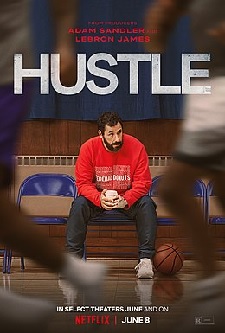
Movie Review: Hustle (2022)

TL;DR – Sports movie for basketball and Adam Sandler fans only.

Review (warning: spoilers)

Fictional professional sports movies are challenging. The need to achieve a level of authenticity usually requires a mix of actors and actual sports athletes. And while athletes can do the sporting action for the film, the need to generate story and drama doesn’t always mean they can act.

The plethora of professional sports docuseries generate more drama and insight because you know it’s athletes being themselves (no acting classes required). For example, The Last Dance which follows the Chicago Bulls sixth title run, and Formula 1: Drive to Survive that reveals the behind-the-scenes politics in F1 driving, are classic examples of how fascinating the athletes, coaches, managers etc. are in real life. And that there is more to the sport than the sport itself.

For the fast paced game of basketball, this can be especially challenging to create a fictional story that is both genuinely moving and authentically real. Efforts such as Spike Lee’s You Got Game and Samuel Jackson in Coach Carter are at the upper end while Space Jam (both the Michael Jordan and LeBron James versions) dwell at the bottom of the ladder. I mean I love Looney Tunes but NBA superstars teaming up with cartoon characters to play basketball in order to save the planet is a stretch.

So, where does Hustle land? Probably somewhere above the average but not anything at the earth shattering level. Adam Sandler clearly loves the game and plays Stanley Sugarman, a Philadelphia 76ers scout who has missed his daughter’s nine previous birthdays because he is always on the road or flying around the world trying to find the next big talent that will rock the NBA landscape.

After years of sacrificing his family life with wife Teresa (Queen Latifah) and daughter Alex (Jordan Hull), he is finally presented with his dream job as Assistant Coach to the 76ers by Philly owner Rex Merrick (Robert Duvall). However, when Rex suddenly passes away, Rex’s son, Vince (Ben Foster) takes over the reins and orders Stanley back on the road. It’s clear that while Rex treated Stanley like family and knows that Stanley has the basketball IQ to be a great coach, Vince has no such affection and often ends up butting heads with Stan.

Forced to be on the road once more, Stanley ends up in Spain and walks by a local outdoor court where a buzz is occurring. There’s a massive crowd as street basketballers place bets on who will out school and score the other. It is here that Stanley stumbles upon Bo Cruz (Juancho Hernangómez) playing while wearing work boots and dominating his opponents on the court.

Stanley has found his unicorn. A diamond in the rough that needs a little polish, but he has no doubt can make an impact in the NBA.

The rest of the story is a by-the-numbers telling of a player with a rocky past (Bo has no father figure, has previously served time for an assault charge and is trying to care for his mother and daughter) that achieves his dreams of playing in the NBA through determination and belief from Stanley (who fills the father figure void that Bo lacks).

Stanley goes out on a limb when he is unable to convince Vince that the 76ers should give Bo a go and ends up quitting to train Cruz and get him in front of other NBA heads to witness his skill and talent.

A number of real life NBA players, coaches and commentators are dispersed throughout the film to drive home the authenticity angle of the story. Dirk Nowitzki, Luka Doncic, Trae Young, Anthony Edwards, Kenny Smith, Shaq, Charles Barkley, Allen Iverson, Tobias Harris, Matisse Thybulle, Doc Rivers, and Brad Stevens to name a few all lend their time, however brief, in the story.

Director Jeremiah Zagar is conscious enough to not dwell on the real athletes too much. Their appearances lend to some decent comic timing with Sandler’s one-liners and wit. But the primary focus is always on Stanley and Bo.

Juancho Hernangómez who plays Bo Cruz is also a Spanish international and real-life NBA player for the Utah Jazz. His ‘acting’ is confined to displaying his ridiculous basketball skills in endless drills and training along with on court action. The dramatic elements he needs to deliver are done with enough competence to be moving. For example, when he is reunited with his daughter as a surprise that Stan sets up by flying her over from Spain is genuinely touching. Likewise, when the inevitable conflict occurs between Stan and Bo due to a break in trust, Hernangómez delivers enough heartfelt anger and frustration to be believable.

But at the end of the day, this is an Adam Sandler film, and he shows he is more than a comedian. The character that is Stanley Sugarman has a number of past scars that allow Sandler to demonstrate his dramatic chops, and he does this in fine fashion. His chemistry with Queen Latifah and Jordan Hull on-screen adds to the emotional pull, and you can’t help but cheer on Stanley’s efforts even though you know it will all work out in the end.

7.5 out of 10

Book Review: Chew (Volume Eleven) “The Last Suppers” by John Layman and Rob Guillory

TL;DR – Tony Chu faces off against Mason Savoy.

Summary (warning: spoilers)

Go to my book reviews page to see what has happened in previous volumes of this award winning graphic novel series.

The Pope has declared, “Chicken is DOOM!”

The proclamation occurs during Easter to millions of people televised worldwide. Applebee assigns Tony and John to investigate why the Pope has now become an egg worshipper and converted follower of the “Divinity of the Immaculate Ova” church. The Pope has gone on to say that eating chicken is a sin and that anyone eating chicken must die.

The pair are led back to the Pacific Island of Yamapalu where the alien fruit that tastes like chicken, Gallsaberry, grows. There they encounter Mason Savoy who convinces Tony to have a sit down, which turns out to be more precarious than either of them thought as they psychically “time-travel” back to the dinosaur ages (with the help of a food-powered individual) where they discover a species of animal that is half-human, half-chicken. Or at least, they have chicken heads with a humanoid body. Savoy reveals that this species would have become the dominant life form on Earth had they not been wiped out by an errant meteor that wiped out the Mesozoic era.

Meanwhile, Tony’s wife, Amelia has been continuing writing her novel using her food-power that allows her to write about the origins of the food that she eats (her writing so believable that anyone who reads it can taste the food also). She has been taking bites out of her own Gallsaberry and receiving images of an alien detective fighter against a mad tentacled alien eater.

Add to this that NASA have discovered another planet with alien fire writing encircling its skies and things are coming to a head.

Review

How much is a life worth? Would you kill one life to save the lives of billions of others?

For Anthony “Tony” Chu, the answer is every life is equally precious. For Mason Savoy, the answer is the lives of billions outweighs the life of one.

This philosophical conundrum is at the crux of the conflict between Tony and Mason. As two of the three known remaining cibopaths on Earth (the third being Tony’s daughter, Olive), their power to obtain the origins and events of things that they eat combined with their ability to absorb others’ food-related powers (should they decide to cannibalise them) makes them pivotal in unraveling a series of mysteries including:

  • The so-called avian flu pandemic that wiped out millions of people (including Mason’s wife).
  • Subsequent conspiracies around the government’s prohibition on chicken
  • The sudden appearance of alien fire writing encircling the Earth
  • The rise of “The Divinity of the Immaculate Ova” cult that believe that chickens should not be consumed and all chicken eaters should be killed
  • The rise of individuals who have a vast array of food-related powers, some using it to further their own ends, some seeking to serve the greater good.

For Tony and Mason, they initially started out on the same page, but they quickly diverged as Mason was willing to torture anyone who might have information to uncover the truth surrounding the mysteries listed above and would go so far as killing anyone standing in his way.

Of course, Tony stood in his way and thus an indelible chasm has separated the pair. In this volume, Mason makes one final attempt to extend an olive branch. He knows that together, they can get to the truth.

Their last supper involving psychic time travel and the revelation that a specifies of humanoid chicken once existed leads much to be speculated. But not even this can sway Tony to Mason’s side, much to Savoy’s fury.

This gives the impression that Savoy has determined that Tony must now be removed from the equation, which leads to the events in the epilogue of Volume 10, where inexplicably we see Tony holding what appears to be a murdered Amelia in his arms.

What is revealed, however, is that Amelia is actually attacked by E.G.G. terrorists and it is Mason who comes to save her. Further, Amelia, while seriously injured, is not dead. She reveals to Tony that after Mason made quick work of the terrorists, he stole the final chapters of her book and the Gallsaberry fruit that she was eating.

This leads to some brilliant writing by Layman and art by Guillory. Spattered throughout each chapter of this volume, we see Mason doing a monologue. At first, it gave me the impression that Savoy had broken the “fourth wall” and was talking to the me (the reader) directly.

His monologue revolving around why he will do anything to uncover the truth even if the path he goes down causes him to become a monster. However, I realised that he is actually talking to Tony.

I then thought that perhaps this monologue was somehow set in the future, and Mason had successfully captured Tony and is trying to explain his actions before the inevitable “now-I-have-to-kill-you moment” (thanks for listening!)

But I now believe this monologue is a message left for Tony as one of Mason’s memories. Similar to when Tony’s twin sister, Toni, was murdered by The Vampire. She took specific steps to be able to communicate to Tony even after her death.

And in a twist that I did not see coming, we discover on the final page that Mason has hung himself and left one final note for Tony which simply says, “Eat me.”

Absolutely brilliant stuff.

In this penultimate volume, Chew has surpassed my expectations and kept me guessing. I don’t want the ride to be over, and I have a feeling that the final Volume 12 will be bittersweet.

5 out of 5.

Anime Review: Modest Heroes (2018)

TL;DR – Three anime shorts that contain visual magic but need a strong story to support them.

Review (warning: spoilers)

Modest Heroes tells three short stories from anime production company Studio Ponoc.

The first is called “Kanini and Kanino”, a story about two water breathing siblings the size of gold fish, who live underwater in a forest stream. Their pregnant mother, Kaka, went to the surface (not really clear why) and hasn’t been back in some time. Their father, Tata, gets caught in a strong current and gets taken away, leaving Kanini and Kanino fending for themselves. The pair go searching for their father and eventually find him wounded. They face off against a fish that seeks to eat them and is only saved when an Egret bird traps the fish with its dagger-like beak. Demonstrating the many dangers that face these tiny water breathing humans. They make it home to discover Kaka has also returned with five new-born babies in tow. There is next to no dialogue other than when the characters call out to each other by their names.

The second is called “Life Ain’t Gonna Lose” which focuses on a a boy named Shun and his mother. Shun is faced with the challenges of growing up with a severe egg allergy that can cause anaphylaxis, hives and possibly death. He has to carry an epi-pen, and his mother is always having to check foods to see if it contains eggs. Flashbacks reveal previous incidents where Shun has had to be rushed to hospital for touching or consuming something that has eggs (e.g. a piece of cake that was used to celebrate a classmate’s birthday). One day, Shun is riding home on his bicycle after baseball practice and sees a dead pigeon lying on the ground. He arrives home and pulls out his vanilla ice-cream, which isn’t meant to have eggs, but he discovers to his horror that they’ve now added it. He manages to call his mother and gets the epi-pen and survives.

The third and final short is called “Invisible” and opens to an invisible man getting dressed and brushing his teeth. The invisible man works at a car dealership, and he is overlooked by his colleagues both literally and figuratively. He carries around with him a fire extinguisher, and wears clothing, glasses, and shoes but for some reason is like a ghost to everyone around him. At one point, he throws the fire extinguisher in anguish and freaks out at what he’s done. We discover the extinguisher ensures he stays grounded to earth, and without it, he becomes weightless causing him to be caught up in the air by a gust of wind and fearful of disappearing into the stratosphere. He manages to secure the weight of a pick axe and becomes grounded once more just as a storm unleashes its fury. As he sits in the rain, hungry and miserable, a blind man and his guide dog come up to him. The blind man apparently “sees” the invisible man and hands him a sandwich while asking him the question, “Are you going to stay, or are you…?” (I imagine he was going to finish the question with “float away”). The invisible man gratefully accepts the sandwich and without words, you can tell he is going to fight to exist. He then sees a baby pram rolling down a hill as a truck comes speeding by. The invisible man springs into action and manages to save the baby.

The animation is exquisite, and it is clear that Studio Ponoc aspires to be considered in the same category as Studio Ghibli. There is also a sense that these short stories are meant to conjure similar magic to Pixar shorts.

Short stories are a skill that needs to tell a tale that captures you in a limited number of words. Likewise, animated short stories have a restricted timeslot and the visual needs to do more than simply look good.

Out of the three short stories, I found “Life Ain’t Gonna Lose” to be the most effective. Having a son that has food allergies, I can relate to the challenges that Shun’s mother faces.

However, “Invisible” was probably the most captivating with the idea of an invisible man seeking to exist. If you watch the credits there is an end scene where the invisible man appears visible riding his scooter as you can now see his hair, which makes you wonder if the man was visible all along but to himself, he felt invisible.

The weakest of the three was “Kanini and Kanino”, which lacked any sense of actual tension. The story itself is straight forward and there were no twists. You don’t have to have a twist in a short story, but there was not enough emotional pull for me to empathise with the diminutive beings. I felt Studio Ponoc was relying on their visual wizardry to keep me captivated in this one without success.

An interesting experiment and from what I can tell the first volume in a series of short story volumes from Ponoc. There is definite potential for greatness after their debut feature length film Mary and the Witch’s Flower, but I daresay they still have a long way to go before reaching the dizzying heights of master storytelling that the likes of Miyazaki and Studio Ghibli have achieved.

6 out of 10

Movie Review: Top Gun: Maverick (2022)

TL;DR – I feel the need, the need for speed.

Review (warning: spoilers)

Three decades ago, director Tony Scott brought to the big screen one of the most testosterone fuelled, iconic films of the 80s. Not only did it make sales of Ray Ban aviator sunglasses shoot through the roof, contain a blistering hot soundtrack, solidify Tom Cruise as a Hollywood superstar, and establish Val Kilmer’s own rising star, the original Top Gun was lauded for the technical aspect of capturing real fighter planes in action. In a time before CGI became part and parcel of any action film’s budget, Top Gun was painstakingly filmed with the US Navy and actual pilots for the stunts.

For those going through adolescence in the 80s, myself included, it struck all the right chords to be a box office smash even if the story was straight forward and lacked any real complexity. The one liners (“Great Balls of Fire”, “Son, your ego is writing checks your body can’t cash”, “Because I was inverted” to name a few), the adrenaline rush of dog fights, and the chemistry and antagonism between Maverick, Goose, Charlie and Iceman characters were enough to deliver popcorn fun.

With box office success comes the speculation of a sequel. And while there was an indication of this possibility in Top Gun when Maverick chooses to return to the academy as an instructor, it still took two decades before a screenplay for the sequel was drafted.

And while the story is again straight forward: Maverick returns to Top Gun to train a bunch of hot shots on a deadly mission requiring a “Star Wars”-like bombing of a rogue uranium plant nestled in a snowy mountain (think Star Wars Death Star requiring two squads of fighter jets to bomb essentially a vent sized bullseye, the first squad bombing the vent and removing its cover, the second squad dropping bombs down the vent and destroying the underground plant while avoiding surface-to-air missile (SAM) batteries and enemy patrol jets), there are a few surprises that arguably elevates Top Gun: Maverick above its predecessor.

The first is the emotional conflict that arises between Maverick (Tom Cruise) and Rooster (Miles Teller). Rooster is the son of Goose, who Top Gun fans will know died in the first film and was the primary source of Maverick’s rite of passage from reckless pilot to a wiser, more responsible one. Rooster holds a serious grudge against his teacher and mission instructor for blocking him from entering the Naval academy. This was a promise Maverick made to Goose’s wife who didn’t want Rooster to follow in his father’s footsteps and become a pilot.

The scenes where Rooster plays “Great Balls of Fire” on the piano in a bar with his fellow hot shots is a moving tribute to the original film and causes Maverick to feel haunted that events are repeating themselves and Rooster could die. There is also a wonderful and surprisingly humorous sequence in the climactic part of the film where Maverick and Rooster have to escape behind enemy lines by stealing a fighter jet. Having Rooster as the spotter to Maverick’s flying and the way Rooster delivers his lines is exactly like his father, Goose and provided a wonderful nostalgia for fans of the first film.

The second surprise is the story is set 36 years later than its predecessor. That is, it is set today which encapsulates all the aircraft and technology advances of today. One might have expected that the sequel would have been set closer to the original, perhaps in the 90s during the Iraq war or The Persian Gulf war. The fact that Maverick has not become an admiral (even though he should be after all his medals and years of service) and is stuck as a captain, provides an intriguing contrast for a man essentially stuck in doing the only thing he knows how to do in life (i.e. flying) during a time where acts of war involve using technology that does not require human pilots. The introductory diatribe from Rear Admiral Chester Cain (Ed Harris) on how he calls Maverick a dinosaur sets up the question of relevance and purpose in Maverick’s life.

The third surprise is that director Joseph Kosinski, along with Tom Cruise himself, demanded that the film should be filmed using real life jets as much as possible. There could have been an over abundance of CGI to create the action sequences, and while CGI is used, the scenes are meshed with live flying action that left me giddy.

Everything is all wrapped up with homages to the original including the opening text taken directly from the first film explaining what Top Gun is along with the song Danger Zone blasting over the speakers to video footage of jet fighters taking off and landing. There’s also an equivalent “volleyball” scene where Tom Cruise and company get to show off their half naked selves by playing team building beach football game. The fact Cruise looks ageless and that buff is in itself surprising (and ridiculous).

It is strongly advised you see the Top Gun before going to see Top Gun: Maverick in order to fully appreciate the sequel. There is a lot of love placed in the sequel; the fact it is dedicated in memory of Tony Scott (who was slated to do the sequel but committed suicide before filming began), the fact Val Kilmer reprises his role as Iceman (even though he is suffering from throat cancer in real life), and the attention to detail to bring back all that was good about the 80s film such as the Ray Bans, the motorcycle, and Penelope (Jennifer Connelly), who plays Maverick’s love interest driving an old model Porsche rather than a sleek, modern day one, adds to an overall experience that will leave fans more than satisfied.

9.5 out of 10

Book Review: Chew (Volume Ten) “Blood Puddin'” by John Layman and Rob Guillory

TL;DR – Finally revealed what Tony’s twin sister whispered into his ear in order to give Tony the key to defeating The Vampire.

Summary (warning: spoilers)

Go to my book reviews page to see what has happened in previous volumes of this award winning graphic novel series.

John Colby’s attempts at reconciliation with his partner, Tony Chu, go bust. Tony still blames John for working with wanted fugitive Mason Savoy and roping in his daughter Olive to try and take down The Vampire. The casualties were high in the last volume, and Tony is holding onto a lot of anger.

Tony ends up working with D-Bear who reveals he has some intelligence beneath that giant Afro as they bust a couple of food-powered baddies. But these are side stories for the main one, which sees Savoy and Olive awaken in hospital and escape to hunt down the location of The Vampire once more. And this time they have Tony’s wife, Amelia, in tow.

It takes OIive’s words to strike home how much Tony has failed her as a father, going so far as to say that Savoy has taught her more and been more of a father than Tony ever has been. This makes Tony realise how important relationships are in his life, and he seeks to be better not only towards Olive but also John.

When it is finally revealed how Tony can defeat The Vampire, Tony and John have been on the same page all along. The key to The Vampire’s defeat is to eat Poyo the rooster; the greatest crime fighting rooster in the history of all roosters (and humankind).

Oh, and Mike Applebee and Caesar Valenzano, who both looked like they were on death’s door after the failed assault on The Vampire, get turned into a robotic centaur and man with a cyborg lobster claw respectively. Great stuff!

Review

Cibopaths are individuals who have the strange power to know the origins of anything they eat. For example, if they eat an apple, they know what tree the apple came from and where it grew. If they eat a steak, they get all the gruesome details of how the cow died in order to become a steak. Further, cibopaths can acquire the strengths and abilities of those things they consume. So, if they go so far as taking enough bites out of a person who has other food-related powers, then the cibopath will acquire that other food-related power also.

There are four known cibopaths: Tony Chu, Mason Savoy, Olive Chu and The Vampire. Of the four, The Vampire is the primary antagonist of the Chew series. He has been hunting down every person with food-related powers, all around the world, to kill and consume them in order to acquire a new power.

The Vampire is responsible for the murder of Tony’s sister, Toni Chu (who had the food-related power to see into the future of those she takes a bite out of). Toni left a piece of her toe for her brother to consume, so she could communicate to him (by him eating her toe) after she gets murdered. In that exchange, she whispered something into Tony’s ear telling him how to defeat The Vampire, but we don’t get to see what she said until this volume.

And now, it all makes sense.

The last volume (Vol Nine) saw the shocking end of Poyo the killer rooster. John Layman has done something very clever. Poyo has been a recurring character since the beginning, and while integral in demonstrating the ongoing ‘food-related theme’ of the series and showing Poyo is the baddest and most deadly of all poultry-related creatures, he was presented as a side character in following volumes. In fact, his appearance was usually in a two-page spread that gave artist, Rob Guillory, the freedom to go crazy showing Poyo fighting against some super food-powered monster. The two-page spread was often a ‘Street Fighter’ style depiction that would look cool on a poster, but it always felt like a strange side-bar in the Chew series.

So, you can imagine my surprise when Poyo had his neck broken, not by a super food-powered monster, but by John Colby. The fact that they are both on the same team, looking to stop The Vampire and solve food-powered murders, allows John to get close enough to Poyo and unexpectedly breaking the poor bird’s neck. The subsequent confusion (and ending of volume nine) was both brilliant and agonising as I had to grab the next volume post haste.

And like I said, it now makes sense. John realises that the only way Tony can stop The Vampire is to acquire all the fighting knowledge, anger, skill and downright bad-ass attitude of Poyo by eating the bird. But, initially, Tony doesn’t want to hear anything John has to say after Colby’s failed incursion on The Vampire’s compound led to Olive badly hurt and in hospital.

After much butting of heads, the pair finally come together and reveal what the other doesn’t realise they already know. Tony reveals his sister told him to eat Poyo, and John reveals his belief that the only way to stop The Vampire is to eat Poyo. The moment is both funny and marvelously well-timed.

Thus, Tony fulfills his destiny and kills The Vampire. The confrontation is action packed and clever as Tony ends up killing The Vampire the same way The Vampire killed Tony’s sister, by breaking his neck. The Vampire believes, however, he has the last laugh as he thinks Tony will take a few bites out of him to acquire all of The Vampire’s collected food-related power. The Vampire conveying mirth at the idea that he will live on in Tony, but to his surprise, Tony says he doesn’t want any of those powers and finishes his arch nemesis off.

But the series is not over. There is still much that is unresolved including the alien fire writing in the sky, the mystery of the avian flu, the origins of the individuals who have acquired food-related powers and the space fruit known as Gallsaberry, which tastes like chicken.

And in the epilogue on the final page of Volume Ten, we inexplicably see Amelia (Tony’s wife) dying (or dead?) in his arms. What? Why? Who? How?

Layman and Guillory are not holding anything back. Riveting stuff from first page to last.

5 out of 5.

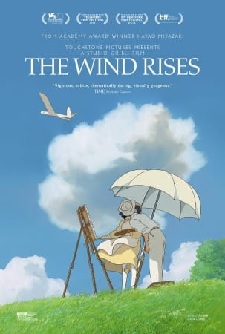
Anime Review: The Wind Rises (2013)

TL;DR – A fictional re-telling of real-life aeronautical engineer, Jiro Horikoshi.

Review (warning: spoilers)

Director Hayao Miyazaki’s vast body of work explores many themes centred around humanity, and what he sees as the direction humanity is taking. A outspoken pacifist, Miyazaki often contrasts the beauty of creation against the horrors of violence in many of his films. He also has a distinct fascination for flight.

The ability to fly must be something Miyazaki sees as achieving freedom. Freedom from gravity, freedom from the weight of human failings, freedom from artistic restrictions, freedom from the boxes we are often forced into.

Whether it is a witch flying a broomstick (Kiki’s Delivery Service), flying castles (Laputa: Castle in the Sky), pigs in seaplanes (Porco Rosso) or riding dragons (Spirited Away), it is clear that Miyazaki’s passion for flight is not a mere motif in his films, but something that he sees as incredibly beautiful.

The Wind Rises is as literal as it gets to Miyazaki exploring the theme of flight. But this movie also expresses his immeasurably disdain towards violence and war. Set in the years leading up to World War II, the film tells the story of Jiro Horikoshi, a real-life aeronautical engineer, who designed and built fighter planes for Japanese Imperial Army.

Horikoshi was strongly opposed to the war, and it is clear that Miyazaki saw a kindred spirit. The Wind Rises is an unapologetic telling of how Horikoshi’s love for flying was used by political powers and the military for war much to Horikoshi’s heartbreak. He never sought to build planes to kill people, he built planes as an artistic expression of beauty, and The Wind Rises demonstrates that beauty in animated glory in a way only Studio Ghibli could deliver.

The dream sequences that Horikoshi has interacting with Italian aircraft designer, Giovanni Battista Caproni, are marvellous, and Miyzaki has not shied away from going into the technical challenges Horikoshi faced in building airplanes.

The Wind Rises also introduces the fictional love interest, Naoko Satomi, who Horikoshi eventually marries. However, she dies from tuberculosis, which somewhat mimics the overall tragedy Horikoshi experiences towards his planes being used for war.

The messages are much more blunt in The Wind Rises, which I imagine was intentional as this was meant to be Miyazaki’s final film. However, I have since learned that Miyazaki has come out of retirement to direct How Do You Live?

As an artistic work, I can appreciate The Wind Rises but I confess that I found other Miyazaki films more poignant and enjoyable. For example, Porco Rosso which tells the tale of an Italian World War I fighter pilot cursed as a pig far more moving and dramatic.

Nevertheless, The Wind Rises is yet another film from Miyazaki’s heart (and likely to him, the most important), and it is a heart that is filled with art and beauty and desire for peace. You cannot help but be moved by that as you experience The Wind Rises.

8 out of 10

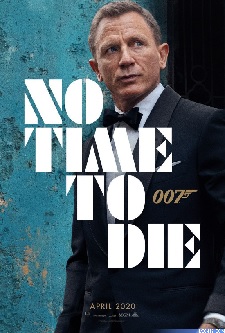
Movie Review: No Time to Die (2021)

TL;DR – For a franchise that has spanned decades and 25 movies (or 27 depending on who you ask) and counting, this is a Bond film of firsts. First time James Bond isn’t 007. First time there is a black female 007 agent. First time James sires a child. And the first time James Bond will meet his maker.

Review (warning: spoilers)

I’ll be up front. I’m not a huge James Bond fan. The man who has a licence to kill, the gadgets and gizmos, the Aston Martins, the womanising, the spy action, the over-the-top villains etc., are all mashed into a kind of amorphous blob for me. I think it has something to do with the main character himself. I just find him kind of bland. And don’t get me wrong, as a piece of entertainment, most Bond movies deliver enough thrills and action to be enjoyable, but I always find them largely forgettable the next day.

In saying this, however, when Daniel Craig took up the mantle and starred in Casino Royale (2006), it was a new take on an old character. Craig breathed fresh air resulting in a James Bond that was more human, more tortured, more flawed, and more interesting as a result.

Craig would go on to star in three more films – Quantum of Solace, Skyfall, and Spectre – before reaching his fifth and final film in No Time to Die.

The crux of the story revolves around a biological weapon of mass destruction (though initially it was designed to target specific individuals only). The weapon uses nanobots that target individuals using their DNA and be deadly to that person but harmless to everyone else. I should say at this point, the vast array of gadgets, weapons and devices used in No Time to Die are outrageously fun and cool but don’t expect them to be grounded in science; maybe science fiction but not science.

Ernst Stavro Blofeld (Christoph Waltz), leader of the criminal syndicate Spectre, currently incarcerated by MI6, and Bond’s arch-enemy, has his minions kidnap the scientist, Dr Obruchev (David Dencik), from MI6. Turns out the bioweapon (coined ‘Project Heracles’) is being manufactured by MI6, much to Bond’s disgust, and Dr Obruchev is the mastermind behind it.

Even though Bond is in retirement, Blofeld still has an axe to grind and sets a trap that draws Bond into working with the CIA and infiltrate a Spectre gathering of bigwigs in Cuba. When the trap is sprung, Bond is infected by the bioweapon while the Spectre elite get to watch on with glee. However, to their surprise, it is not Bond who keels over and dies but many of the Spectre members instead.

Turns out Obruchev betrayed Spectre and is working for a man named Lyutsifer Safin (Rami Malek) whose family was killed by Spectre and wants revenge not only on Blofeld but also wants to wipe out millions of people around the world.

What brings much needed emotional gravitas to the story are the many relationships that surround Bond and the challenges that confront him. This includes:

  • Madeleine Swann (Lea Seydoux) – Bond’s primary love interest, who James thinks betrays him to Spectre at the beginning of the film. Later, Bond realises Swann never had any part in Spectre’s plans to kill him and in fact reveals she has a little girl which James realises is his daughter.
  • Garreth Mallory (Ralph Fiennes) – Head of MI6. He and Bond collide on many fronts yet they realise their goals are to try and make the world a better place even if their ways are misguided sometimes. When Bond discovers that it is Mallory and MI6 behind Project Heracles, it causes considerable friction.
  • Nomi (Lashana Lynch) – She has taken over as the new 007 agent. At one point, Bond aligns himself with the CIA and there is a race between him and Nomi to get to Obruchev first.
  • Felix Leiter (Jeffrey Wright) – a CIA field officer and one of Bond’s few friends, which means he doesn’t survive to the end of the film. The scene where Leiter dies in Bond’s arms is genuinely moving.

No Time to Die is a much more complex film than previous Bond flicks and is better for it. James Bond needs to juggle the many people in his life while also facing off on not one, but two, mad men in Blofeld and Safin.

And for the first time, he sees a life that he can live outside of espionage with Swann and being a father to their daughter, Mathilde (Lisa-Dorrah Sonnet). It is this potential investment that draws the movie watcher into Bond’s plight.

So, it is quite a punch in the stomach, when we watch Bond successfully defeat Safin in the climactic finale only to be poisoned by the bioweapon. In a dying act of spite, Safin smashes a vial of nanobots programmed to kill Madeleine and Mathilde against Bond’s face. James knowing he can never be with the woman and daughter he loves, performs his final heroic act by opening the silo doors to Safin’s island compound as a strike from a UK navy destroyer sends missiles to destroy the bioweapon manufacturing plant within.

Thus, in a movie of firsts for the franchise, James Bond officially dies.

We will now have to wait and see whether 007 will make a comeback in another form or be rebooted. But what is almost certain is Daniel Craig’s tenure as the iconic character has now drawn to a close.

A fine ending, however bittersweet, that will make me remember it for days to come (unlike its predecessors).

8 out of 10

Book Review: Family Tree (Volume One) “Sapling” by Jeff Lemire, Eric Gapstur, Phil Hester & Ryan Cody

TL;DR – an apocalyptic tale with elements of fantasy and horror about a young girl who starts to turn into a tree and her family seeking to save her.

Summary (warning: spoilers)

Loretta is a single mother working at a convenience store, trying to support her two kids, Josh and Meg. When Josh’s high school calls, she needs to pick him up because he’s in trouble for being found in possession of marijuana, Loretta drives by and picks Meg up from her school first. In the car, Meg complains that her skin is itchy and shows her mum a nasty rash. Loretta intends to take her to the doctor, but they have to pick up Josh.

While Loretta meets with the principal, Meg is left waiting in the hallway outside the office and an old man comes up to her and hands her a bag saying she is going to need it.

After a somewhat heated debate with the principal, Loretta takes her kids home and Meg shows her that her back now feels itchy. When she lifts her shirt up, to their horror, they see Meg has a tree branch growing out of her and other parts of her body now look like tree bark.

Loretta and Josh attempt to rush Meg to the hospital but a van collides with their car. A group of men with weapons jump out and try to grab Meg, but the old man appears with a shotgun and starts firing away at Meg’s assailants. The old man turns out to be Josh and Meg’s estranged grandfather.

Thus begins a journey to uncover the mystery behind Meg transforming into a tree, and whether it can be prevented. Why are there people looking to kidnap Meg? What happened to Josh and Meg’s father (Loretta’s husband who abandoned them)? And what does the grandfather know?

Review

Family Tree is a graphic novel series about a mother seeking to save her daughter from turning into a literal tree. The first volume – Sapling – is comprised of the first four issues and mixes current events of Loretta trying to understand what is happening to her daughter with past events involving Loretta’s husband who was cursed with the same fate.

Turns out Meg’s father also succumbed to the horrifying transformation, which is kept a mystery in volume one as to whether it’s a disease, some mad scientist experiment gone wrong, or something else.

Past events show Meg’s grandfather on the run with his son and being hunted down by a group of people whose origins are unknown. Who are they? Who do they work for? How do they know about Meg’s father’s transformation? What are they after?

While the premise sounds ludicrous, the writing of Lemire combined with the effecting art of Gapstur, Hester and Cody create a surprisingly atmospheric story that has just enough mystery that you’ll want to find out what is happening.

Lemire instills emotional pull, especially with the short scenes of dialogue we see between Meg’s grandfather and practically-turned-into-tree Meg’s father in a motel room that you can’t help but be drawn into their predicament.

Meg’s grandfather then sets off to find Loretta and the kids knowing somehow that Meg will be soon suffering the same change. There are hints shown in an other-worldly scene where Meg spiritually connects to her deceased father, and they speak of living together within the confines of a giant tree (a tree so large that it is another world unto itself).

But volume one focuses primarily on the family being hunted. The ending strikes a brutal chord as we witness the grandfather go down fighting against the group of thugs hunting Meg to give Loretta and the kids the chance to escape.

Overall, the first volume gives the feeling there is no messing about. There are three volumes in total to Family Tree so story and art are not given the luxury of diving more in-depth into backstory like other lengthy graphic novel series such as The Walking Dead (which gave me a similar sense of that apocalyptic dread even if The Walking Dead has a completely different story).

Without that luxury of extra pages of both text and art, Family Tree has not grabbed me around the neck from its opening foray simply because you’re thrown right into the thick of it without much exposition. This is both a strength and a weakness in the first volume.

Probably the most glaring omission are the group of individuals hunting Loretta and the kids down. There is no glimpse into their motives or who they are, so you get no feeling other than they are the ‘bad guys’. They might as well be one-dimensional robotic mannequins programmed to hunt.

I assume volume two and three will provide that detail and build up to make it an effective trilogy as a whole, but that is yet to be seen.

Time to pick up volume two.

3 out of 5.