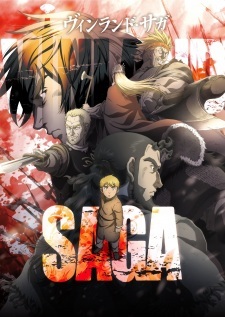
Anime Review: Vinland Saga Season 1 (2019)

TL;DR – During the era of Vikings, only the strong survive and if you’re after revenge then willpower alone will not get you far.

Review (warning: spoilers)

Thors Snorresson, a Jomsviking and considered one of the mightiest warriors ever, seeks an end to all the fighting and fakes his death during an epic sea battle. He flees to Iceland with his wife, Helga, and there they raise their son (Thorfinn) and daughter (Ylva) while living off the land as farmers. When you are known as “The Troll of Jom” and have spilled the blood of countless enemies, you know that becoming a pacifist and deserting your comrades goes against the Viking code. A code that is pretty simple: fight and kill until you are killed so that you can enter Valhalla.

In a sense, Thors is an aberration to all men who call themselves Vikings; who would want to be a farmer living in peace when you can go on voyages to foreign lands and kill, rape and pillage? Blood, valour and riches is all that matters. You can get peace when you’re dead.

Fifteen years later, the story unfolds during a time where war is being waged between Denmark and England. Floki, a former comrade, who discovers Thors is alive, goes to enlist him and the young men of the village by essentially threatening to wipe out the village otherwise. Thors agrees in order to protect his loved ones and the village folk. Little does he know that Floki still holds a grudge from the previous desertion and is secretly seeking Thors demise. Floki does this by striking a deal with Askeladd, a commander of a band of powerful Vikings, to ambush Thors ship at the Faroe islands.

Thors departs with the young men of the village, men that have never seen the true horrors of battle. They talk excitedly about achieving greatness, but Thors has secretly organised for the men to sail back to the village and he would go on ahead himself. This intention is reinforced when it is discovered that Thorfinn has stowed away on the ship against his father’s wishes and only reveals himself when they are at sea.

However, before Thors can navigate a return, the trap set by Askeladd is sprung. What proceeds is an exciting sequence of events where Thors methodically fights his way through Askeladd’s men without killing them. He then challenges Askeladd to a duel.

It should be noted here that Askeladd is no schmuck. His skill at sword fighting is unparalleled and he has a unique intelligence that makes him deadlier than any hulking Viking. The sword fight with Thors is one of the most breathtaking scenes in the entire anime. Thors defeats Askeladd but his son, Thorfinn, is captured by Bjorn (Askeladd’s right-hand man). Thors agrees to surrender so long as Askeladd promises to let Thorfinn and his men go. Askleadd agrees and Thors is slain by a volley of arrows.

This moment forever shatters Thorfinn’s innocence and turns his heart into a pit of despair that seeks revenge. What follows is Thorfinn following Askeladd and his men like an angry dog. Thorfinn challenges Askeladd to a duel but is easily defeated. However, Askeladd seeing Thorfinn’s potential agrees to duel him again if Thorfinn can prove himself in battle.

Much happens as Thorfinn becomes a vicious fighter that Askeladd uses in his schemes. Future duels occur between the pair but Thorfinn always loses (and Askeladd doesn’t take his life).

Vinland Saga is uncompromising, unforgiving and, at times, unbearable. The weak do not survive and the darkness that grows around Thorfinn is all-consuming. The emotional vacuum I found myself in ensured I watched all 24 episodes of the first season.

But the big question is did I enjoy it? Overall, it’s gripping and the animation is effective if not brilliant, but I wouldn’t say it’s one of my favourite animes. There were a few things that bothered me (not enough to make me stop watching it, but enough to down my enjoyment).

The first is Askeladd. He has a strange sense of honor. He agrees to the duel with Thors. If Thors wins then they go free, if Askeladd wins then he can do whatever he wants with them. Thors wins but Askeladd semi-reneges on the deal when Bjorn captures Thorfinn causing Thors to surrender and sacrifice his life. This, in itself, isn’t strange if Askeladd was a man without scruples but even though he orders his men to kill Thors, he still ends up letting the villagers live and return home (he could have killed them or captured them as slaves). And then the ongoing allowance to let Thorfinn duel him and live each time is what drives through the first season, and it’s clear that Askeladd allows this not just so he can use Thorfinn for his own ends but also because there is an underlying acknowledgement of guilt for having killed Thorfinn’s father. I get he’s not meant to be purely a villain (near the end of the series, he’s far from that), but as an elite warrior acknowledging another elite warrior in Thors, I found it puzzling that he went through with the cowardly execution.

The second is the story arc starts off with a focus on Thorfinn and his mission for revenge, but then it becomes clear that the main character isn’t him but Askeladd. His motives and personal history come to the forefront as the war between Denmark and England intensify. Thorfinn becomes a side character until the end of the season when Askeladd kills King Sweyn in an act of sacrifice (he kills the king but in turn gets killed by the king’s guards) to protect his homeland (Wales) from invasion. This sends Thorfinn into madness as he never gets to achieve his revenge. It is my understanding that the second season of Vinland Saga, like the manga, will now circle back to Thorfinn as the main character. But having the first season (and thus first story arc) focus on Askeladd, you can’t help feel that creator Makoto Yukimura did this because he found Askeladd a more interesting character while Thorfinn is just a one-dimensional moody ball of rage.

Lastly, it grated me that Askeladd never tells Thorfinn about Floki’s duplicity. If anyone should be the target of Thorfinn’s revenge, it’s Floki. But for the first season, there is never a glimpse that this will ever be revealed and Floki appears to have got away with his betrayal. I haven’t read the manga and with season two green-lit by Twin Engine, I’m hoping Floki will receive his comeuppance in some fashion.

6.5 out of 10.

Movie Review: Black Widow (2021)

TL;DR – When the past catches up to her, Natasha Romanoff needs to confront more than her previous sins, she needs to confront her family.

Review (warning: spoilers)

In the Marvel Cinematic Universe (MCU), this movie occurs after the events of Captain America: Civil War and before Avengers: Infinity War. It’s not an origin movie for Natasha Romanoff (Scarlett Johansson) a.k.a. Black Widow but more an examination of past choices and their impacts on her present life.

For fans of the Marvel comics (note I said ‘comics’ and not ‘movies’), there will be a number of elements adapted into MCU that may rub the comic purists the wrong way. For example:

  • Natasha was raised by a man named Ivan Petrovich. She was given to him as a baby during the Battle of Stalingrad in 1942 by a woman who perishes in a burning, collapsed building. In the movie, Melina (Rachel Weisz, ex-Black Widow) and Alexi (David Harbour a.k.a. Red Guardian) are depicted as Natasha’s surrogate parents.
  • Speaking of Alexi, in the comics, both he and Natasha meet through the KGB and are trained as agents (no familial ties through blood or otherwise). They fall in love, get married and are husband and wife until Alexi is trained to be the Red Guardian and told he can no longer have contact with his wife by the Soviet government.
  • In MCU and the comics, both Natasha and Yelena Belova (Florence Pugh) are trained in the Red Room. But they were never adoptive siblings as depicted in the film. In fact, the story-line in the comics has Yelena as Natasha’s foe and is sent to kill her.

All the above may be acceptable differences when adapted to make a movie, and in fact, I found Yelena as the younger sibling allowed for much greater character development for Natasha. Their relationship also serves as an integral stepping stone to what is revealed at the end credits (yes, there’s a post-credit cut scene so stick to the end). There is also a scene where Yelena mimics Natasha signature, superhero landing pose (one leg spread apart, crouch position, hand hitting the ground… you know the one).

“Why do you always do that thing?” asks Yelena.

“Do what thing?” asks Natasha.

“The thing you do when you’re fighting. The….like, the…” Yelena proceeds to do the superhero landing, flicking her head back, crouched position, hand out and making her long hair fly backwards. “…you’re a total poser.”

It makes you gravitate toward the pair in ten seconds of screen time.

However, there will be one difference that comic fans may take particular exception to, and that is Taskmaster (Olga Kurylenko).

Taskmaster is the Red Room’s ultimate weapon and plays a role as the main one-on-one kick-ass threat to Black Widow. The fight scene on the bridge where Natasha is ambushed by Taskmaster is brilliant. Taskmaster’s abilities involves “photographic reflexes” where she is able to copy the fighting style of her opponent. She is part of the (predictable) twist in the Black Widow film.

The problem that purists will have with Taskmaster isn’t that she’s female (in the comics, Taskmaster is a male character), it’s the fact that the character is so far removed from the comic story-line that the MCU writers might as well have created a new character. Heck, it’s revealed Natasha’s belief that she destroyed the Red Room and its spymaster was mistaken. Both are alive and well and there’s a bunch of Black Widows all over the world. The writers could have honed in on one “other” Black Widow and given her the ability to copy the exact fighting styles of her opponents. Oh wait… that’s exactly what the writers did. The problem is they called her Taskmaster.

In the comics, Taskmaster has different origins entirely, and his history is complex using his unique abilities on both sides of the hero/villain fence; he’s not in it for the power, he’s in it for the money and thus is more a mercenary type figure. He has fought against HYDRA and the Avengers at different times; assisted both the US Government, S.H.I.E.L.D and criminal organisations. Was the teacher responsible for training the likes of Crossbones, Diamondback, Spider-woman and U.S. Agent. And clashed with Spider-man, Fantastic Four and Deadpool to name a few. None of this fits the story-line in the Black Widow movie, yet they tie the name to one of the characters anyway.

Putting all this aside, the story still struggles in some other key areas:

  • The surrogate parents in Melina and Alexi are confused; do they care more about their jobs or their adoptive children? It doesn’t even seem that they know. It takes Natasha and Yelena together to make their parents realise what their actions have cost them and for the ‘family’ as a whole.
  • In the prologue start of the film, Red Guardian gives his two girls over to the Red Room program. Twenty years later, it is revealed the Red Guardian is locked up in an arctic, maximum security prison because he criticised his own government (forget the fact that he gave over his two girls to be brainwashed into assassin drones). Doesn’t really make much sense but I guess those Russians can be a stickler to critique.
  • Then there’s the puppet-master behind the Black Widow program, Dreykov (Ray Winstone), whose global machinations never feel quite as earth-shattering as they should be (it probably doesn’t help that we know that what is around the corner is Thanos, a much greater threat to humanity).

Still, for all its shortfalls, Black Widow is carried through to the end by the great chemistry between Johansson and Pugh. Their sibling rivalry and bond is the highlight. Every scene the pair are together is where the Marvel magic is unleashed.

Fast forward to post-Avengers: Endgame (or the Black Widow post-credit cut scene), and Yelena is visiting Natasha’s grave. A mysterious woman appears next to her, but those who have watched “The Falcon and The Winter Soldier” series on Disney+ will know she is Valentina Allegra de Fontaine (Julia Louis-Dreyfus). Her exact character role is not revealed in either movie or TV series but if you can’t wait, you can search and get the character bio. Valentina hands Yelena a photo of Clint Barton a.k.a. Hawkeye and says he is the one responsible for Natasha’s death. Thus Black Widow 2.0 is born, and I look forward to seeing Florence Pugh taking on the title character in future MCU movies.

7 out of 10

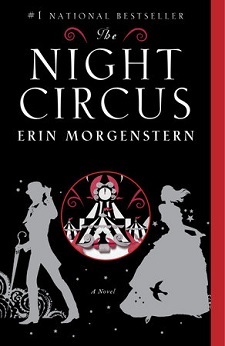
Book Review: The Night Circus by Erin Morgenstern

TL;DR – two magicians, who can conjure actual magic, compete against each other using their proteges.

Summary

Celia Bowen and Marco Alisdair are selected by two rival magicians to compete in a deadly contest where the night circus is the stage. The two proteges conjure ever more intricate and complex spells in the night circus without understanding the rules of the contest or why the contest exists. Through each encounter, both in the real and magical world, Celia and Marco begin to connect on a level much deeper than mere competitors. And it is only revealed much later by their cold-hearted, immutable magician masters that the only way the contest will end is if one of them dies.

Review

Erin Morgenstern’s tale of wonder and woe is sumptuously filled with evocative passages that seek to tantalise all the reader’s senses – sight, sound, smell, taste and touch. It’s an ambitious undertaking but she achieves it through her incredible imagination of the night circus; a magical venue that opens only between sunset and sunrise and transports itself around the world in a blink of an eye.

A key pre-requisite to the reader is not to ask why. If you want to understand why the contest exists between powerful magicians – Prospero the Enchanter and Mr. A. H. (aka ‘the man in the gray suit’) – then you will be sorely disappointed. If you ask, why do these two compete through proxy instead of duking it out themselves? You won’t get an answer.

Prospero and A.H. may have once been of this world, but from what I can gather they have reached a level of god-like power where they now use us as pawns in a chess game. They are aloof, stoic and lack empathy toward any other human being. This is demonstrated when Prospero is willing to use his own child as one of the contestants in their deadly game. Why? Don’t ask. I imagine the pair as two bored all-mighty beings who decided to use mortals in a game of life or death just for kicks.

Then there’s this little nugget that may drive readers to put this book in the bin or at least, back on the shelf:

“I’m not certain I understand the rules,” Marco says.

“You don’t need to understand the rules. You need to follow them. As I said, your work has been sufficient.”

Mr. A. H’s response is nothing short of him viewing Marco as a bug that needs to know how insignificant it is. The master magicians are perfect foils for making the reader care about Celia and Marco. And when the story focuses in on the young pair, the world opens to so much more.

What follows is an adventure that is spell-binding. A feast for fantasy readers. The supporting cast are integral in making the night circus come alive with more than the astounding magical feats of Celia and Marco.

Chandresh Lefevre (a theatre producer), Tsukiko (a contortionist), Friedrick Thiessen (a clock maker), Widget and Poppet (two children born on opening night of the night circus), Bailey Clarke (a young boy obsessed with the circus) and Isobel Martin (a clairvoyant and fortune-teller) are but some of the other characters and all have an important role in the the fate of the night circus and Celia and Marco’s lives.

I especially enjoyed Isobel Martin. Prior to meeting Celia, Marco and Isobel meet and fall in love. She is a tragic figure in the story because once Marco meets Celia he starts drifting away from her. But she plays a pivotal role in the circus. Her emotional conflict drew me in completely to the love triangle that confronts her, and actions that she takes are painful and genuine.

A welcome read that I have no hesitation in recommending to those who enjoy the fantasy genre.

Step right up, step right up, come one, come all and enter the night circus.

4.5 out of 5.

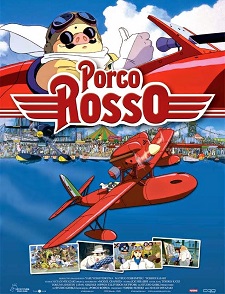
Anime Review: Porco Rosso (1992)

TL;DR – flying pigs never looked so attractive

Review

All lovers of Japanese anime must see this movie. A tale for all ages, I found this to be a wonderful surprise on a late Saturday night filled with adventure, beautiful animation, moving music, simple but intricately woven story-line and colourful characters that will delight both adults and children. Director Hayao Miyazaki is a magician and conjures a film that rivals his other great works such as Tonari no Totoro, Spirited Away and Kiki’s Delivery Service.

The story follows the adventures of Marco, an ex-WWI flying ace turned freelance bounty hunter who flies a gorgeous, bright red, single engine, fighter seaplane. Oh and he’s a pig, or rather an anthropomorphic pig, due to some strange, mysterious curse.

He encounters all sorts of delightful characters all helping or hindering him in his search for the meaning as to why he was a man who became a pig. Along the way the many forms of love and friendship (including between foes/rivals) are explored and by the closing credits I found myself wanting to see more but understanding that the conclusion was as it should be. In fact, I daresay the ending is near perfect.

Story-telling is an art form, and Miyazaki has it in spades. He also has an attention to detail that many viewers take for granted when watching an animated film. For example, the vapor trails from the airplane fight scenes, the architecture of the European cities Marco visits, the mood lighting when Gina sings her forlorn song in the bar at the Hotel Adriano, and the black and white film that Marco watches in a theatre where he liaises with Ferrarin (an old comrade). All these details lend to the feel and atmosphere that can be compared to real life films like Casablanca and Roman Holiday.

A movie to see with a great big bucket of popcorn or loads of ice-cream while buried under a doona or thick blanket. Wonderful to contemplate by yourself or watch with family or friends. I recommend this for people of all ages.

10 out of 10.

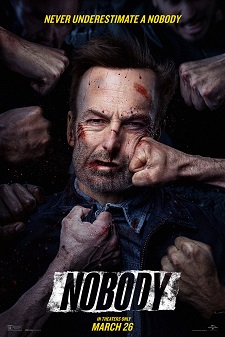
Movie Review: Nobody (2021)

TL;DR – Hutch is an auditor. A man who assesses risks and consequences. If he perceives you as a risk, he’s happy to be the consequence.

Review (warning: spoilers)

Hutch Mansell (Bob Odenkirk) is nobody. Technically, this isn’t true. He’s a father of two kids, a husband to wife, Becca (Connie Neilsen), and holds down a day job as an office worker. So he’s somebody.

However, to police and law enforcement and Russian criminal syndicates, he’s a nobody. But that will change by the end of the movie.

When we’re introduced to Hutch, we sense straight away that he’s unhappy. There’s a lifelessness to him that comes from living a groundhog day existence repeating the same routine over and over again. He goes for a jog in the morning, takes out the garbage, makes a cup of coffee to go, catches the bus to work, clocks in at the metal fabrication company where he crunches numbers on a computer spreadsheet, clocks out, returns home where his kids mostly ignore him, and then goes to bed with no intimacy with his wife. On some days, he’ll vary his routine by doing chin ups at the bus stop shelter while staring at a poster of his wife who is a successful business woman.

The beginning sets wonderfully the struggle Hutch experiences with his mundane life. When one night two thieves break into his home and his son tackles one of them, Hutch has the opportunity to help and catch the thieves. Instead, he freezes and the thieves get away. When later Hutch is talking to his half-brother Harry over a radio in his office and reveals he let the thieves go because they were desperate and the gun they had wasn’t loaded, you realise Hutch is much more than he seems.

When his daughter can’t find her cat bracelet. Hutch springs into action, suspecting the two thieves and hunts them down to their apartment. But when he arrives, he discovers the thieves are parents themselves with a sick baby. Disappointed and angry, he leaves, takes out his frustrations on a brick wall and takes a bus home, bloody knuckles and all.

However, on the way, a bunch of hooligans crash their car at a red light. They’re drunk and stumble out to see the bus waiting at the intersection. When Hutch starts an inner monologue and begs the powers that be to let these hooligans onto the bus, you know Hutch will no longer be a nobody but a somebody. The scene unfolds as the thugs get on the bus and start harassing the passengers to the song I Gotta Be Me by Steve Lawrence & Eydie Gorme. When the gang singles out a young, female passenger, Hutch stands up with a grin, escorts the protesting bus driver out the front door and then turns around to face the thugs and proclaims in no uncertain terms that he’s going to send all these guys to the hospital (actually, he’s more blunt than that but you get the idea).

The fight scene had me on the edge of my seat and Hutch dishes out as much as he gets. It is by far the best action sequence in the entire film and carries immense weight because it’s the first time you see Hutch unleash the beast. It’s brutal, visceral, and completely spell binding. The camera work is brilliant and you can’t help but feel every hit to the face, dislocating bone, knife stab and breaking glass.

In the aftermath, Hutch feels alive. But what Hutch doesn’t know until later is that one of the thugs he treats as a nobody is actually a somebody also. Specifically, the thug is the younger brother of Yulian Kuznetsov (Aleksey Serebryakov), a Russian crime lord that reacts as all crime lords would react when he finds out his younger brother is in hospital with a busted wind pipe, he sends an army to deal with Hutch and his family.

Derek Kolstad, writer of the John Wick series, also wrote Nobody and he has a knack for building suspense and unleashing mayhem. Odenkirk is perfectly cast as Hutch, and the disconnections (at the beginning) and connections (after the bus fight) with his family bring much needed depth to his plight. The scene where Hutch ushers his family down into the basement and the kiss he gives Becca is poignant and yearning. You’ll care about Hutch like you did with John McClane in Die Hard.

The final showdown at the factory has Hutch going MacGyver with an assortment of inventive traps to obliterate Yulian’s henchmen. It’s all a bit silly but by this point, you’re satisfied because of what has happened before.

One of the better action thrillers I’ve seen this year.

8 out of 10

Book Review: Supermarket by Bobby Hall

TL;DR – A psychological dark comedy that puts you in the mind of a struggling writer looking to succeed at all costs. Even if it costs his sanity.

Summary

Flynn has dreams of being a successful author, but he can never finish a story he starts. When his girlfriend dumps him, it triggers a depression that almost drowns him, but he catches a break when a publisher offers a potential book deal on condition that he finishes his manuscript. He decides the only way to complete the story is if he goes method by working in a supermarket for which his story is set. The pressure to write causing his mind to blur the lines between reality and fantasy.

Review

Bobby Hall’s debut novel has been described as Naked Lunch meets One Flew Over the Cuckoo’s Nest – if they met at Fight Club.

If you are aware of these references then this does sum up Supermarket succinctly. It’s a trippy journey that is primarily fuelled by emotional napalm rather than narcotics or alcohol, and demonstrates the darkness that can consume a person that suffers from depression, stress and anxiety.

The human mind is a wondrous thing, but it can also be a prison. The book examines themes of schizophrenia, mental illness, treatment and therapy as we follow Flynn on a journey that keeps you turning the pages even if you can dissect what is real and not and can predict where the story is heading.

When Flynn decides to use the supermarket and his fellow workers as inspiration for his novel, it all makes sense. Writers often draw from their own experiences in order to tell a story, and what better way to tell a story set in a supermarket than actually working in one?

Flynn bases the main protagonist of his novel on Frank, an employee that Flynn admires for his rage-against-the-establishment attitude and laissez-faire outlook on life. Frank has his flaws: he’s chauvinistic, a womaniser, steals from the cash register, and has a gun in his locker for the day some maniac goes nuts in the supermarket. But these flaws are nuggets of writing gold for Flynn to create a more realistic character and are traits that, in their own strange way, Flynn gravitates towards.

There is enough banter, comedic moments, and flashes of hope (e.g. love interest Mia) interspersed amongst the madness that prevented me from putting this book in the DFA (did not finish) basket. It could have been too mind-bending for me to get to the last page, but Flynn’s interactions with different staff at the supermarket carried me along.

However, where I struggled wasn’t in the passages of darkness where Flynn battles his mental demons and his own sanity. Nor was it an inability to empathise with Flynn as Hall does a great job of capturing the challenges of being a writer whether it’s self-doubt, writers block, or procrastination.

What grated me was that Hall does the whole edginess and “see how clever I am?” a little too much like throwing a meat pie at my face and telling me to enjoy it even though I’m vegetarian. For example, when you’re a writer (Hall) writing a story about a writer (Flynn) who is trying to write a story and decides to break the fourth wall by having Flynn talk directly to the reader (me) and then admitting he’s taking you out of the story by telling you something directly… then it’s like what’s the point?

Then there’s a section in the second act where Flynn is describing an interaction at a library. He breaks the fourth wall by telling the reader that he’s not sure he should be describing this interaction. He purposefully diverts the discussion from the upcoming events at the library by telling the reader that this is what you do in novels… you describe stuff. And then goes on to say that he could have told his entire story in five minutes AND then he starts trying to actually summarise the two hundred pages I’ve read previously in a separate narrative to me (the reader) as if doing me a favour.

Is this meant to be edgy? Is it meant to be reflective of the mental instability of Flynn the character? Maybe both, but I don’t think Hall really pulls it off. Other readers may find these passages refreshing or original, but it took away for me what was a pretty engrossing story.

Still, Hall delivers in many other ways. In the acknowledgements, he talks briefly of how he wrote part one in the “darkest of times” and it was only two years later that he awakened to write part two. Clearly, this has been a work of passion (and catharsis) drawn from his own personal experiences and that resonates in the story of Flynn.

3 out of 5.

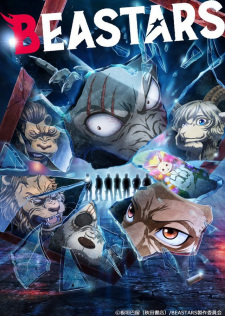
Anime Review: Beastars Season 2 (2021)

TL;DR – Beastars season 2 delves into unveiling who murdered Tem the alpaca, and how Legoshi the wolf seeks to achieve justice while navigating his own identity as a carnivore and his feelings for Haru the rabbit. Life is complicated no matter where you are on the food chain.

Review (warning: spoilers)

The first season of Beastars began with the bloody murder of a student (Tem) at Cherryton Academy. This was largely then put aside for twelve episodes and focused more on the relationships between Legoshi (the wolf), Haru (the rabbit) and Louis (the red deer). It was very much an examination on what it would be like to live anthropomorphic lives as a herbivore or carnivore, and the constant battle of one’s own animalistic instincts as either predator or prey.

It’s tough enough going through those teenage years and puberty without also dealing with the urge to devour or be devoured by your classmates…

Season 2 focuses on revealing the murderer and Legoshi’s desire for justice, and I feel picks up the pace much better than the initial season. As with real life, the decisions the main characters make demonstrate that nothing is ever truly black or white.

Unlike season 1 where the relationship between Legoshi and Haru was explored in depth, this season sees the lens turn to Legoshi and Louis.

The events that unfold once the murderer is known leads to a collision course that I expected would end in blood and violence. I felt the impact of each episode wanting to know what fate lay in store for each character, and the anime ramps up the tension demanding I watch the next episode immediately. In this way, I found season 2 far more gripping.

However, while there was blood and violence, this did not lead to death. In this way, Beastars delves far deeper into what it means to be a carnivore or herbivore (or indeed how it reflects on being human) by showing how strength can come from sacrifice, and understanding can be achieved from forgiveness.

For many anime watchers who enjoy shows like Dragon Ball, My Hero Academia, and Naruto, they will likely find themselves puzzled by the events that unfold in the final episodes. There is a stop-start with the action scenes which some will find strange, but Beastars is not about powering up for the sake of defeating evil (even though Legoshi does indeed go through a power up phase). As I wrote above, nothing is ever truly black or white, nor is it clearly good or evil.

In the end the murderer does go to jail, but he is left with a sense of understanding of what he has done and hope that he can change his ways. Likewise Legoshi and Louis both come to their own understanding and acceptance of what it means to be carnivore and herbivore respectively.

Again, the adult characters are all on the periphery. The only adult characters of note are Gohin (a giant panda) that trains Legoshi and Ibuki (a lion) that acts as a sort of father figure to Louis. It still bothered me that the adults are otherwise nowhere to be seen and the students are left to figure out their own way.

Nevertheless, season 2 builds on the first season in admirable fashion. The animation is consistently stunning and the plot, while odd and at times perplexing, gets you thinking about the bigger questions of life, love and friendships.

7.5 out of 10.

Movie Review: Gunpowder Milkshake (2021)

TL;DR – straight forward action thriller with plenty of action but lacking the thrills.

Review (warning: spoilers)

Nothing annoys an assassin more than when the employer they work for sends them on an assignment without the proper intel. When Sam (Karen Gillan) is given a job by her employer, The Firm, and she’s told the target is not heavily guarded, only to find out that the target is heavily guarded, and she has to go all Rambo to get out alive, you can understand she’s peeved.

However, that’s not how The Firm sees it, and they give her another assignment in order for Sam to get back into their good graces. The target this time is a man who has stolen from The Firm. Sam hunts down the thief, shoots him in the abdomen, and then finds out that the man actually stole the money to pay a ransom for his daughter who has been kidnapped. The Firm, of course, doesn’t give a crap about any of this and just wants their money back.

Somewhere in the assassin’s playbook, or perhaps it’s an unwritten rule, you’re to be a mindless, efficient killing machine and not question any orders unless a child is involved (or a dog in case of John Wick). Then all bets are off.

But Sam doesn’t even need much convincing to go against her employer. She’s got mother issues from having been abandoned at the diner where she traditionally shared a milkshake with Scarlet (Lena Headey) who is also an assassin as well as Sam’s mother. So, the last thing she wants is to become like mommy-dearest by abandoning this girl to whatever grisly fate her kidnappers have in store. Also having killed the man who stole the money to save his daughter can leave even the most hardened hit-girl with a mountain of guilt.

The Firm also finds out one of the henchmen that Sam went Rambo on was actually the son of a powerful crime boss, Jim McAlister (Ralph Ineson). Naturally, The Firm wanting to smooth relations over with Jim and company, gives Sam’s location up. Who knew employer loyalty to their assassin proteges was so fleeting?

There’s plenty of potential across the board here. The cinematography is full of colour and quirkiness; Gillan gets to use a bowling ball, a panda bear suitcase and a giant ceramic tooth as weapons; girl-power is in full force as Headey, Angela Bassett (as Anna May), Michelle Yeoh (as Florence) and Carla Gugino (as Madeleine) all join in on the action; Paul Giamatti (as Nathan) plays the face of The Firm; Chloe Coleman (as the kidnapped Emily) is a revelation; and there’s much needed humour from Michael Smiley (as Dr. Ricky) and the three goofy assassins – Ivan Kaye (as Yankee), David Burnell IV (as Shocker) and Jack Bandeira (as Crow).

But for all the potential the story never delivers as it should and there’s way too many (or too long) slow-mo action shots. The trio of Anna May, Florence and Madeleine are under developed, and when Madeleine gets killed, it feels obligatory because one of the female assassins needs to die otherwise there’s no emotional pull… right? But it didn’t matter to me because it felt like they were simply padding out numbers.

The relationship between Scarlet and Sam is also never properly explored. You could remove Scarlet entirely from the story and just have Sam scarred as an abandoned girl at a diner, and you would still have the same film. Headey does what she can with what she’s given, but in the end, she’s like whipped cream on a milkshake; you can remove the whipped cream and still have a milkshake.

Director Navot Papushado has created a film that is more style than substance. Forget about all the plot holes (for example, the diner introduced in the first scene is meant to be neutral ground and no guns are allowed inside, but in the final scene the same diner is filled with every man and woman carrying a firearm), the film could have reached the thrills of a John Wick film even if it was unable to attain the lofty heights of Leon: The Professional.

With all the blood-letting and brutality, there was Tarantino-level action, but the film left behind the Tarantino-level dialogue that would have built the tension and made you care about the characters. Instead, Papushado appears more interested in ensuring each female character gets enough screen time for a slow-mo action scene.

5.5 out of 10

Book Review: The Wife and The Widow by Christian White

TL;DR – a brilliant suspenseful tale of two women and the lengths they go to for the ones that they love. If you like crime mysteries, this is a must read.

Summary

Grief-stricken Kate (the widow) discovers her husband led a life unknown to her. Abby (the wife) lives on a tourist island and is confronted with the prospect that her husband is a murderer. Both seek to uncover the secrets of the men in their lives and in the process discover not everything is what it seems.

Review

Christian White has written a crime fiction novel that will have you turning every page with an eagerness to reach the destination. When you get there, you will be filled with awe.

Or in my case, filled with an intense desire to throw my keyboard out the window and give up on writing for I was stunned that someone could write like this. The prose is eminently readable and the female leads are both vivid and convincing.

Kate Keddie is a Melbourne city woman waiting for her husband, John, at the airport. Her young daughter, Mia, bounces excitedly next to her seeking minute-by-minute updates. When the plane from London finally lands and passengers start emerging through the exit doors into the arrivals lounge, the atmosphere is filled with the anticipation that comes from a collective group of people waiting to spot their family or friends returning from faraway. But when John doesn’t emerge, the excitement is filled with a sudden dread. Kate checks she hasn’t missed any calls, texts or emails from her husband telling her that he missed the flight. Nothing on any of the channels. When later, Kate phones Trinity Health Centre for Palliative Care, where John works as a physician, she expects they would know of any news from her husband since they were the ones who sent John to the medical conference in London in the first place. That’s when she discovers, John hasn’t worked at the health centre for three months…

Abby Gilpin is married to Ray and has two teenage kids in Lori and Eddie. They all live on Belport Island, a holiday destination for the city folk. Abby is a dutiful wife, caring mother, loves reading true crime stories, and works at the local supermarket. Her husband Ray runs a business called Island Care, which provides cleaning and maintenance services to home owners. When a body is found on the island and it all points to murder, Abby becomes as intrigued as the rest of the locals until her world starts turning upside down when she begins to suspect Ray is involved.

White is skilled in throwing the reader right into the thick of it, and I found myself investing in the dilemmas of Kate and Abby and following their paths until they eventually cross. He also introduces a third, silent character that is every bit as important as the two main protagonists – Belport Island.

In summer, Belport Island is a tourist hot spot. Only a ferry ride from the mainland, it serves as the perfect place to getaway from the big smoke and city grind.

In winter, Belport Island is a ghost town. The locals rely heavily on the summer peak season to eke out an income, but most of the businesses close during the winter.

White captures the malaise that festers across Belport during the frigid months, and the love/hate dependency the locals have on rich city folk coming to their town. The island is a reflection of this attitude when tourists vacate after summer break is over and the cold settles in leaving the locals to fend for themselves. Everything feels harsher. The rocky shores look sharper, the currents of the sea more treacherous, the holiday homes empty and lifeless, and the streets sapped of warmth beneath steel grey skies.

Belport Island is the perfect setting, the perfect silent character, that weighs down on the minds of Kate and Abby as they each search for the truth about the men in their lives.

One of the best reads I’ve experienced in a very long time. Damn you, Christian White, damn you.

5 out of 5.

Anime Review: Beastars Season 1 (2019)

TL;DR – can carnivores and herbivores co-exist in peace?

Review

Welcome to Beastars, this is not Zootopia… I repeat this is not Zootopia. If you are looking for the Disney film please close this review immediately. You have been warned.

Beastars is set in a world of anthropomorphic animals (i.e. animals with human traits and emotions) where the ‘civilised’ co-existence between carnivores and herbivores is constantly threatened by animalistic instinct. The story focuses on the student life of Legoshi, a shy, awkward wolf with enough arm and jaw strength to tear the limbs off small creatures.

The scene is set when Tem, an alpaca student, gets murdered and devoured triggering a chain of events that examines the tenuous relationships between carnivores and herbivores. Aside from Legoshi, the cast is large and varied.

There’s Haru, a promiscuous, white rabbit, that Legoshi becomes attracted to while fighting his instinct to eat her; Louis the red deer and dreaming to become the next Beastar (a title given to an individual of great talent and service); Juno, a female gray wolf that has a crush on Legoshi; and a plethora of other supporting characters including a Labrador, cheetah, Bengal tiger, anteater, panda, bald eagle and mongoose to name a few.

The animation is nothing short of stunning with both characters and background settings created in remarkable detail.

There is also complexity and layered emotions in every character. Layers that lead to existential crises and lots of philosophical contemplation. This is all interspersed with depictions of extreme violence and sexual references that is not for the faint of heart.

The anime is based on the manga of the same name, illustrated and written by Paru Itagaki. Whether intentional or not, Itagaki has created a story that examines behaviour both animal and human that is allegorical in nature. The messages it speaks of reflects the strengths and weaknesses of real life and humanity.

Overall, for all its beauty and darkness, season 1 meanders somewhat as the murder of Tem is side-lined to examine more the inner struggles of the main cast. You almost forget the murder ever happened until the last episode where the first story arc of Legoshi, Haru and Louis closes and you’re reminded that the murderer is still on the loose. I don’t know why, but I found it difficult to empathise with any of the characters. Philosophical monologues would occur with a purpose that eluded me.

The adult characters are all on the periphery. The main characters, all in their teens, have to figure out everything themselves. The murder is never properly investigated. All of this disconnected me from their plight. Legoshi, Haru, Louis and company all attend a school that largely appears to teach nothing about life let alone subjects. So in the end, it becomes more about an animal kingdom where everyone is trying to survive rather than striving to live.

7 out of 10.