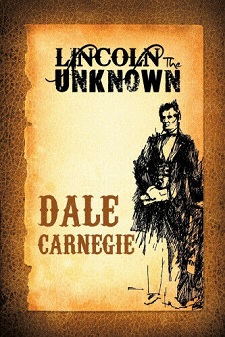
Book Review: Lincoln the Unknown by Dale Carnegie

TL;DR – it is often said that behind every great man there is a great woman… and then there’s Abraham Lincoln.

Summary

A biography of Abraham Lincoln written by Dale Carnegie, who pulls back the curtains on a man who experienced almost unending darkness to achieve change during a time when blood, sweat and tears soaked American soil.

Review

Clementine Churchill was married to Winston Churchill for 56 years. Coretta Scott King was married to Martin Luther King Jr for 15 years before her husband’s assassination in 1968. Both women created lives that were filled with numerous accomplishments while being steadfast, supportive wives to their husbands. They are a couple of examples that fit the “behind every great man there is a great woman”.

Then came Mary Todd Lincoln who broke the mold. At least, that is how Carnegie portrays her and what you will walk away with if you read this biography.

I don’t normally read non-fiction, but when a friend of mine recommended me Lincoln the Unknown, I thought I would give it a go. While there have been many books written about arguably the greatest president in American history, I discovered that Carnegie’s biography of the man captures far more than Lincoln’s political accomplishments and chronicles a life that was profound with suffering and an almost unheard of strength of will to strive for what he believed in.

Though debated by historians, Carnegie states in no uncertain terms that Abraham’s first and true love was Ann Rutledge, who died of typhoid at the age of 22. The many events that follow leading up to his marriage to Mary Todd Lincoln will leave you gobsmacked.

By all indications, she was a manipulative, power-hungry, jealous, angry, and mentally unstable woman who made Abraham’s life a living hell. Carnegie does not mince his words and makes it clear in no uncertain terms that she was considered a devil woman with many of Abraham’s closest friends urging him not to marry her. The fact that he did through Todd’s manipulation and his own honour as a man demonstrates he operated in a time that no longer exists today.

How Abraham Lincoln went on to achieve everything he did is beyond me. From his first inaugural address to the Emancipation Proclamation to the Gettysburg Address and reunifying a nation torn by civil war, Lincoln lived a life that any other person would have looked at and said, “Yeah, that’s not for me.” Imagine the stress, anxiety, pressure, worry and insomnia he experienced as a result of being president during a civil war with an economy going down the tube and then throw in a marriage that left nothing but heartache and pain.

One could argue whether Lincoln would have achieved such immortal greatness if he was happily married. That being driven out of his home by a vindictive, jealous wife forced him to focus on his life’s work rather than the idea of life’s love.

We will never know.

4 out of 5.
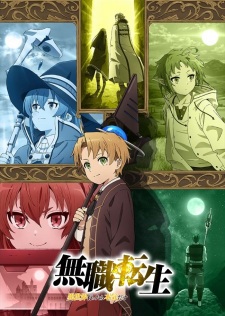
Anime Review: Mushoku Tensei: Isekai Ittara Honki Dasu Season 1 (2021)

TL;DR – a jobless recluse dies in an accident only to be born in another world where sorcery, warriors and monsters exist. He has a chance to live a second life. Oh and he also remembers his first life entirely so he has an adult mind in a child’s body.

Review

The story of an introverted, jobless Japanese man who undergoes some sort of transformation is a common trope in anime. For Mushoku Tensei, the transformation occurs when said character trope attempts a heroic act to save some teenagers only to be hit by a truck and dying in hospital. He then gets reincarnated into a world of might and magic as a baby but retaining all his memories and knowledge of his previous life.

Known as Rudeus Grayrat, this second chance at life leads him down a path where he learns to live with greater meaning and purpose than he ever did in his first life. He is nurtured and loved by his parents, Paul Greyrat (father and master swordsman) and Zenith Greyrat (mother and accomplished healer) and soon discovers that he, too, can conjure magic.

The anime is strong at the beginning as Rudeus, as a baby and toddler, has a mind of an adult. The inner monologue is amusing as he absorbs his new environment and learns the rules and mechanics of the world he has been born into. The fact, his parents and everyone around him, has no idea that he has already lived an adult life leads to some comic moments ripe for ecchi.

Through flashbacks you discover, he was bullied, oppressed and homeless, which traumatised him deeply. And through the bonds he forges with the new people he encounters, he learns to overcome those emotional scars.

The novelty of the beginning soon wears off. The episodes moving slower than I wanted. Episode five was a particular highlight when Ghislaine Dedoldia, a warrior beast woman, comes to rescue Rudeus who is trying to protect Eris Greyrat (his cousin) from being kidnapped.

After that the story unravels somewhat as a mysterious ball in the sky appears along with an increase in monster activity. The mysterious ball turns out to be a gathering collection of mana and then in episode eight, new characters are introduced with no clue as to who they are or what their purpose/motive is. There’s a guy who appears to be able to control dragons, a little horned demon girl who leads an army that we don’t see, a dude that lives in a castle that floats in the sky and ruminates that the ball of mana may be a spell seeking to break the seal imprisoning a demon-God named Laplace.

The ball of mana explodes engulfing Rudeus and Eris and teleporting them to a demon continent where they are saved by Ruijerd Superdia, an elite killer, who decides to help them get back home. Together the trio journey to the city of Rikarisu where they register as official adventurers and can take on quests to earn money.

As you can see I wasn’t joking when the story unravels into a disjointed mess. Events occur that I’m sure will tie in to later episodes but season one ends with no answers provided. The series becomes flat and lifeless and my investment in Rudeus and his friends hanging by a thread.

The animation is solid if not spectacular, and there’s really not enough provided in the story to keep me going. Season two is scheduled to be released in October 2021. It’ll be a coin flip as to whether I’ll watch it.

5.5 out of 10

Movie Review: Green Book (2018)

TL;DR – a road trip film about identity, race, culture and friendship.

Review (warning: spoilers)

The title of this film is based on The Negro Motorist Green Book which was an annual guidebook for African-American road trippers. From this, you immediately get a sense of what this movie is about. Set in the era of Jim Crow laws where state and local laws enforced racial segregation in the southern United States, the green book provided information on where places were relatively friendly and safe to travelling African-Americans.

The racial divide underlies the story but this film is much more than that as it focuses on two men of different childhoods, backgrounds and cultures overcoming the narrow views imposed on them to find a connection that grows into friendship.

Inspired by a true story, we follow gifted classical and jazz pianist, Don Shirley (Mahershala Ali) on a road tip into the deep south with chauffeur and bodyguard, Frank “Tony Lip” Vallelonga (Viggo Mortensen). Don is educated, refined, well-spoken and seeks to rise above (in his own way) the prejudices and discrimination he faces every day. Tony works as a bouncer, struggling to find work in an America coming out of a recession in 1962. The scene where Tony competes in a hot dog eating contest to win a bet sums up the lengths he will go to earn some cash for his wife and two kids. He’s rough, says-it-how-he-sees-it, and has been infected by racial and cultural prejudices himself through society and his own upbringing in a robust Italian family.

When his job as a bouncer is put on hold because the club is being renovated, he applies as a driver for Don on a music tour of the south. The initial friction between them slowly transforming as they continue on their journey together. Examination of Don and Tony’s own idiosyncrasies and fallibilities along with their building trust lifts the film. And when faced with all manner of unsavoury incidents from Don being beaten by a group of white men at a bar to a country club refusing him to eat in the whites-only dining room, Tony comes to the realisation of his own prejudices and their bond becomes one of genuine friendship. There’s plenty of comic moments too that enhances their on-screen chemistry.

Winner of the Oscar for Best Picture at the 91st Academy Awards, this is an uplifting film that is in stark contrast to more recent Best Picture winners in Parasite (black comedy thriller) and Nomadland (bleak drama).

I have also read that Green Book has received controversy in its depiction of Don Shirley along with the white saviour trope (white character saves a non-white character while also learning something about him/herself). Whether such criticism is fair or otherwise, had it not been inspired by a true story, the movie is still highly enjoyable and when viewed through that lens, the message of hope and reconciliation is worth being said. For without it, how will we ever change for the better if such things are kept silent?

9 out of 10

Book Review: Scythe (Book 1 of Arc of a Scythe series) by Neal Shusterman

TL;DR – In a world where disease and death has been mostly conquered, over population becomes an issue. Enter the Scythedom, an organisation that is responsible for the selection of those chosen to be gleaned (killed) in order to maintain a population level that can be sustained. They provide a necessary service… or is it really necessary?

Summary

Humanity has created an artificial intelligence known as the Thunderhead. It has evolved to the point where it creates a near-Utopian society. Everyone has a link to the Thunderhead, a relationship that allows the AI to serve and protect them from sickness, disease, violence and even self harm. People now have the ability to live forever. This leads to the problem of over population.

The Scythedom came into being as a means to cull numbers, and it was decided that this could only be performed by humans. It also is the only organisation that the Thunderhead has no jurisdiction over. Along with a licence to kill, scythes are also given a ring that allows them to grant immunity for a period to the family members of those that they glean/kill; this immunity means that those family members cannot be gleaned themselves for a year.

With this as the backdrop, the story follows Citra Terranova and Rowan Damisch, two teenagers that are chosen by Scythe Faraday to be his apprentices. Both grab his attention for demonstrating a level of moral fiber that he believes is a requirement to become a scythe. He explains to them that the Scythedom meet three times a year at a great assembly known as conclave to discuss the business of gleaning and whether more scythes are needed. He has been given one ring to take on an apprentice. He decides to take on two and whoever succeeds in being anointed a scythe, the other will return back to their normal life.

But this gets turned on its head when Scythe Goddard (a rival scythe whose methods of gleaning, Faraday disagrees with) manipulates vernal conclave and obtains a ruling that whoever of Faraday’s apprentices gets ordained as a scythe, he or she must then glean the other apprentice. Thus sets the stage for book 1 of the Arch of a Scythe series.

Review

Neal Shusterman has written an astounding young adult novel that is both fascinating and gripping. A world where living forever creates a whole different set of problems (not just overpopulation but stagnation in individuals living a life of meaning and purpose) and a system is established through the introduction of scythes to stem the tide of population growth, Shusterman achieves enough dystopian realism that you believe that if such a world existed, the world of Scythe would be it.

Both Citra and Rowan are immensely likeable, their personalities and motives for accepting their apprenticeship distinct. Scythe Faraday is the perfect foil for both of them until events tear the apprentices away from their master. This inciting incident leads to them going down very different paths before meeting up again at winter conclave where it will be decided who will be ordained the next scythe and in turn also end the life of the other.

I enjoyed the ending of book 1, and it sets the stage for a larger scale story in book 2. You sense there is far more to be told than the two lives of Citra and Rowan. Hints toward a much more complex tale between Scythedom and the Thunderhead. Yes, the Thunderhead intrigued me to no end. And that is what you want in a trilogy. For each book to have a satisfactory end yet tying together a bigger picture. Remarkable effort.

4.5 out of 5.

Anime Review: Haikyuu!! Season 1 (2014)

TL;DR – the best volleyball anime ever (drops microphone…)

Review

For a sports anime to be elevated into greatness, it has to tick a lot of boxes for me.

Firstly the accuracy, as much as the animation, needs to be spot on. Sports animes such as Kuroko no Basket (basketball) and Yowamushi Pedal (cycling) have elements that are unrealistic or border on the fantastical. The animation looks great but when the characters have almost superhuman powers (as in Kuroko no Basket) or defy physics/gravity (as Midousuji Akira does in Yowamushi Pedal by cycling around a corner leaning an inch from the ground) then it’s no longer a sports anime.

Secondly, the story needs to engage and have a narrative that is more than just the sport itself, otherwise you might as well watch a live sports match rather than an animated one.

Thirdly, and generally all sports anime do this well, the characters need to be explored and have depth. There is a balancing act to this as sports anime often goes into long-winded backstory flashbacks that can sometimes take up more than one episode before returning to the present competition at hand.

Lastly, how the sports anime progresses when they’re not competing in a game is as critical as the sports action itself. Filling the gaps between tournament games/matches allows for greater story and character development, but this is also a balancing act and can detract or enhance the series accordingly.

For Haikyuu!! Season 1, it ticks all the above boxes. The story primarily focuses on two characters – Shoyo Hinata and Tobio Kageyama – who face each other in a volleyball tournament in junior high school.

Hinata is short, got red hair that reflects his competitive spirit, and can jump great heights and loves spiking the ball. He puts together a team in his junior high school that can’t really play volleyball but his enthusiasm is infectious and he builds a positive environment for his teammates to play together even if they can’t play well.

Kageyama is tall, got black hair and has a win-at-all-costs attitude that is a detriment to this team. He is a gifted setter (the player in volleyball that sets the ball before it gets spiked) and can control who he sets to with incredible precision. Unfortunately, he demands his teammates to be quicker and stronger to meet his standards. Unlike Hinata’s team, Kageyama’s team is actually good at volleyball and their junior high school has a strong volleyball program, but his teammates soon despise Kageyama for his dictator-like attitude to playing and essentially sapping out any joy in the game.

In the first episode, Kageyama’s team crushes Hinata and his teammates but Kageyama sees the fire in Hinata and can’t understand why he isn’t playing on a better team. They are rivals but there is a begrudging respect for the competitive spirit in each other. Fast forward to the next year, and it turns out that Hinata and Kageyama have joined the same high school – Karasuno – much to their disbelief. What follows is a heated and humorous unfolding of their rivalry while also seeking to build chemistry with the rest of their Karasuno teammates.

If after 17 minutes and 30 seconds of the first episode, you aren’t grabbed by this anime then don’t bother watching the rest of the series. It was an adrenaline rush of the highest level. A build up leading to a moment of animation that I knew meant I was watching a sports anime that had the promise of greatness. The rest of season 1 delivers on this promise as we follow Karasuno and the trials they face on and off the court leading to a brilliant practice match against Aoba Johsai high school.

If you want to watch a sports anime, that isn’t just good but great, then this is the one.

10 out of 10.

Movie Review: Anon (2018)

TL;DR – a sci-fi film that has been largely panned by critics is actually a real gem.

Review (warning: spoilers)

The use of technology to record evidence of criminal activity is nothing new (e.g. CCTV, digital recorders, facial recognition etc.) With the ever expanding advancements that allow social networking to connect us around the globe, and the increasing collection of personal information by corporations, the idea of “big brother” has allows loomed heavy over society and governments. The balance between human rights/privacy and law enforcement/monitoring through the use of technology is an ongoing challenge.

It’s also ripe material for creating dystopian sci-fi stories of which Anon examines in clever detail. The film starts with us following detective Sal Friedland (Clive Owen) walking to work, and through his eyes, we see that every person he focuses on, he can bring up all manner of information from name, age, address to social and biographical information. Law enforcement also have different clearance levels to access things like criminal history as well as be able to video replay past events as seen through those individuals.

The CGI effects are clean and minimalist in nature. They provide an augmented reality that I found engaging and immediately shows the viewer that we’re in a futuristic society. There’s a definite Matrix feel to the environment. We watch as Sal passes various civilians and profiles are brought up through his ocular enhancements, but when a female pedestrian (Amanda Seyfried) walks by and brings up an error (i.e. no profile and flagged as “Anon”), Sal pauses, puzzled and wondering if there’s a glitch in the system.

When a series of murders start to unfold, it becomes clear that someone has hacked the system and found a method to get away with the killings. This part of the story drew me in completely. What the killer does is take over the victim’s ocular system and transfers their sight to the killer’s view. Imagine seeing yourself through the eyes of the killer as they calmly walk up to you with gun in hand. Disorienting and confusing, you watch yourself beg, cry out, asking what is going on, only for your brains to be blown out. In this way, the victim never sees who kills them.

After further detective work, the Girl/Anon becomes linked to the killings and is the primary suspect. She has the ability to replace recorded histories with fake events and her services are sought by the wealthy. For example, a married man who has an affair can have the affair erased and replaced with innocuous events. So long as you pay her price in cash, she can create a whole new history for you. Sal goes undercover to hire her services and a cat and mouse game ensues. The twist to this sci-fi mystery is worth the wait in my opinion.

Clive Owen is a bit wooden as Sal. I’m not sure if that’s how the character is meant to be portrayed or not. In a world where practically all crime can be solved with little actual detective work because everything is recorded, his character is mostly bored at the beginning, but this picks up when the killings begin. Amanda Seyfried plays the femme fatale with conviction and her analog existence demonstrates a cautionary tale of our reliance on digital technology.

Critics (and many audience reviews) have panned the film as bland and lacking substance. I found it a pleasant surprise that mixed elements of Minority Report and neo-noir L.A. Confidential.

Anon may not reach the heights of either of those two films, but it is certainly better than some other bigger budget sci-fi offerings out there.

7 out of 10

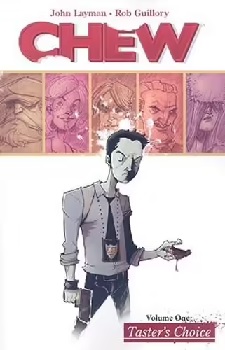
Book Review: Chew (Volume One) “Taster’s Choice” by John Layman & Rob Guillory

TL;DR – a dystopian world where there is a prohibition on poultry and individuals exhibit powers that revolve around tasting food. There’s conspiracy, intrigue and cannibalism… all you need in this award-winning graphic novel.

Summary

Tony Chu is a detective and Cibopathic. He can bite a piece of fruit and get psychic impressions of where the fruit was grown, what pesticides were used, and when it was harvested. Or he can take a bite out of a steak and get a much more violent psychic impression as to how the beef came to be served on his plate… the only food that does not trigger this ability are beets.

Together with his partner, John Colby, they work for the Philly P.D. busting illegal poultry distribution. Yes, you read correctly, it is illegal to sell, buy, or eat poultry meats. Why? Because years ago an ‘avian flu’ pandemic struck the world and wiped out millions of people. Subsequently, the governments outlawed the consumption of birds. This has led to conspiracy theories, protests, and plenty of underground racketeering in the area of poultry.

Volume one introduces us to this strange world where Tony’s unique ability allows him to solve many acts of culinary violence. Not that his boss treats him in any way other than a freak. Things take a more bizarre turn when he is recruited by the FDA (Food & Drug Administration), the most powerful law enforcement agency on the planet, and is thrown into a series of cases that hint to a far greater conspiracy than he could imagine.

Review

John Layman and Rob Guillory have created a story that is fascinating and gross in equal measure. This is a good thing for it provides a distinct feel, flavour and theme to the world of Chew. The story grabs you like a culinary delight filled with all manner of surprises, not all of them pleasant, but propelling you along to the next course with a curiosity that you can’t resist. The characters are all colorful and distinct, and artist Guillory has a style that is incredibly appealing. A combination of influences from other famous artists such as Steve Ditko, Dave Crosland, Rumiko Takahashi and Chuck Jones.

We’re introduced to Tony and John on a stakeout to bust an underground restaurant that serves chicken dishes. What they encounter is a sous-chef serial killer that has been kidnapping people and eating them (why eat chicken when you can eat human?)

Things quickly turn for the worse as they bust into the kitchen only for John to get a cleaver to the head. Tony captures the serial killer but not before he commits suicide by slitting his own throat (thinking he’ll take all his cannibalistic secrets to the grave). Tony, seeking to bring closure to the families of the murdered girls, proceeds to take bites out out of the killer to obtain the memories of the atrocities that have been committed. Tony closes all thirteen murder cases and captures the eye of Mason Savoy who recruits him to the special crimes unit of the FDA. And that’s all in chapter one…

Mason Savoy is a particularly fabulous character, a giant of a man, who talks with eloquence and a joy for rhetoric. He also happens to be a Cibopath and together they proceed to investigate a series of events including:

  • a missing health inspector
  • the Yakuza
  • a food critic named Amelia Mintz (who is a Saboscrivner; every dish she writes about is so real that people who read her words can taste the dish)
  • E.G.G (a terrorist organisation that believes the government has lied to the public about the avian flu)
  • and a bunch of astronomers working in a lab at the arctic circle.

There’s much to absorb in the first volume of this magnificent series. Every panel should be examined carefully as it provides hints as to what is to come. Chew will have you chomping at the bit for the future volumes. Enjoy the feast.

4.5 out of 5.

Anime Review: Ano Hi Mita Hana no Namae wo Bokutachi wa Mada Shiranai (2011)

TL;DR – a group of six childhood friends drift apart after one of them tragically dies. Years later, as teenagers none of them have truly moved on and when the ghost of the one who died appears, they reluctantly come together to figure out what needs to be done in order for her to move on to heaven. Sometimes the most beautiful flowers bloom from tragedy.

Review

Aside from being the longest title I’ve ever seen for a TV series, this slice-of-life anime examines life, loss and friendships in a way that isn’t sentimental for sentimentality’s sake. The title translates to “We Still Don’t Know the Name of the Flower We Saw That Day.” For the purposes of this review, I will refer to it as Anohana.

The first thing to highlight is the music. Both the opening and ending theme songs are perfect. “Aoi Shiori” by Galileo Galilei and the cover version of “Secret Base (Kimi ga Kureta Mono)” by Ai Kayano, Haruka Tomatsu and Saori Hayami match the feel and atmosphere of this spectacular anime. If you take the time to find these songs on YouTube with English translations, you will also discover the lyrics fit the themes of Anohana.

The second thing to highlight is the animation itself. The backgrounds and settings are gorgeous to look at, and the character design is clean and distinct. I especially like how they switch between the characters as children in sixth grade and how they are older in high school. The subtle differences is a lovely contrast and you can notice this if you watch the opening credits as they switch between the cast in sixth grade to high school. Don’t miss noting the flower in the opening credits that replaces one of the main characters.

But neither the music nor the animation would be as effective if it was not for the story. The plot surrounds six childhood friends who grow apart after a tragic accident involving the death of one of their group, Meiko Honma (nicknamed ‘Menma’). As they age and lose touch with each other, the impact of the tragedy lingers on in their hearts in different ways; how they deal with it as they age and how it forms a part of who they are and what they become as they get older.

First there’s Jinta, who was the leader of the sixth grade group. Gregarious, excitable, and always seeking adventure. We are introduced to him now in a hermit-like existence, skipping school, eating ramen, and playing video games at home away from the outside world.

Naruko has bright red hair, is awkward, wears large square rimmed glasses, and always looks up to Jinta when they were in sixth grade. I found her adorable and of all the character designs, she’s my favourite of the six. As a teenager, she’s blossomed and is quite the stunner in high school but beneath the exterior, the anxiety and awkwardness remain.

Tetsudo (affectionately known as “Poppo”) is a shaved head little kid who enjoyed hanging out with Jinta and the others. He undergoes the largest transformation as he fills out to be a tall teenager, thick brown hair, who loves his food, and aims to travel to as many places around the world as he can. Of all the characters, his is the one who seizes his life and seeks to make the most of it.

Atsumu is a boy who had a crush on Menma when they were kids. In the current day, her death does not appear to have had any lasting effects. He seeks to leave the past in the past. He’s now grown into a handsome teenager, smart and athletic, and the eye of many of the girls in the elite high school he attends. This is all a façade, however, and as the series progresses it is revealed that he has never managed to move on from Menma’s death.

Chiriko is a long black haired girl who is shy and quiet. Her personality appears to remain the same from childhood to teenager. She attends the same elite high school as Atsumu and they often go to and from school together. It’s clear that Chiriko has feelings for Atsumu but has never expressed them because she has always known Atsumu was in love with Menma. While the quietest, she is the most astute of the group. She understands the position she is in, and acknowledges her own hope (foolish or otherwise) in waiting for Atsumu.

And last but not least is Menma, silver haired, doe-eyed, free-spirited. She hides her hurt behind smiles and is always considerate of others.

When Menma appears to teenage Jinta as an older version of herself, he think he’s just hallucinating. But as time progresses, he comes to believe that she has come to him in ghost form. Events unfold as the paths of the group reunite to fulfil Menma’s wish. Part of the mystery is figuring out what her wish is for even her ghost form doesn’t know what it may be. Jinta is convinced that if he can achieve her wish then she can move on to heaven. Little does he know that he and the others have never let Menma go themselves and only through coming together are they able to properly process their grief, guilt and previous actions.

A beautifully woven tale of childhood innocence lost, how scars when not treated with kindness can turn into hate, and ultimately how forgiveness and understanding can achieve freedom and hope. One of the best animes I’ve seen.

9.5 out of 10.

Movie Review: Palm Springs (2020)

TL;DR – Time-loop romantic comedy that’ll delight fans of Andy Samberg’s schtick.

Review (warning: spoilers)

Andy Samberg and Cristin Milioti team up in this off-beat comedy that sees them stuck repeating 9 November due to entering a time paradox that resides in a cave somewhere in Coachella Valley. Think Groundhog Day in Palm Springs, California instead of Punxsutawney, Pennsylvania.

There’s a lot of dysfunction with the entire cast of characters (except perhaps one). The cleverness of this film comes from exploring that no one is squeaky clean, that being human means being flawed and that even if you know everything that is going to happen (i.e. if you were living the same day over and over again), you make choices and your actions do have consequences even when you think they don’t because you’re in an infinite loop. The consequences come at chipping away at Nyles (Andy Samberg) and Sarah’s (Cristin Milioti) own souls because even though everyone around them has reset to 9 November, they haven’t; they carry the knowledge and memory of everything they’ve done on those hundreds/thousands/millions of 9 Novembers previously.

The dysfunction carries both the comic and surprisingly thriller moments in the film, and I became invested in finding out what fate lay in store for Nyles and Sarah. The premise for their paths crossing in the first place surrounds a wedding being held at Palm Springs between Sarah’s sister, Tala (Camila Mendes) and her future brother-in-law, Abe (Tyler Hoechlin). Through subsequent loops presented in the film and through the eyes of Nyles or Sarah, key elements of the story are revealed including:

  • Nyles’s girlfriend, Misty (Meredith Hagner) cheats on Nyles at the wedding reception.
  • Sarah actually slept with her sister’s groom, Abe, the night before the wedding.
  • Roy (J. K. Simmons), a family man and wedding guest, has a wild night with Nyles, does drugs, gets stuck in the loop and proceeds to hunt Nyles to kill him (repeatedly) through future loops. The first appearance of Roy with bow and arrow shooting Nyles and Sarah’s subsequent reaction is nothing short of priceless.
  • Initially, it appears Nyles comes to rescue Sarah when she’s asked to do a speech as the maid of honor at the wedding reception. Sarah is unprepared, didn’t realise she had to do a speech, so Nyles swoops in and does a wedding toast instead saving her from embarrassment. Later, it is revealed that Nyles, does this because he knows Sarah will end up sleeping with him when he does this.

All these nuggets are a sample of the fallibility in all the characters. The only one exempt appears to be Tala, who doesn’t know Abe has cheated on her with her sister and is portrayed almost like a saint having donated bone marrow previously to save her brother’s life.

The many attempts to get out of the loop contain the usual dark humor and creative ways of suicide. The movie is edited skillfully to ensure that repeated scenes don’t bore but have purpose, and the plot moves at a pace that allows for sufficient self-realisation by the main pair even if predictable. The culmination of character development and change in Nyles and Sarah leads to the eventual escape of the time loop.

Make sure you also watch for an extra scene during the credits showing an interaction between Roy and Nyles. It’s a nice touch at the end even if open to interpretation.

7.5 out of 10

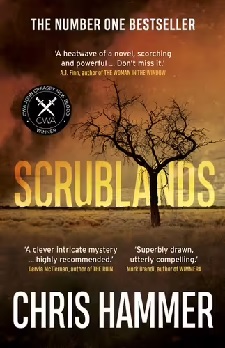
Book Review: Scrublands by Chris Hammer

TL;DR – Crime mystery novel that has been lauded for its realism in depicting a town devastated by tragedy and drought. The story is solid but I struggled to finish it (see full review below for reasons). In the end a passable read.

Summary

On a blistering, hot morning in Riversend, much-respected priest, Byron Swift, is getting ready for Sunday service. Wearing his casual clothes, he greets early arrivals and engages in friendly small talk. When Craig Landers, owner of Riversend’s convenience store, arrives with some of his mates from out of town, Byron shakes his hand, smiles, and they talk for a few minutes. When they finish Byron excuses himself and heads into the church to prepare for service. A few minutes later, the priest re-emerges wearing his robes, a crucifix reflects the sunlight and in his hands he holds a high powered rifle with a scope and proceeds to fire calmly and methodically on his parishioners. Five people are killed before the local constable arrives on the scene and shoots Byron dead.

Twelves months later, Martin Scarsden, a journalist, visits the drought-stricken town of Riversend to do a story on the one-year anniversary of the mass shooting. The story is only meant to focus on how the community is recovering, but it becomes evident that it has never recovered because the full truth is still yet to be told.

Review

The debut novel by Chris Hammer has a lot going for it, even if readers will see striking similarities with The Dry by Jane Harper. He captures outback Australia and a small country town dying from drought in a manner that will make your throat feel parched. A former journalist himself, Hammer is able to throw the reader into his main character, Martin Scarsden, and capture what it is like to be a journo and the methodical mind that is required for the profession. Scarsden also has his own mental and emotional issues, and this allows for a layered character that readers should find intriguing.

There is also care in creating a believable setting. A lovely map of this fictional town is provided at the beginning of the book and its description as Scarsden explores his surroundings comes to life off the pages. Outside of town, the scrublands is a place that is desolate and vast and will make you feel like it can swallow you whole without anyone ever noticing. When a bushfire comes screaming through the scrublands, Hammer describes the series of events as the townspeople rush to stop the devastation with such wonderful detail that you’ll be wanting to check the smoke alarms in your own home.

The plot is also intricate and should keep you guessing until the end. The mystery of why Byron Swift goes on his violent rampage and the many secrets each of the townsfolk are hiding allows the story to continue ticking over and suitably the pages as well. The many sub-plots almost seek to undo the ending, but Hammer is able to tie everything together in a way that is believable if fantastic in some areas.

All the above are strong reasons why Scrublands has done so well and Hammer awarded the 2019 John Creasey (New Blood) Dagger by the UK Crime Writers’ Assocation.

Where I feel it came undone was in how Hammer describes his female characters. His depiction of male characters is strong. Scarsden, Swift, Robbie Haus-Jones (the constable), Codger Harris and Harley Snouch are portrayed with depth. But the female characters didn’t grab me at all. The main female character, Mandalay Blonde (the name itself not doing me any favours) is portrayed as having “Hollywood” good looks. She has some level of complexity in that she’s a single mother and her own mum was allegedly raped. Unfortunately, she’s a “damsel-in-distress” type character and every time Scarsden sees her he’s amazed at how beautiful she is. In fact, in one paragraph of the book, Hammer describes Mandalay from the perspective of Scarsden as beautiful twice. He doesn’t even bother using a different adjective.

And, of course, Scarsden ends up sleeping with her. This was enough to take me out of the story on numerous occasions. Blonde plays a pivotal role in the story but she’s portrayed as helpless, in need of saving, and I found it annoying how Scarsden interacts with her. Her depth felt artificial as much as the description of how she looks.

If you can overlook how Hammer writes his female cast (to be honest, there aren’t many and that’s probably because he’s just not good at it) then the rest of the story can carry you through.

2.5 out of 5.