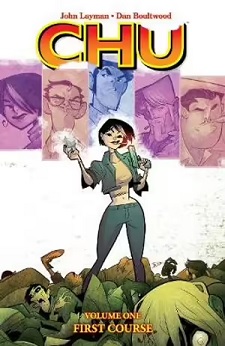
Book Review: Chu (Volume One) “First Course” by John Layman and Dan Boultwood

TL;DR – An essential read for those who have read the Chew series.

Summary (warning: spoilers)

From the deranged and brilliant mind of John Layman comes Chu, a prequel to the Eisner award winning series Chew.

Saffron Chu and Tony Chu are siblings. Saffron is a cibopar; a food-power that allows her to read minds and obtain secrets from those she eats with. Tony is a cibopath; a food-power that allows him to obtain psychic impressions of what he eats.

If Saffron eats the same burger in the same room as someone else, she can access their thoughts and secrets.

If Tony eats a burger, he gets images of where the meat came from, how the cow was killed, where the vegetables were grown and how the bread was made. If Tony were to take a bite out of say, a murder victim, then he’ll get images of the killer. The only food that Tony does not get psychic impressions from are beets.

Saffron is a thief and in a relationship with Eddie Molay, fellow thief and expert locksmith. Tony is a detective.

When a job Saffron and Molay undertake goes sideways, Tony is asked to investigate setting the course for brother and sister to collide.

For those in the know (i.e., that have read Chew), this series is set when the onset of the avian flu that wipes out millions around the world starts.

Let the games begin!

Review

This delectable piece of work is to be savoured. Devoured slowly by examining each panel, digesting each beautiful morsel and then re-read for all its grandeur. I promise that’s the end of my culinary metaphors.

If you haven’t already, I strongly recommend you read Chew first. Even though Chu is a prequel, you will appreciate the references more if you have finished the epic body of work that is Chew by Layman and Rob Guillory.

This time Layman has teamed up with artist Dan Boultwood. There is both a familiarity and unique style to Boultwood’s art that I found delightful. I’m a huge fan of Rob Guillory, and his art in Chew is slightly grittier than Boultwood, but that doesn’t mean Chu’s art is any less effective. It’s a refreshing, clean take by Dan who uses angles, close-ups, and bird-eye views to capture all the action, comedy, violence and emotional angst of its characters while staying true to the Chew canon.

As for the Chu story, Layman has concocted a wonderful prequel that connects many dots that lead into Chew. We get to see how Tony Chu and John Colby first meet; John’s hairdo and cowboy moustache is hilarious, and I didn’t realise it was him until he said his name. It was great to see how these two became life long partners in crime fighting.

We also dive into more of Tony’s family and learn about the twins Saffron and Sage Chu, as well as learning the disconcerting history of Ong Chu, their grandfather, who turns out was a total bad-ass.

Saffron must have got her criminal tendencies from her grandpa as she uses her food-power to read other people’s minds as information reconnaissance for jobs. She’s in deep with Eddie and together they get hired to do a job by a guy named “The Boss” to rob from the number one mobster in the city. However, things do not go according to plan when the team they work with starts getting serious food poisoning from eating chicken; their sniper man and strong woman both go down vomiting. This is a reference to the avian flu that will wipe out millions and leads into the Chew story arc.

As a result of the botched job, the mob come targeting Saffron and Eddie and want their pound of flesh (or their heads will work too). The juggling between Saffron performing her criminal hi-jinks with spending time with her family is cleverly done, and all the while, Tony is slowly piecing together what is going on.

For some readers, the climax of the collision between Saffron and Tony will be hard to swallow (okay, that’s the last culinary metaphor I swear). Tony’s actions appear extreme when in the context of the fact that Saffron is his sister. He doesn’t give her much chance to explain her actions but for those who have read Chew, they will know this is exactly what Tony’s character is like. He’s not just a detective but he sees things as black and white, and it is this perspective that ultimately becomes his undoing in both Chu and Chew series.

Though Saffron is arrested and ends up serving time in prison, she continues to use her food powers to absorb all the knowledge of her fellow prison inmates. So when she is released, she is now much more dangerous than before. Much to Tony’s chagrin. Like I said, it’s his undoing.

There’s a second volume to Chu but my library hasn’t got it yet. I might just have to bite the bullet and buy both volumes. Okay, okay, I lied about the “last” culinary metaphors. But can you blame me? John Layman uses it on practically every page.

5 out of 5.
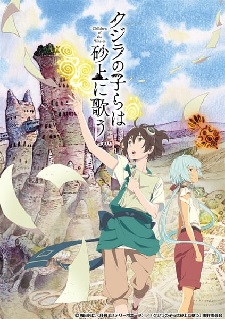
Anime Review: Kujira no Kora wa Sajou ni Utau (2017)

TL;DR – a frustratingly pointless examination into the lives of children cursed by their ancestors.

Review (warning: spoilers)

Kujira no Kora wa Sajou ni Utau (aka Children of the Whales as released on Netflix in 2018) is beautiful to look at and has an interesting premise but overall is odd. I’ve watched a lot of anime that is strange and unusual, but this is probably one of the first animes that left me disappointed in an odd way.

We have the Mud Whale, a giant floating island in the shape of a ship that traverses an endless sea of sand. On this island are two groups of people – the marked and unmarked. The marked are able to utilise a magic called “thymia” to manipulate objects, while the unmarked can’t. The trade off, however, is that the marked have a shortened life span and rarely live past their 30s.

The Mud Whale is ruled by two positions of power – the Committee of Elders and the mayor. The mayor moves around the island and reports to the committee and is more a figurehead than ruler. The committee is comprised of unmarked elderly individuals (you can’t get into the committee if you’re marked because of your short lifespan) and they stay holed up in a room overlooking the island. The committee are the ones that decide what largely happens to the inhabitants on the Mud Whale.

There is this weird rule that you can’t show emotions especially sadness. When people die on the Mud Whale, a funeral is held but it is said if you cry then your life is cut shorter. This raised a red flag for me immediately. The suppression (and in other ways, removal) of emotions is a central theme in this series and is a key oddity that I felt doesn’t always work in the story.

The Mud Whale comes from the Allied Empire that also has similar island ships. Within each ship (including the Mud Whale) is a “nous”, which is a weird alien-like organ that acts as the heart of the ship. A nous can take away the emotions of people, and if the nous is destroyed then the island ship sinks into the sea of sand. However, an important point to note, the Mud Whale’s nous does not take away the emotions of people. Instead, we learn later that it takes the life force of the marked and this is why their lives are shortened.

As the series progresses, we learn that the inhabitants of the Mud Whale are descendants of criminals and have been exiled. As the viewer, when we are introduced to the Mud Whale, the inhabitants have been exiled for nearly 100 years.

Outsiders from the Allied Empire arrive and proceed to execute the Mud Whale people. The attackers pause only when they learn that Lykos, a girl from another (abandoned) island ship and rescued by Chakuro (a marked resident of the Mud Whale), is the younger sister of one of the commander in chiefs of the Allied Empire.

When Lykos refuses to go home, preferring to stay on the Mud Whale, the attackers return to their ship and use Lykos as an experiment to show what happens when you become tainted on the Mud Whale and emotions overcome you.

This leads to the Community of Elders deciding it would be better to commit mass suicide by killing the nous and sinking the Mud Whale rather than have the Allied Empire return to execute the rest of them later. The elders are prevented from this madness by Chakuro and others who are marked.

The series attempts to examine the impacts of violence and the idea of suppressing one’s emotions. There are a number of points which I struggled with:

  • The knowledge of why the people of Mud Whale were exiled and why they were declared criminals is never revealed. This is a fundamental point that is kept hidden from the viewer in the entire series which indicates that potentially a second series might be developed. But by keeping this information from the viewer, it makes all the violence largely senseless and frustrating.
  • To make matters worse, the people of Mud Whale (especially the marked children) do not know themselves why they have been exiled. The only ones who do know the true reasons are the Committee of Elders, and they don’t share this information, which is also a bit silly. Withholding information is also a fundamental trigger to all the death that occurs.
  • When the Allied Empire ship comes and starts their massacre of the now largely pacifist residents of Mud Whale, it’s a painful sequence of events. The soldiers of the Allied Empire have supposedly removed their emotions from the nous on their ship, yet there are some particular soldiers who delight in the violence (so I guess sad emotions are removed but they can still feel bloody glee for killing unarmed children).
  • This segues into another problem I have. Most, if not all, of the original people who were condemned as criminals have died. It’s been 100 years of exile after all. So, these subsequent generations are now being branded by whatever sin their ancestors have made when clearly they are good people. The fact the Allied Empire are unable to see this (or don’t care) is difficult to swallow. It was vexing to see that no one dared to ask, “Should we be killing these unarmed men, women and children when they don’t seem like bad people?”

As a viewer, it’s difficult to accept what happens because we are kept in the dark for too long. There’s a lot death, a lot of pent up emotions (that are considered “bad” when really the bottling of emotions is what is truly problematic) and a lot of idiotic people withholding information from others who really need to know the truth.

It’s an examination into the ephemeral and impermanent nature of life but presented in a way that makes little sense (or hope for that matter). Not enough was given to me as the viewer, so the series became a struggle. I now doubt that if a second season is released that I’ll watch it.

4 out of 10

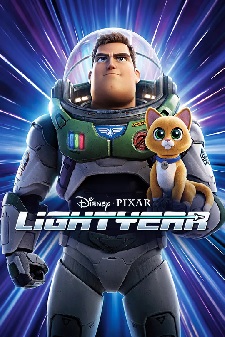
Movie Review: Lightyear (2022)

TL;DR – story about the man behind the toy.

Review (warning: spoilers)

The movie opens simply by stating:

In 1995, a boy named Andy got a Buzz Lightyear to for his birthday.
It was from his favourite movie.
This is that movie
.

And away we go. Buzz and company are flying an exploration vessel into unchartered space (4.2 million light years from Earth). As a space ranger, they scout planets and wake the scientist crew if they believe the planets are worth exploring.

The mission log narratives are there. The iconic lines that Buzz delivers such as, “Terrain seems a bit… unstable”, “You’re mocking me aren’t you?” and, of course, “To infinity and beyond” will remind you of the toy Buzz immediately. The action sequences and movements of the human Buzz are almost identical to the toy Buzz. In fact, the “makers” of the toy have modelled it so well against the movie character that they’re almost identical. Almost.

What makes this film subtly different is how the character of Buzz portrayed in the movie that inspired the toy is far more complex as the movie progresses.

Far more human.

This is where it is clever once you let it sink in. For example, the voice of the human Buzz (Chris Evans as opposed to Tim Allen) is subtly different. The casting of the human Buzz to be voiced by anyone other than Tim Allen caused controversy. However, I feel it is a clever move to demonstrate that there are distinctions between human and toy.

The toy Buzz is so iconic because it does outrageous things and acts like… well… a toy.

The human Buzz deals with human lives and this is, at its core, the heart of the movie. Along with Buzz, we are introduced to another space ranger, Commander Alisha Hawthorne. She is a wonderful foil for Buzz’s character and ensures his feet remain planted on what is important. However, Buzz doesn’t realise this until much later in the film.

At the beginning, Buzz is all about the mission. To be a space ranger and to serve and protect the scientists on board the ship while they continue to explore unchartered space. He’s single-minded (just like the toy) and so when their ship is attacked by the planet’s vine-like tentacles, Buzz is determined to get off the planet with everyone safely onboard in one piece. He wants to do everything himself. He wants to be the hero. He finds the rookie space rangers on board burdensome, and he doesn’t even trust the IVAN (internal voice activated navigator) system and would rather handle the controls himself than hand it over to autopilot.

This leads to Buzz making a mistake that damages the ship and results in him and the crew being stranded on the planet. The hyper-speed crystal used to fuel the ship is destroyed.

As they slowly colonise the planet, Buzz starts doing test flights on a new hyper-speed crystal so they can continue their journey in unchartered space. However, Buzz discovers there’s a catch. Due to time dilation, each test flight that approaches the speed of light causes a jump. To Buzz, his test flight might feel like only a few minutes but back on the colony, everyone has experienced years passing.

Feeling responsible for getting everyone stranded, Buzz continues with the test flights and watches as his good friend Commander Hawthorne ages dramatically each time. She settles down, gets married, has kids and grandkids and eventually leaves one final message to Buzz before her passing. It’s a scene right out of another Pixar film – Up – where we get snapshots of the couple at the beginning meet, get married, and grow old together.

This sequence in Lightyear is where you realise that this isn’t Toy Story.

And the film is all the more powerful for it. As events unfold, Buzz learns that he needs to trust others to help him (including IVAN) and with the help of Sox (an intelligent and very funny robotic cat), Buzz comes to realise that there is something more important than the mission. And that is people.

He has to go through quite a bit before this epiphany hits him including facing a time travelling older version of himself who pilots a robotic Zurg. The older version wants to travel into the past to make it so that they never crashed and got marooned on the planet in the first place. But present Buzz realises that by doing that, it would mean Hawthorne would never get married and have a family.

You take it for granted just how good the Pixar animation is. If you pay attention, the detail is stunning. The scene where an Izzy Hawthorne (granddaughter to Alisha) has to push off from an airlock to another part of the ship with nothing but the emptiness of space around her is nothing short of nerve racking. If her trajectory is not right then she would end up floating into outer space forever. This is one example where the animation is as good as CGI generated space flicks.

A great sci-fi adventure that should be viewed as what it means to be human as opposed to a toy.

9 out of 10

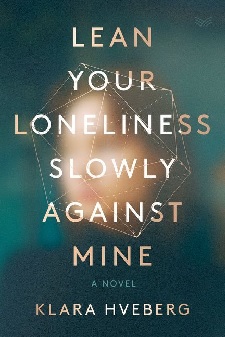
Book Review: Lean Your Loneliness Slowly Against Mine by Klara Hveberg

TL;DR – a story about how even the most rational minds can be consumed by the irrational that is called ‘love’.

Summary (warning: spoilers)

Rakel is a mathematics genius. She also has a passion for literature, music and art. In these things, she embodies herself completely. Her passions are a focus of such intensity that it often comes at the expense of everything else that is happening around her. Whether it is a mathematical problem, an evocative poem, a classical piece of music or a painting, if Rakel finds herself drawn to it then her whole focus is consumed by that which she has turned her mind toward. In doing so, it triggers emotions that ripple through her entire body and soul.

When she meets Jakob, her mathematics professor, a spark is ignited between them. Unfortunately, he’s married and has children, but Rakel can’t help herself. Her focus is only on him, and it threatens to consume her.

Review

According to the Myers-Briggs Type Indicator, the character Rakel is an INTJ (Introversion, iNtuition, Thinking, Judging). In one of the chapters, she examines this personality type and is described under Myers-Briggs as one of the rarest personalities; a combination of innovative, independent, strategic, logical, reserved, insightful, and driven by their own original ideas to achieve improvements.

In short, Rakel prioritises rationality and success over politeness and pleasantries.

Her honesty can be interpreted as being blunt to a fault. But it is this outlook, combined with her intellect, that attracts Jakob to her. He identifies in her all the brilliance and wonder that is contained within her mind’s eye and soul. When her attention is focused on him, and she demonstrates a sharpness of wit that surprises him, Jakob finds he cannot help but be drawn in to her orbit.

Being married with kids doesn’t stop Jakob from falling in love and sleeping with Rakel. And Rakel can’t stop herself from reciprocating. Jakob then makes a promise that after eight years (when his kids are old enough), he will leave his wife and they can be together. Rakel, of course, holds on to this promise like it is the sole purpose of her existence.

Stories of students falling in love with their teachers or vice versa is a universal minefield. Where Lean Your Loneliness Slowly Against Mine is effective is the in-depth dissection of Rakel’s thoughts and feelings towards Jakob.

Hveberg does this, not only through directly placing you in Rakel’s mind but also through the real life story of Sofia Kovalevskaya, who was a pioneer for women in mathematics and considered the greatest known woman scientist before the twentieth century. Sofia received private tutoring from Karl Weierstrass, a famous German mathematician, and speculation abounds whether the pair had a romantic relationship.

Capturing Rakel’s contradictory nature is impressively done by Hveberg (who on the back cover earned a PhD in mathematics and makes me wonder how much of the author is in Rakel). In one sense, Rakel is logical, insightful, and ambitious, in another sense, she is emotional (at times, overly so), clueless, and stagnant. Her interactions with Jakob summarise this dichotomy. One moment, their interactions are intelligent and witty, and other moments, Rakel comes off as clingy and jealous.

Thus demonstrating that even if you’re an INTJ personality type, you are not immune to the desire and actions of love, which can override everything that is fundamental to how a person perceives themselves. For example, Rakel is willing to wait the eight years even though the loneliness (when she and Jakob are apart) begins to manifest in psychosomatic ways. Rakel becomes so ill that she is bedridden for excruciatingly long periods of time. You can almost see her soul shrivelling before your eyes.

It will come as no surprise that Jakob breaks his promise. Nearing on the eight year mark, he confesses to Rakel that he won’t leave his wife, and he attempts to explain why. The title of the book is said from Jakob to Rakel as part of the explanation. Two lonely souls coming together to try and alleviate their loneliness. But when Jakob finally sees that he is not alone when he is with his wife and that he still loves her, it is only Rakel that is left alone.

The story is an existential piece of work that is clearly personal to Hveberg and confirmed by the author’s notes at the end of the novel. For some readers, they will identify and be consumed by Rakel and what she experiences because they have experienced something similar. For others, they will likely not get past the first few chapters because they will want to slap Rakel and yell at her to dump Jakob’s sorry ass and get over it.

For myself, I found the last third of the novel to be a struggle as it becomes repetitive both in the ongoing investigation into Sofia Kovalevskaya’s life and Rakel’s ruminations. Rakel also comes to love another man named David, who works with mechanical puzzles (like Rubik’s cubes), and when she realises that she’s fallen for him (note: David is also married), she lets him go. Thus, demonstrating that she will not make the same mistake twice. However, I personally did not think it was necessary to include David’s character.

When Jakob reveals he won’t leave his wife, it would have been sufficient to then lead into Rakel’s process to move on and how she goes about it. The insertion of David into the story just felt like dragging out an already pretty depressing story.

The ‘hope’ at the end, comes in the form of Rakel writing her own novel. A process of catharsis. She talks about the structure of her book being in two parts – gold and granite – and repeating it over and over so there are multiple parts all made up of gold and granite. She concludes that even though there might be more granite, overall there will be a gold sheen because the gold will stand out more.

I don’t know about that. The granite seems to definitely come to the forefront and weigh heavy in Lean Your Loneliness Slowly Against Mine. Rakel’s luminous moments are sucked in by the black hole that forms by her longing and subsequent break-up with Jakob. She uses the black hole metaphor throughout the story.

And though there are theories that suggest that certain things can escape a black hole, and we are given the impression that Rakel is able to escape hers by story’s end, it does not feel like she will ever be whole again.

In the end, a quote from the story sums it up: The irrational always wins over the rational in this world. And thus is love captured in many a story because of this.

2 out of 5.

Anime Review: Kaguya-sama wa Kokurasetai: Tensai-tachi no Renai Zunousen (2019)

TL;DR – battle of the sexes comedy set in a prestigious school where love is war.

Review (warning: spoilers)

Kaguya-sama wa Kokurasetai: Tensai-tachi no Renai Zunousen (aka Kaguya-sama wa Kokuraetai: Love is War) is a hilarious anime that posits the theory that love is a power struggle and the first to confess and fall in love loses. On a deeper level, it demonstrates how not to love because this show examines all the manipulations and mind games that are played between the two main protagonists – Miyuki and Kaguya.

Miyuki is the president and Kaguya is vice-president of the student council at Shuchiin Academy (an elite school for the brightest and wealthiest students). Miyuki and Kaguya are multi-talented, highly intelligent, and are the gossip of the Academy as to whether they are dating or not. In reality, they’ve never been in a serious relationship, don’t have the first clue of what it means to commit to a relationship and view dating as simply a game where they attempt to get the other to confess. There is a genuine attraction and interest displayed by the pair, but they go about manipulating each other in a battle of wills and sexes that overrides any ability to properly connect.

The fact that Miyuki and Kaguya take it so seriously is what makes it funny. Whether it’s taking a psychological relationship quiz from a magazine that reveals sub-consciously what you’re really like and who you like, to other students coming to Miyuki for relationship advice (even though he has no clue what to do), the arena that is the student council room leads to comic misunderstandings and a total failure to communicate feelings properly.

In one episode, a male student comes to Miyuki seeking advice on how he can hold hands with the girl he likes on a date. Miyuki goes to great lengths to map out all the steps which involves getting a job and earning enough money to pay for surgery so the boy’s hands won’t be sweaty when he attempts to hold the girl’s hand. It’s this type of absurdity that makes you laugh because it’s so ridiculous.

Joining our two main characters are Chika (the student council secretary) and Yuu (the student council treasurer). Chika is largely clueless about what is happening around her, yet somehow she comes off as more emotionally mature than Miyuki and Kaguya. Yuu is an introverted student who believes he can read 5% to 6% of what a person is thinking by the expression in their eyes (he places too much weight in this 5-6%). Yuu thinks that Kaguya is capable of killing people if she doesn’t get her way, which leads to some funny situations. He’s a fatalistic character who struggles to connect with the fairer sex and harbours a strong hatred toward guys who have girlfriends but don’t treat their girlfriends first.

The attempts at depth are often short lived in this show, and it aims squarely at the laughs to carry through the series. In this sense, it succeeds as a light and airy affair that serves its purpose as a comedy but is largely forgetful once you’ve watched it.

However, one episode did stick in my mind. Episode nine has three parts that all connect (previous episodes also have three parts but they are all distinct snippets). Part one sees a typhoon hitting the area. Kaguya tries to get Miyuki to ask her for a lift to his work because the trains have stopped due to the bad weather. Kaguya refuses to offer the lift because she thinks if she does this (instead of him asking her) then it’ll be a “car date” and she will have essentially confessed her attraction to him. And though she want to help and would love to spend time in the chauffeured car with him, she can’t bring herself to do the asking. Her manipulations fail as Miyuki ends up daring the storm on his bicycle leaving Kaguya standing outside in the rain waiting for her limo.

Part two is the next day, Kaguya wakes up sick. Miyuki, Chika and Yuu play a memory card game to see who will get to visit Kaguya and give her the student council printouts. Chika reveals that Kaguya becomes childlike when she’s sick and wants to be taken care of. Miyuki and Chika both want to see her in this state for the opportunity to comfort her. It’s a hilarious process as Chika attempts to cheat but Miyuki figures it out and wins.

Part three shows Miyuki visiting the mansion that Kaguya lives in. And the ensuing set up created by Kaguya’s maid to bring the pair together is also laugh out loud (the maid knows Kaguya has a huge crush on Miyuki).

This episode was memorable because all three parts connect and delve deeper into the underlying emotions the pair have for each other.

A crazy, fun ride.

8 out of 10

Movie Review: Ghostbusters Afterlife (2022)

TL;DR – fitting tribute to all things great about the Ghostbusters with a dash of Goonies thrown in.

Review (warning: spoilers)

Over three decades have passed since the supernatural events in New York in which the world was introduced to a quartet of loveable dudes with proton packs that busted ghosts. Many of the events in the first Ghostbusters film should be watched in order to fully appreciate Ghostbusters Afterlife.

The story is set in Summerville, Oklahoma, and although it’s the year 2021, the town is stuck in a bygone time where there is zero mobile phone reception, and there still exists drive-in restaurants where carhops bring fast food to your vehicle on roller skates. By all intents, there’s not much to do for the kids in this town other than to drive up to an abandoned mine and watch the sun set. And though the town is not on a fault line, they seem to be experiencing earthquakes on an almost daily basis.

Little does anyone know (except one particular individual) that the mine was the site of an occultist named Ivo Shandor, who built a temple in order to summon Gozer, an evil god of destruction.

The one individual who knows about what is actually happening is an aged Egon Spengler (Bob Gunton) who has gone to great lengths to set up his dirt farm with a giant ghost trap to trap Gozer once and for all. The film opens with Egon driving madly away from the mine and being chased by an unseen poltergeist after having captured Zuul, or it could be Vinz (it’s not clear which one), who are demigods that serve Gozer. Zuul is the “gatekeeper” and Vinz is the “keymaster” and together they can open a portal between worlds to allow Gozer to come through and wreck destruction. These supernatural beings will be familiar to those who have watched the first Ghostbusters.

Unfortunately for Egon, while he manages to get back to his dirt farm and lures the creature chasing him, the ghost trap fails to activate. Egon hides the trapped ghost under the floorboards and suffers a fatal heart attack after being attacked by the creature.

This event leads to Callie (Carrie Coon) and her two kids, Trevor (Finn Wolfhard) and Phoebe (McKenna Grace) to take over residence at the dirt farm. Callie is Egon’s estranged daughter, who has long held the belief that her father abandoned her. Her goal is to move in, clear out all her father’s stuff and sell the place so they can move back to the city.

Again, for the those who have watched the first Ghostbusters, you’ll pick up straight away that Phoebe is a young girl version of her grandfather, Egon. She’s hyper intelligent, wears the same glasses as Egon wore, has the same curly hairstyle and loves science. She is also extremely unusual in that she gets calmer when things get crazier.

And believe me, the crazy hits the fan and sprays it all over the place.

She befriends a boy named Podcast (Logan Kim), who has his own podcast and a fascination for supernatural stories, at summer school along with her teacher, Gary Grooberson (Paul Rudd), who is a seismologist and has a fascination for all things Ghostbusters-related (he later has a fascination for Phoebe’s mother, Callie… read on below). The chemistry between Phoebe and Podcast reminded me a lot of the characters in Goonies.

Through the exploration of the dirt farm and the mine, Phoebe and company discover what Egon was doing including his lab where she is guided by Egon’s ghost to fix a proton pack. She also finds the trap hidden under the floorboards, and when they open it, it releases Zuul (or Vinz) who travels back to the temple. In the mine, they find Ivon Shandor has somehow kept himself alive in a cryogenic coffin. Near him is a pit where Gozer attempts to rise out of but is constantly blasted down by three huge proton canons built by Egon. It is these canons that are causing the daily earthquakes.

Phoebe’s brother, Trevor, also discovers and successfully fixes the ol’ Ghostbusters Cadillac (the scene where he goes hooning around the fields is a lot of fun).

All things culminate in a paranormal cataclysm that is triggered when Callie gets possessed by Zuul and Vinz possesses Gary. Together they copulate in hilarious fashion (again, a tribute to the first Ghostbusters where Rick Moranis and Sigourney Weaver’s characters get possessed by the demigods and copulate) in order to open the portal to allow Gozer to come through. Gary/Vinz also destroys the proton canons ensuring Gozer’s arrival.

The final stand off sees the arrival of the original Ghostbusters (Phoebe contacted Ray Stantz (Dan Aykroyd) seeking his help) and combining their efforts with Phoebe, Egon’s ghost, Callie, Trevor and Podcast to take on Gozer.

There’s plenty to love about Ghostbusters Afterlife and director Jason Reitman, who also co-wrote the script with Gil Kenan, have stayed faithful to the first two Ghostbuster films. There has been criticism about the fanservice, but I didn’t think it was overdone.

Even the miniature Stay-Puft Marshmallow men in the Walmart scene attacking Paul Rudd was pretty funny.

But my favourite scene would have to be when Trevor is behind the wheel of the Ghostbusters Cadillac, Podcast is remote controlling a ghost trap on wheels, and Phoebe is in a side gunner seat with proton pack ready and blasting her gun at “Muncher” (a ghost that must be a relative of “Slimer” in the original Ghostbusters, who eats nothing but metal) while they speed along a country road trying to prevent Muncher from reaching the mine and the sun is setting in the background. It’s an iconic scene that left me giddy.

8.5 out of 10

Book Review: Y: The Last Man (Book Five) by Brian K. Vaughan, Pia Guerra & Jose Marzan Jr.

TL;DR – the origins of the plague are revealed, and Yorick reunites with Beth. But will they live happily ever after?

Summary (warning: spoilers)

Click here for reviews of previous books of this Eisner award winning series.

The concluding volume is packed. The highlights are as follows:

  • Dr Allison Mann undergoes surgery at a bioethics institute in order to save her life from internal bleeding caused by a previous miscarriage. There she discovers her father, Dr Matsumori, is actually still alive (making Yorick not the last man on earth).
  • Dr Matsumori reveals he was not attempting to clone himself. Instead, he managed to create clones of his daughter (Ayuko Matsumori aka Dr Mann). It is his belief that the moment he was able to successfully create a female clone, the plague struck (see further detail below in the ‘review’ section). Dr Matsumori is killed by Dr Mann in order to protect Yorick.
  • Dr Mann and Rose stay in China while Yorick and Agent 355 move on to Paris to find Beth. Yorick keeps having dreams about a decaying Beth telling him not to come find her. These dreams are a subconscious red flag, but Yorick ignores them. It is also clear that after four years of being together, and the countless times Agent 355 and Yorick have had each other’s backs, that the pair have feelings for each other. But Yorick has made a commitment to Beth (proposing to her prior to the plague) and is determined to find her.
  • Hero (Yorick’s sister), Beth II (the second Beth who seduced Yorick in Cooksfield, California), Beth II’s child (who is also called ‘Beth’… I kid you not… and is Yorick’s daughter), the female astronaut Ciba and her son, and the Russian agent Natalya journey to Paris also to find Yorick.
  • Alter is also converging on Paris to find Yorick. The reason she gives to her soldiers is that they need to secure the last man for Israel (to ensure its future). In reality, she wants to die a soldier’s death and be killed by a man (as opposed to a female soldier). Her reasons for this are explained below.
  • Agent 355 locates Beth and organises for her and Yorick to reunite. Her ‘mission’ complete, Agent 355 slips away unnoticed (burying her feelings for Yorick) and deciding to live a life as a civilian.
  • Yorick and Beth are initially happy and spend a night in a hotel. However, when they start talking, the past and Yorick’s dreams come to the fore. Beth wants to discard everything that has happened in the past, but Yorick argues that the past is important. He asks her what she was going to tell him over the phone the day he proposed to her (the phone line cut out when the plague hit, so Yorick never heard her response). Beth confesses she was going to break up with him and tries unsuccessfully to convince Yorick that she has changed and does want to marry. When Yorick leaves to think things over, Beth is left waiting. Hero and company arrive, and when Beth II and baby Beth meets Beth, a lot of confusion occurs.
  • Yorick spends the whole night thinking and eventually hunts down Agent 355. There he confesses his feelings to her, and she acknowledges she feels the same way but says it’s a mistake and that he should try to work things out with Beth. It is then he reveals the vision he saw during his suicide intervention in Colorado with Agent 711 (refer book two review). The vision was of Agent 355 wrapped in the green scarf she has been knitting for years (and that she actually gave to Yorick as a parting gift). After more conversation, Yorick convinces Agent 355 that they should be together.
  • Agent 355 finally whispers her real name in Yorick’s ear, and they appear that they will move forward hand-in-hand. However, the moment is short lived as Alter shoots Agent 355 in the head with a sniper rifle.
  • Alter confronts Yorick. In the ensuing melee, Yorick manages to get Alter’s gun. Alter tries to convince Yorick that the cause of the plague was actually the Culper Ring (which Agent 355 worked for) and that the American government had developed a chemical weapon that was used against China that was meant to make all the women unable to conceive boys but instead it wiped out 99.99% of all men instead. Yorick doesn’t believe her. Alter then reveals she is responsible for assassinating Yorick’s mother. She yells at Yorick for him to pull the trigger, and he realises that what Alter wants is to commit suicide (just as he did before his intervention in Colorado by Agent 711), but she wants to do it as a soldier killed by a man. Yorick cuffs her instead, brings her outside where Alter’s soldiers are waiting, throws her on the ground in front of them, drops the gun and walks away.
  • The epilogue reveals a number of things detailed in the ‘review’ section.

I told you the final volume was packed.

Review

The conclusion to Y: The Last Man does not disappoint. The sense of devastation when Agent 355 was shot hit me like a sledge hammer. Both the art and script were brilliant throughout, but the scenes leading up to Yorick finally finding Beth, their subsequent fall-out, and Yorick and Agent 355 coming together were by far the most impactful.

There would be no happy ending for Yorick.

While it is an amazing accomplishment the body of work Vaughan, Guerra and Marzan have generated, there are some bits that didn’t quite work for me.

The first is the revelation that Dr Matsumori is alive. Everything works up to a point. The doctor reveals that he successfully cloned his daughter a number of times. And when he heard that his ‘original’ daughter, Dr Allison Mann, was close to creating a clone, he wanted to sabotage her by sending Ampersand with a serum in his body that would infect and kill Allison’s unborn child. Through chances of fate, Ampersand got mixed up with another monkey and ended up in Yorick’s hands. Further, the serum that Dr Matsumori injected into Ampersand turned out to shield both monkey and Yorick from the plague. This same serum protected Matsumori. However, he then goes into this theory about morphic resonance and that’s where things go a tad sideways.

Morphic resonance is a pseudoscience described in this volume as the “socio-biological interconnectedness of species”. An example is monkeys on one island learning to wash their food, and the practice spread to another tribe of monkeys on another island that have never interacted with the first group of monkeys. Morphic resonance is the idea of almost spontaneous transmission of data at a genetic level. Matsumori posits that as soon as the first female clone was born, men no longer served any use, so Mother Nature (through morphic resonance) wiped out everyone with a Y-chromosome. By all intents, Dr Matsumori was mentally ill at this point and intended to complete the evolution by killing Yorick and then himself. It kind of works up to the morphic resonance bit. Then it’s up to the reader as to whether you believe it’s true (or even possible).

This truth is further debated based on Alter revealing later that she found government documents that showed the plague was caused by a chemical agent released in China (i.e., it had nothing to do with morphic resonance). This ambiguity is intentional by Vaughan et al. And you, the reader, are left to form your own conclusions.

The second thing that didn’t quite work for me is Alter’s true intentions. The wanting to commit suicide but doing it by having a man kill her like a soldier was quite the twist. All along you believe her mission to secure Yorick as the last man for Israel and protect him from other countries is her only objective. But really her motives are entirely selfish, which feels like quite a swing in her character. The amount of collateral damage she inflicts through all five volumes to reach the point where Yorick is holding a gun at her is extensive. Alter did not hesitate to kill those women closest to her (that have served her faithfully) and manipulating events to convince her soldiers to continue to follow her. All so that she could have a man shoot her? I don’t know, I’ve gone over the pages a number of times now and I’m not sure it works.

The third nugget is Yorick’s reaction to the revelation that Beth had intended to break up with him when he proposed. It is not the revelation itself that is unbelievable. It is more Yorick’s reaction. Beth explains that at the time, they were moving in opposite directions. This was true. She was working to be an Anthropolgist and had a clear purpose, while Yorick seemed to be sailing along listlessly working to be an escape artist/magician. She then goes on to say, however, that he has now completely changed since the plague struck. He has grown, and she believed he was still alive even though all evidence showed that the plague wiped out every male.

Yorick focuses on the fact that she was going to dump him, rather than everything she says afterwards. He’s hurt and devastated, which is understandable. But for him, to just let it all go to find Agent 355 was a struggle for me to believe. I have nothing against him and Agent 355 coming together. It was simply the transition felt hurried. And let us not forget that Yorick is far from flawless (recall he got Beth II pregnant). Yet, he holds on to this fact that Beth intended to break up like that means they’re irreconcilable and that the only reason she now wants to marry him is because he’s the last man on earth.

Lastly, it is never revealed why Beth travelled from Australia to France to find Yorick. The previous volume said that there was meant to be some special meaning between Beth and Yorick about Paris even though Yorick, himself, didn’t know what that significance was. This little plot hole was left unexplained.

Others may view the above as nit-picking. And truth be told, none of the above sways me from saying this was one of the best graphic novels series I have ever read. Y: The Last Man is a must read for fans of dystopian fiction. Intelligent, thought-provoking and killer art.

5 out of 5.

Anime Review: Spy x Family (2022)

TL;DR – To accomplish his mission, a spy must create a family in order to get close to his target. In doing so, he will discover that being a good husband and father is the toughest assignment he’s ever undertaken.

Review (warning: spoilers)

Spy agent Twilight is on a mission to get close to reclusive Donovan Desmond, a political leader of the rival nation, Ostania. In order to do this, he must pose as a parent and enrol a child into the same private school as Desmond’s son.

The school is stupidly elite and snobbish, and to obtain the best chance of getting a child into the school, he has to “create” a happy family unit.

Twilight, under the alias Loid Forger, adopts an orphan girl named Anya and marries a woman named Yor Briar. Twilight is the type of meticulous spy that he plans for all possible outcomes, but even he is unaware that little Anya is a telepath and Yor has a secret life as an assassin.

Comic situations abound because Loid and Yor do not know each other’s true professions, and neither knows that Anya can read their minds and knows the truth.

Totally ridiculous, but there is a delightful charm about all three characters and the situations that unfold. More importantly, Twilight starts to care more about his “family” than he realises.

The animation is clean and gorgeous to look at. The action is over the top, and the reactions of characters are ludicrous and funny, but interspersed between all this are genuine moments of emotional connection and the conundrum all three of our main cast face.

That is, Loid learns to think and care for someone other than himself, Anya is seeking to be part of a loving family, and Yor is trying to find how she can be “normal” and in a relationship when she has spent most of her life killing people.

The absurdity of someone as intelligent as Loid and as deadly as Yor and neither realising that the other is not who they say they are is something you might ponder for a minute and then let go cause it’s all part of the fun. The fact that Anya is able to read their minds leads to some very hilarious incidents.

Adding to this tangled trio is Yor’s brother, Yuri Briar, who (unknown to Yor) works for the State Security Service (SSS) police. The SSS hunt spies and use torture to identify anyone working against their country.

This puts Twilight and Yuri at odds with each other as they work for different countries and have been told contradictory information. Twilight has been told to get close to Donovan Desmond because the man threatens the peace between his nation, Westalis, and Desmond’s nation, Ostania. Yuri has been told that Twilight is actually the one seeking to destroy the peace within Ostania and seeks to stop him. It seems like one or both of them are being lied to by their own governments.

Yuri also has an unhealthy obsession about his sister and is overly protective, so this leads to further tension and hijinks that are over-the-top funny. His first visit to their home where he gets drunk had me in stitches.

The silliness is balanced with the emotional growth among our main trio. A thoroughly enjoyable ride from start to finish.

The highlight would have to be the dodgeball game. Just watch it.

8 out of 10

Movie Review: Chickenhare and the Hamster of Darkness (2022)

TL;DR – a film about differences and how those differences are what make us interesting.

Review (warning: spoilers)

Chickenhare, as the name suggests, is half-chicken, half-hare and he has no idea why he was born this way. He is found as a baby in a boat by two hare brothers, Peter and Lapin, who are adventurers trying to find the Hamster of Darkness (a mythical sceptre that can summon an army of ghost hamsters). Raised by Peter, Chickenhare idolises his adopted father and wants to become an adventurer as well. However, he is teased incessantly for his appearance and tries to cover up the chicken parts of him so he looks like a hare only.

He wears fluffy rabbit shoes over his chicken feet and a fedora hat to cover the chicken feathers that grow between his large rabbit ears that would make Dumbo the elephant envious. While Peter expresses a love that accepts all of Chickenhare, Chickenhare hates that he is different.

Bubbling beneath the surface is a rivalry and feud between the two hare brothers that reminded me a lot of the relationship between Mufasa and Scar in “The Lion King”. Peter is anointed the King of Featherbeard, and Lapin attempts to overthrow his brother for the crown but fails. Stuck in a cell, Lapin is allowed to access books and continues to research the Hamster of Darkness, which in his mind if he can obtain he will become ruler of Featherbeard.

When Chickenhare comes of age, he undertakes the trials set by the Royal Adventure Society to become a full fledged adventurer. Unfortunately, he fails the obstacle course due to the gear he is wearing that covers up his chicken features. Down but not out, Chickenhare endeavours to secretly find the Hamster of Darkness to prove his ability as an adventurer. He goes to meet his Uncle Lapin in jail to obtain a book on the Hamster of Darkness and in doing so, Lapin obtains one of Chickenhare’s feathers to pick the lock to escape. Thus begins the race to find the Hamster of Darkness first.

Chickenhare and the Hamster of Darkness takes a lot of inspiration from other films. As mentioned above, there is “The Lion King” rivalry between brothers Peter and Lapin. And Chickenhare is a character like Dumbo the elephant, who is shunned for his appearance. There is even a scene later in the film where Chickenhare finally accepts who he is and his enormously large rabbit ears sprout chicken feathers allowing him to fly just like Dumbo. But the inspirations don’t stop there. Others that I picked up include:

  • The adventure scenes are all influenced from “Indiana Jones” movies with booby traps and even a giant rock wheel that slowly rolls down a hallway threatening to crush Chickenhare and his friends (just like Indiana did running away from the giant boulder in “Raiders of the Lost Ark”).
  • Lapin’s imprisonment down the bottom levels of the dungeon reminded me of Tai Lung the snow leopard in “Kung Fu Panda”. Lapin even escapes using one of Chickenhare’s feathers to pick the lock, just as Tai Lung escaped from his shackles using a duck feather.
  • The obstacle course set out by the Royal Adventure Society uses dangerous contraptions to test the dexterity and skill of the wannabe adventurer. It reminded me a bit of the training arena in “How to Train Your Dragon” minus the dragons.

With all the above elements, does the movie work? Surprisingly yes. Though there are clear tributes to other films including a moment where Lapin reveals that he is Chickenhare’s father (actually he’s not, but they had to do an ode to “Star Wars”), the movie works because the characters are engaging and the story of accepting one’s differences, and it is these differences that make us interesting and unique, is a message that all audiences young and old should hear and embrace.

Chickenhare is supported through the film by Meg (a skunk who faces her own issues of discrimination) and Abe (a pessimistic tortoise that is so droll in his delivery that you can’t help but chuckle).

And then there is the scene with the “pigmies”. A tribe of pig-like critters that see Chickenhare as a god that they provide a banquet for and then subsequently will sacrifice in a volcano. These pink little dudes stole the show. They can turn themselves into cube building blocks and essentially build one on top of each other into transformer-like structures. They’re hilarious and quite alarming when a tidal wave of them come at you.

And did I mention that the when the Hamster of Darkness is used to summon the ghost hamsters they reminded me of the green ghost swarm in “Lord of the Rings”?

I mean do I need to go on? It’s an enjoyable ride.

8.5 out of 10

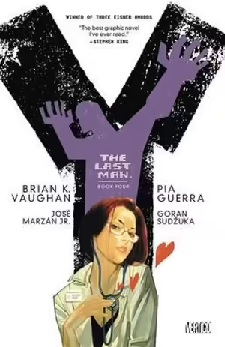
Book Review: Y: The Last Man (Book Four) by Brian K. Vaughan, Pia Guerra & Jose Marzan Jr.

TL;DR – Yorick reaches Australia after three years since the plague hit. Will he finally find Beth?

Summary (warning: spoilers)

Click here for reviews of previous books of this Eisner award winning series.

Having arrived in Sydney aboard an Australian submarine, Yorick is determined to find Beth. Though Agent 355 accompanies him and tries to watch his back, he’s found by a reporter who takes a photo of him with all his man bits on display so she can publish the news to the world and win a Pulitzer.

Agent 355 finds the reporter but fails to retrieve the film. Yorick is able to convince her to let the reporter go and allow the photo to be published because it’s a tabloid paper as opposed to a ‘real’ newspaper, and no woman will believe the tabloid photo.

Returning to his search, Yorick discovers that Beth has left for Paris to search for him. Paris is meant to hold some special meaning between the pair, but Yorick has no idea what that might be and why she would journey to France in search of him.

Meanwhile, Ampersand the monkey has arrived in Yokogata and managed to escape from the clutches of Toyota, a Japanese ninja (never thought I’d write a sentence like that…)

Review

Conflicting agendas are the name of the game at the start of book 4 of Y: The Last Man. Agent 355 and Dr Mann want to head to Yokogata to rescue Ampersand. On the other hand, Yorick has finally reached Australia and wants to find Beth. Agent 355 agrees to giving him 24 hours to see what he can find about Beth and her location and then it’s destination Japan.

Though he ends up getting photographed nude and published in a tabloid newspaper, he discovers that Beth has left the Land Down Under for the lights of Paris, which makes absolutely no sense to Yorick.

A lot of threads continue to get tugged as we follow Yorick’s journey. As the reader, we get to jump all around the world and see what is happening to the various people Yorick has interacted with previously. A number of surprises include:

  • The Beth who lives in Cooksfield, California that seduced Yorick is now pregnant with a baby girl. She is visited by Hero and joins her. Together, they head to Kansas to meet up with the Hartle twins.
  • In Washington, Yorick’s mother, Jennifer (aka Secretary Brown) discovers the tabloid and photo of him and realises he is still alive. Unfortunately, she is visited by Alter, the Israeli rebel, and is murdered.
  • More backstory on Agent 355 and how she came to work for the Culper Ring. The surprise being that she ended up killing her teacher, who attempted to assassinate the president after joining the splinter group, Setauket Ring.
  • The origins of Ampersand and his immunity are shown. He was a test monkey and injected with mysterious serum and was meant to be shipped off to Dr Mann’s laboratory. In transit, however, he ended up escaping and getting mixed up with another monkey that was destined for “Helping Hands” (an organisation that trains monkeys to help disable people). When Yorick applied at Helping Hands, he was assigned Ampersand.
  • Alter interrogates the Hartle twins and finds out that Yorick is making his way to Paris. We learn more of Alter’s origins, and there’s small surprise that she joined the army not to seek revenge for her sister’s death (who we thought was killed by Palestinians) but because she believes the world will always have war and operates on bloodshed. We discover that Alter’s sister was actually killed protesting against the destruction of Palestinian homes by an Israeli Defence Forces bulldozer.

However, the juiciest pieces of the puzzle come forth from Dr Allison Mann as we get several flashbacks to her upbringing. As a child, she learned her father, Dr Matsumori (a radical bioengineer) was having an affair with his research assistant, Dr Ming. We also learn he and Dr Ming were also studying cloning.

It then jumps to when Allison was a young adult, living in America with her father and falling in love with another woman named Mercedes. When her father announces that they will be moving to China, Allison refuses and accuses her father of wanting to get back together with Dr Ming. The dissolution of her relationship with her father leads her to move in with Mercedes. However, their relationship does not last, which leaves an indelible mark on Allison.

Jumping forward to where she is now a lecturer in genetics at Harvard, she receives the news that her father is a few years away from cloning himself. Refusing to allow her father to achieve such a scientific breakthrough, Allison seeks to clone herself and dangerously self-impregnates with the help of her assistant Sunil. This then leads into the events we see in book one where she is rushed to hospital because something is wrong with the baby and then the “instant” plague hits killing every man on earth except Yorick.

These flashbacks bring us full circle to the present where Allison is back on the submarine in her cabin and starts haemorrhaging. The complications of her failed birth to her clone has clearly left damage that is now coming back to haunt her.

If there are any shortfalls with book four, it lies in a feeling of repetitiveness. There is even dialogue between Yorick and Agent 355 that reflects that they just seem to jump from one dangerous situation to the next. Agent 355 is at wits’ end and lets out a number of expletives at how hard it all is, while Yorick tries to console her. However, when you you’re the last man on earth, there were always going to be several countries of women looking to find him. You can always trust politics or misplaced religious beliefs to ensure little agreement as to who should “secure” Yorick.

With only one volume remaining, it will be interesting to see what will be the fate of Yorick, Ampersand, Agent 355 and Dr Mann.

4 out of 5.