Anime Review: Made in Abyss (2017)

TL;DR – Riko goes in search for her mother and the secrets behind the Abyss, a seemingly bottomless chasm where monsters lurk around every corner, and treasures can be found for those who dare to enter. With the help of an amnesiac robot boy, which Riko names Reg, they descend into the depths risking their lives.

Review (warning: spoilers)

The Abyss is a giant hole in the earth, its origins a mystery. For a normal human being, the deeper they go into the Abyss, the more dangers they will encounter and the less likely they will get out alive. Even without the monsters, the levels cause all manner of bad things to happen to the human body. Known as the ‘Curse of the Abyss’, it is actually the ascent from the depths that causes physical symptoms. For example, ascending from the highest level, you will feel dizziness and nausea. Ascending from the fourth level, you experience pain and bleeding from every orifice. Manage to get to the fifth level and you want to head back up will cause sensory deprivation and self-harm. It’s basically a one-way ticket; the Abyss is happy for you to journey down but if you want to go back up, you’re going to have to pay a price, and it could be your life. .

Divers will risk this, however, for the many treasures and artifacts buried in the Abyss. The town of Orth surrounds the giant hole and divers are trained from a young age to go in and raid. Divers are ranked by the colour of their whistle. Rookies are red whistles and can only explore the highest level. Blue whistles can go down to the second level, Moon whistles the third and fourth levels, Black whistles can journey to the fourth and fifth levels, and White Whistles are the legends that have managed to go deeper than any other diver.

What starts off as a cross between Dungeons & Dragons and Nintendo’s The Legend of Zelda turns pretty dark and morphs into a fantasy horror with deeper psychological questions (most of which are left unanswered in this first season).

What sticks out the most about this anime series is the character art. Depending on your point of view, some will think it is one of the show’s strengths, others will argue otherwise. The artistic style reminded me of the cute characters in Zelda. The two main characters, Riko and Reg, are adorable to the point of being too cute. It is an interesting choice by writer and illustrator Akihito Tsukushi because it contrasts starkly against the monsters and violence they confront. Combine this with a story that has dark psychological elements and it creates a weird shock factor seeing such cute child-like characters experiencing the horrors of the Abyss.

The central plot to the series is when Riko’s mother, Lyza (a legendary white whistle diver), delivers a message saying she is waiting for Riko at the bottom of the Abyss. The message also contains a drawing of a boy that looks very similar to Reg, an amnesiac boy robot that Riko discovers on the highest level of the Abyss. Together the pair set off through the levels in search of Riko’s mother.

Along the way, other sub-plots are revealed that demonstrate that monsters come in many forms and those that look like monsters may not actually be monsters on the inside and vice versa. An example of this is the white whistle diver, Bondrewd, who took a bunch of children down to the sixth level to experiment on them to find a way to counter the curse. Many of the children died and those that manage to survive are transformed into grotesque creatures that have lost their minds. Bondrewd is a monster on the inside even though he may appear normal on the outside, likewise Mitty (one of the children that survives the experiment) looks like a monster on the outside but is actually innocent on the inside.

At the time of writing this review, season 2 of Made in Abyss is slated for a release in 2022. Lots of mysteries are yet to be resolved, so don’t expect season 1 to give you answers. It sets up the series well and the story is intriguing. As for where I am with regard to the character art, I would have to say it doesn’t quite work for me. I’m not against cutesy characters, but it does not do anything for me to see them get bloody and bruised. I almost think creator Akihito Tsukushi did this on purpose just for the shock factor.

7.5 out of 10
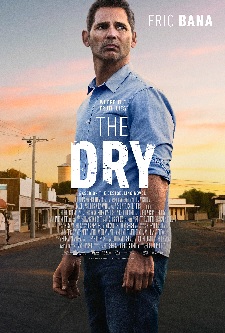
Movie Review: The Dry (2020)

TL;DR – in the drought stricken town of Kiewarra, Australia, a horrific tragedy has occurred involving a murder suicide. Federal Agent Aaron Falk returns to his home town to attend the funeral. The parents of the father who committed the murder suicide ask Falk to investigate the crime, all the while Falk is dealing with memories of his own personal tragedy as a teenager in the town which led him to flee twenty years ago.

Review (warning: spoilers)

Based on Jane Harper’s hugely successful and award winning debut novel of the same name, The Dry is a crime mystery thriller surrounding the murder suicide of a family living in the fictional country town of Kiewarra. The book was ripe to be turned into a film and Director Robert Connolly does a fantastic job in depicting a town barely surviving due to drought. The sweltering conditions, a silent antagonist that drives the people of the town to extreme behaviours and threatening to ignite bush fires both literal and figurative.

Federal Agent Aaron Falk (Eric Bana) returns to Kiewarra (his home town) after a twenty year absence. It is revealed that Falk left in inauspicious circumstances, suspected of murdering his girlfriend, Ellie Deacon (Bebe Bettencourt) two decades ago. Like the brutal drought the town has been experiencing for too long, Falk’s return triggers long memories that stir the strained emotions for both him and the locals.

Falk has only come back because he was close friends with Luke (Sam Corlett), the father who apparently shot his wife and daughter before committing suicide (the only survivor being Luke’s baby daughter who was spared). His intention is to attend the funeral, pay his respects and then get the hell out again. But Luke’s parents convince him to hang around and review the investigation.

There are two mysteries in this story. The murder suicide of Luke and his family, and the unsolved murder of Ellie. Flashbacks of Falk as a teenager, his interactions with Ellie, and the various spots by the river and in the bush where they hung out with friends are interspersed with the present events and actions Falk takes to unravel the current crime.

The cinematography by Stefan Duscio is spot on and lends to the atmosphere of a town on edge reaching boiling point. The harshness and beauty of the Australian outback are both captured and lend towards the overall feel of a story depicting characters suffering both physically (from drought) and mentally/emotionally (from tragedies).

The cast do a tremendous job capturing the heart of the characters they depict, and the film moves at a pace that keeps you guessing and wanting to see how it will all be resolved. Avid crime mystery fans will likely see where the twists and turns will come, but it’s not so much the surprises but the journey of Aaron Falk that makes the film worth watching (both Joe Klocek (young Aaron) and Eric Bana (adult Aaron) do a marvelous job).

8 out of 10

Book Review: The Promise Seed by Cass Moriarty

TL;DR – an elderly man and a young boy are neighbours connected by loneliness. Both their lives are victims of circumstance. Together they discover that they have more in common than they initially realise, but when the boy’s single mother starts a relationship with an abusive man, choices will be made that will shake the foundations of their friendship.

Summary (warning: spoilers)

An old man, who seems to have never caught a break, lives alone tending his garden and taking care of his chickens. He reminisces about a life filled with heartache and hardship. It all started when he was a little boy, and he was found standing over the crib of his dead baby sister. The events of his life that followed were forever scarred by that moment. Several decades on, and he now wishes to live the remaining years of his life in peace. But the kid next door is always causing such a racket.

Next door lives a young boy with his single mother. The boy loves his mother, and she loves him but has no desire to take care of him. She wants freedom of a single life, her love for her son conditional on him taking care of himself while she goes drinking and comes home with strange men. The boy feels lonely and sometimes watches the old man tottering next door, working in the yard and hen house.

One afternoon, due to an incident involving the boy stealing cigarettes, he hides in the hen house. The old man finds the boy but doesn’t give him up to the strange man (whose cigarettes the boy stole from). This leads to a tentative alliance between the pair that slowly grows into genuine friendship.

However, their bond becomes threatened when the boy’s mother starts seeing a man with a penchant for violence.

Review

Cass Moriarty’s debut novel is an evocative, atmospheric drama set in Brisbane, Australia, that captures the innocence of youth and the frailty of age. Chapters alternate between the old man and the boy. Moriarty uses a clever, simple technique to give a distinct voice between her two main protagonists. She writes all the chapters about the old man in first person, and all the chapters about the boy in third person.

Her ability to capture the Australian slang and feel of the old man is spot on. A man that had his prime years during a time when computers were not common place and newspapers were printed using metal letters that needed to be arranged in the right order before a print run. And she achieves the same level of depth and feeling when writing about the young boy next door.

The reflections of the old man’s history is relatable and emotionally moving. It’s a life that was hard but also had highlights and pleasures even if they didn’t last. His reflections influence his interactions with the young boy; he sees a lot of himself in the boy and begins to realise the hardships the boy is going through could lead to destructive behaviour. So, even though he thinks he is old enough to put his feet up and not have to get involved with anyone else’s business, the kindred spirit he feels for the boy causes him to go out on a limb and try to nurture the potential he sees. And in the process, the boy (in his own way) teaches the old man that he still has plenty of things to live for. Together they raise chicks, build a vegetable garden, and spend a glorious Christmas day together on the beach.

All of this is beautifully written. When the boy receives a bicycle as a birthday present from his mum, I was taken back to when I was a child and received my first bike also. His excitement and the places he rides off to reminding me of my own childhood and those simple thrills and joys. Moriarty is exemplary in her ability to capture both young and old souls.

The tensions and inciting incidents that are introduced by the story’s antagonists come in the form of the boy’s mother and her bikie boyfriend named Snake. His name is due to a body length tattoo of a snake that winds itself all along his back with its head and eyes staring from the back of his neck. It is obvious that Snake is nothing but trouble. But the levels to which he takes things out on both the mum and the boy are shocking and disturbing. Domestic violence on this scale was an alarming counterpoint to the beauty and kindness experienced between the old man and boy. It shows the stark reality life has, that is, where there is light, there is also shadow.

A remarkable novel that moved me in many ways. Moriarty’s literary fiction drama was short-listed for the 2013 Queensland Literary Awards for emerging author, short-listed for the 2016 Courier Mail People’s Choice Queensland Book of the Year, and long-listed for the 2017 International IMPAC Dublin Literary Award.

4.5 out of 5.

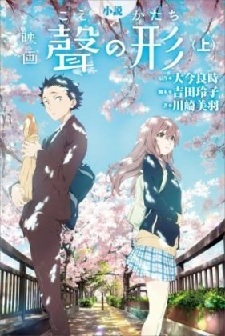
Anime Review: Koe no Katachi (2017)

TL;DR – an anime about the emotional scars from bullying, and the ramifications that occur on a group of kids trying to survive middle and high school.

Review (warning: spoilers)

Shoya Ishida is a joker and bully in middle school. His target of choice is a deaf girl named Shoko Nishimiya and leads to an altercation where the poor girl is physically hurt. This leads to her being transferred to another school and ironically, Shoya becoming the target of bullying by his classmates.

The bullying turns Shoya from an extrovert into an isolated loner, and he experiences depression when he gets into high school. The movie opens with him deciding to tie up loose ends before committing suicide. This includes going to the sign language centre where Shoko attends and apologising to her. However, his attempt at apology turns into asking whether they can become friends, and to Shoya’s surprise, Shoko agrees.

Koe no Katachi (translates to “A Silent Voice”) tackles themes and subjects that are incredibly difficult, but the film does so in a way that is meaningful and sensitive without sugar coating. For example, bullying in anime tends to be one-dimensional and revenge driven; one person bullies another to be vindictive and the other seeks to deliver some sort of retribution usually in the form of violence. In Koe no Katachi, Shoya’s bullying is more to get attention and when he hurts Shoko, he realises he has gone too far and regrets his actions.

Guilt, bullying, teenage suicide, depression, isolation, exclusion and jealousy are all examined in this beautifully animated, emotionally moving film that has won numerous awards including Anime of the Year (movie) and Best Screenplay/Original Story at the 2017 Tokyo Anime Award Festival.

You would think that these topics would result in a depressing, tragic film, but it delivers on the most crucial elements that the story seeks to show (and teach) the audience – forgiveness and redemption.

The fact that Shoko is the victim but feels sorry for Shoya demonstrates layers of human emotion you would be hard pressed to find in real life drama films. The supporting cast around the pair all have their own idiosyncrasies and emotional issues/baggage. One particular character, Naoka Ueno, I found particularly interesting.

Naoka was Shoya’s closest female friend in middle school and joined in the bullying of Shoko. But when Shoya gets in trouble, Naoka denies any involvement. When she gets older and she sees Shoya trying to make amends with Shoko, she is driven by a multitude of emotions that aren’t always explicit in the film. You see anger and jealousy depicted in her verbal and physical abuse of Shoko, but you also sense a hatred towards herself, a guilt that she keeps at bay by stubbornly refusing to admit her transgressions. This subtly changes throughout the film and demonstrates how living a life without regrets is impossible (you just end up regretting more due to your own pride or foolishness). Naoka has to learn the most important lesson along with all the others and that is to have the ability to forgive yourself.

The climax of the film between Shoya and Shoko is nothing short of brilliant. It is animated in a way that will have you on the edge of your seat. A moment where you have no idea what will happen. You are a mere witness to the events and you want both to come out the end unscathed, but will they?

You will just have to watch the movie and find out. Highly recommend this film as an example of what it truly means to be human and how we can rise above our own insecurities and failings.

9 out of 10

Movie Review: The Mauritanian (2021)

TL;DR – star studded cast delivers a legal drama with punch. Based on the memoir Guantanamo Diary by Mohamedou Ould Slahi who was detained and tortured at Guantanamo Bay detention camp on suspicions of terrorism.

Review (warning: spoilers)

There is a statistic shown at the end of the film that states, “Of the 779 prisoners who have been held at Guantanamo, eight have been convicted of a crime. Three of those convictions have been overturned on appeal.”

Mohamedou Ould Slahi was one of those 779, and spent 14 years at Guantanamo. Seven of those 14 years were spent after he won a court case where the judge ordered his release. Yes, you read correctly. He spent seven years in prison, testifies in court, wins his case, and then spends a further seven years before finally being released. Not only that but Mohamedou Ould Slahi was held in prison for 14 years without ever being charged for a crime.

Both the statistic at the end of the film and Mohadmedou’s story demonstrates a system that has failed. Terrorism suspects are detained without due process and interrogated without restraint. It is a damning indictment on human rights.

Directed by Kevin Macdonald, The Mauritanian is a semi-documentary style drama that is straight forward in its telling. It’s a heavy film, depressing and frustrating, where the shocks are mainly attributed to the torture scenes as opposed to the legal failings. The film is elevated by incredible performances of its cast.

Slahi (Tahar Rahim) and Nancy Hollander (Jodie Foster, Slahi’s lawyer) are a tour de force. Both Rahim and Foster were nominated for their roles (Foster won Best Supporting actress at the Golden Globe Awards). Teri Duncan (Shailene Woodley) is Hollander’s co-counsel and Stuart Couch (Benedict Cumberbatch) is the prosecutor. Together, both prosecution and defence go through the process for which they are hired and encountering all manner of obstacles along the way in getting the information they need to build their case.

It is clear early on that Couch is a principled lawyer. He has every reason to prosecute Slahi and wants the man to get the death penalty. But only if there is irrefutable proof that Slahi had a significant hand in the 9/11 terrorist attacks. The proof comes in the form of Slahi giving a signed confession. But when Couch demands to see the process undertaken to obtain Slahi’s confession and is met with a brick wall of individuals saying just prosecute the guy and don’t worry about how he came to confess, you know that the end does not justify the means.

Hollander receives what occurred from Slahi himself, and the inhuman ways he was treated before he “confessed”. This isn’t mere confession under duress, this is pure hell. How Slahi survived is a miracle in itself. The interactions between Hollander and Slahi are the highlight of the film.

However, in the end, the film does not pack the punch you would expect from such atrocities. There’s something missing in the telling, as if the writers were merely reporting on events as opposed to telling a story. Nevertheless, it is still worth watching. The real life footage at the end of Slahi returning home and his lawyers Hollander and Duncan are incredibly moving.

7.5 out of 10

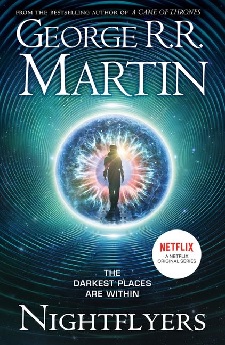
Book Review: Nightflyers by George R. R. Martin

TL;DR – shoe string sci-fi horror about the crew of the starship Nightflyer seeking to explore the furthest regions of known space in search of an alien race.

Summary

Karoly d’Branin assembles a crew of scholars and experts on a journey to locate the Volcryn, an alien race with interstellar technology that surpasses every other race. The Volcryn’s purpose is a mystery. They pass through regions and events always moving outwards towards the fringes of known space, and they do so without any apparent desire to interact with anyone or anything. Karoly, determined to unlock this mystery, sets out on a transport ship called the Nightflyer. The starship is piloted by Royd Eris who locks himself in part of the ship where no one else can access. This results in most of the other crew wanting to find out who their enigmatic and secretive captain is and why he will not reveal himself.

When one of the scholars suddenly dies in horrific fashion, the stress of the journey, combined with the claustrophobic confines of the ship and a captain who is always watching them remotely, causes the rest of the crew to unravel. Karoly is determined to continue on and find the Volcryn, but will he ever achieve his quest or will external forces conspire against him?

Review

George R. R. Martin wrote Nightflyers prior to his critically acclaimed Game of Thrones series. In his early career, he wrote primarily sci-fi and combined them with horror elements, and Nightflyers is one of those efforts. Being a novella, Martin demonstrates he is as capable of writing epic length fantasy as he is in writing short stories. His ability to convey suspense and horror in concise, evocative language to maintain word length is exemplary.

In saying that, the story in Nightflyers won’t shock avid readers or movie watchers of the hybrid sci-fi horror genre. Books like Solaris by Stanislaw Lem or Blindsight by Peter Watts along with films such as 2001: A Space Odyssey and Event Horizon have themes and elements similar that run through Nightflyers.

Still, it is written in a way that will have you turning the pages even if you can see where it all leads. The reason for this is the colourful collection of crew that rides the Nightflyer starship.

Karoly d’Branin is the astrophysicist and leader of the group, who is obsessed in finding the Volcryn and study them.

Royd Eris is captain of the ship and never leaves his quarters. He communicates to the rest of the crew through speakers or a ghostly hologram.

Melantha Jhirl, a genetically engineering woman, is considered the epitome of the human species in terms of physical strength.

Lommie Thorne (cyberneticist), Alys Northwind (xenotech), Rojan Christopheris (xenobiologist), Dannel (male linguist), Lindran (female linguist), Agatha Marij-Black (psipsych) and Thale Lasamer (a frail young telepath) make up the rest of the crew.

All of the characters, except arguably Melantha, are flawed in some way (or multiple ways). By all appearances, Karoly chose his team solely on their expertise in their particular field and not on whether they can actually get along. Even Dannel and Lindran (the two linguists), who are in a romantic relationship, belittle and argue with each other all the time. It leads to conflicts on many fronts.

You will read this story because you will want to know who comes out of it alive., and in this way, the book is effective. An atmospheric novella more about the characters than the plot.

3 out of 5.

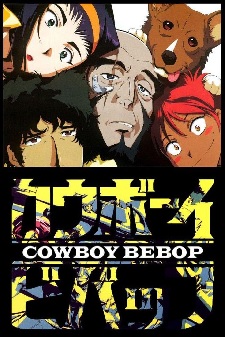
Anime Review: Cowboy Bebop (1998)

TL;DR – The ultimate sci-fi neo-noir spaghetti western anime, and THE anime by which all other anime series should measures themselves against. There are very few series that set the standard as high as this one.

Review (warning: spoilers)

Characters, story, and soundtrack. It’s a simple formula but can be delivered with varying quality. I have read in an interview that Director Shinichiro Watanabe wanted to create an anime series where each individual episode is like a movie. Cowboy Bebop is that series and much more.

The underlying story centres on Spike Spiegel, a hitman of the Red Dragon syndicate. His partner is Vicious, a cold-blooded, power-hungry killer who eventually stages a coup d’état and becomes the Red Dragon syndicate boss. Spike falls in love with Julia, who at the time was Vicious’s girlfriend. As you can imagine, when Vicious finds out he wants Spike’s head on a stick. So much for brother-in-arms.

Fast forward and Spike has managed to escape the syndicate and is now working on the spaceship Bebop as a bounty hunter with Jet Black, a former ISSP (Inter Solar System Police) officer. Together they go around capturing criminals to get the bounty rewards, and along the way their crew expands to include Faye Valentine (a con artist), Ed (a skilled hacker) and Ein (a genetically engineered Welsh Corgi). All of them have their own backstories and skeletons in the closet (except maybe the dog), which are revealed slowly throughout this gripping 26 episode series.

The criminals they encounter are all unique and have different motives, and each episode is self-contained while also progressing the underlying story arc of Spike, Vicious and Julia . Along the way you learn more about the galaxy they live in, and the histories of the rest of the Bebop crew (for example, the Earth has largely become uninhabitable due to a hyperspace gateway disaster, humanity has colonised other planets, and Faye was cryogenically frozen to save her life).

Combine the multi-layered story and brilliant characters with a killer soundtrack that is a mix of blues, jazz and opera (composed by Yoko Kanno) and you have what amounts to a masterpiece.

If you aren’t moved with the scene where Spike and Vicious face off inside a cathedral, this giant stained glass window in the background, and the song “Green Bird” by Gabriela Robin playing in the background then anime is not for you.

Do yourself a favour, binge this series now before it’s too late. See you space cowboy.

10 out of 10

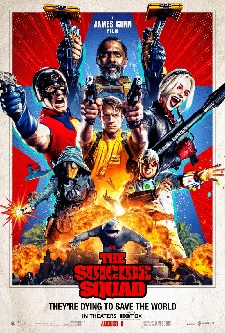
Movie Review: The Suicide Squad (2021)

TL;DR – more blood, more mayhem, and a giant starfish does not make a great comic book movie.

Review (warning: spoilers)

I’m a big fan of James Gunn. Guardians of the Galaxy was directed and co-written by Gunn, and one of my favourite Marvel films – the soundtrack, cinematic style, and storytelling were wrapped up wondrously into a popcorn film that satiated many comic book fans including me. Guardians of the Galaxy Vol. 2 (also written and directed by Gunn) fell short of the first film but still delivered a decent sequel.

Unfortunately, expectations are a dangerous thing. I managed to keep my expectations low for The Suicide Squad (a standalone sequel to 2016’s Suicide Squad), but even then I struggled with this film.

Before I continue, I should preface this with the fact that while I am an avid reader of novels and comics, Suicide Squad isn’t one of them. My understanding is that Gunn has stayed true to the source material. If this is the case, then perhaps I missed a good deal that the die-hard fans will pick up.

With that caveat in mind, I didn’t enjoy The Suicide Squad as much as I had hoped.

As with the first film, the Suicide Squad is comprised of super criminals/villains serving jail time. The government use them for missions in exchange for reduced time. To ensure compliance during the missions and extinguish any temptation to escape, each member of the squad has an explosive chip inserted in the back of their head, which can be detonated if they stray too far from the mission’s path. So far, so good.

The movie opens with an introduction to a bunch of super villains, some new and some coming back from the first film like Harley Quinn (Margot Robbie). None of these characters except Harley registered, so I could not tell the new from the old (which demonstrates how forgetful they all are to me). Still, as they all load up to fly to a South American island nation to destroy a laboratory named Jotunheim along with an evil experiment called ‘project starfish’, you get glimpses of what this dysfunctional mob is all about. There’s the field leader of the squad, Rick Flag (Joel Kinnaman), a dude with boomerangs, another with a javelin, some alien chick, an anthropomorphic weasel named… you guessed it… ‘Weasel’, some guy that can throw a handball and rebound it off multiple surfaces with pin point accuracy, a guy who can detach his limbs and a mercenary figure named Blackguard.

Just when you get to know who’s who, any attempt to build a story on this bunch is wiped out in the first fifteen minutes when they land on the island and are ambushed (it’s revealed Blackguard has somehow betrayed the squad, but it’s never explained how he managed to do this as he’s shot in the face by the very soldiers that he gave information on the squad to). An attempt to salvage the situation is quickly snuffed as all of them perish in an assortment of comic ways except Harley (who gets captured) and Rick (who escapes).

We, the viewers, then see there is a second Suicide Squad that has landed on the island and the first squad was a distraction. Yeah, I don’t know. It took quite a bit of effort to invest in the first bunch and now we’re being asked to get to know a second bunch. The back stories and emotional depth is explored in greater detail with this second squad along with Harley and Rick who join up with them. For the first half of the movie, I felt it did not go anywhere and there were only small glimpses of depth and story.

The scene where Harley is tortured and escapes is probably the best sequence in the film. And when Bloodsport (Idris Elba) and Peacemaker (John Cena) go at each other even though they’re meant to be on the same team brings a real feeling of conflict rather than a farcical feeling of one. There’s some emotional backstory revealed for both Bloodsport and Ratcatcher 2 (Daniela Melchior) that is an attempt albeit feeble in getting us to care about them.

But after that we have a giant starfish aiming for world domination. Think Godzilla but a starfish. I kid you not. The climatic battle scene falling flat in my view. I am pretty sure Suicide Squad aims to have the highest death count of any comic book movie ever filmed so far. The collateral damage (no matter how creative or gruesome) ends up being ho hum because you end up saturated in it.

In a credit scene, we find out that Weasel, who we thought drowned in the opening scene cause he can’t swim, is actually alive and we watch him wander off into the forest on the island. Why? Who knows? Who cares? It’s almost like they had some leftover CGI budget and decided to throw that in for laughs. The Suicide Squad had the potential to add more depth and build on the first film. Sadly, expectations got the better of me.

5.5 out of 10

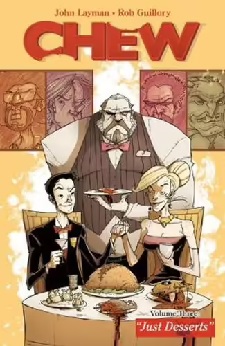
Book Review: Chew (Volume Three) “Just Desserts” by John Layman & Rob Guillory

TL;DR – Tony Chu is turning the corner and things are finally looking up. Work has become tolerable thanks to his partner returning to duty, and he’s found love in food critic, Amelia Mintz. But when you work for the Food and Drug Administration (FDA), you always have a target on your back and Tony finds himself in the cross-hairs of many enemies.

Summary

Go to my book reviews page to see what has happened in previous volumes of this award winning graphic novel series. Volume Three begins with Tony and Amelia infiltrating an elite diners club where the richest dine on the rarest and most endangered plants and animals. The ensuing bust leading to the full blossoming of their relationship.

Tony then goes on assignment undercover and retrieves the death-dealing rooster known as Poyo back into law enforcement hands. Meanwhile, Mason Savoy (ex-FDA agent, wanted murderer, and the man responsible for ripping off Tony’s right ear in Volume One) has been doing his own investigations into Ray Jack Montero who Savoy discovers knew about the ‘avian-flu’ that wiped out millions of people before it occurred.

Montero’s company is seeking to introduce a new artificial meat that tastes like chicken called fricken. Montero falls on Tony’s radar when he tastes the artificial meat and discovers it is actual meat albeit a genetically modified one (i.e. Montero’s scientists have altered frog DNA to now combine frogs and chickens into one). Tony and his team go in and bust Monetro’s operations, but in doing so unwittingly blows another FDA’s assignment (an agent by the name of Ceasar Valenzano, who has ties with Mason Savoy).

This leads to John Colby, Tony’s partner, encountering Savoy at an estate owned by Montero. Savoy is there in burglar gear rifling through Montero’s confidential files but is caught in the act by Colby resulting in the pair facing off against each other.

Review

Mason Savoy returns after his absence in Volume Two, and we see he still surveys a chess board that Tony Chu is but one of the opposing pieces (as opposed to a main player). Savoy’s motives are not fully revealed, but it is clear he has kept tabs on his former FDA partner and knows Tony is a threat. As with my reviews of Volumes One and Two, Savoy is one of my favourite characters and it’s clear he’s playing for the long game.

Along with Savoy, the connection between Tony and Amelia finally bears fruit, and it’s great to see their relationship evolve.

Colby, after getting a cleaver to the head in Volume One and being transformed into a half-cyborg, gets put through the wringer again when he fights a desperate Savoy.

All the elements that make this series engaging – great storytelling, killer art, distinct characters – returns in Volume Three and the ante is upped.

But what drives this volume to another level are the final chapters where we get a glimpse of Tony’s past and the introduction of Tony’s family.

The past is in the form of former fiance, Min Tso, who was so obsessed with Tony that she severed her own toe to give to him when he proposed to her. Safe to say, the relationship did not last. It’s a flashback that makes me wonder if Min might make an appearance in later volumes.

And then we finally meet the Chu clan at Thanksgiving. There’s Toni Chu (Tony’s fraternal twin sister), Chow Chu (already introduced in Volume 1, the older brother chef), Harold Chu (Tony’s cross-dressing younger brother), Sage Chu (moody younger sister), Bao Chu (mother), Bok Chu (deceased father), Ong Chu (grandfather), Charlie Chu (distant cousin), Rosemary Chu-Shen (older sister), Tang Shen (brother-in-law), Chip Chu-Shen (nephew) and Bree Chu-Shen (niece).

And then there’s Olive Chu… Tony’s daughter. First time we see her and you know immediately that their relationship is strained. Olive doesn’t have much to do with her father, and it seems Tony doesn’t know how to communicate to his daughter.

Prior to Thanksgiving, there’s a brilliant sequence of panels where we see Savoy having dinner and the last course is Tony’s ear (the one he ripped off violently in Volume One). Being a Cibopath like Tony, he starts getting images of all the people in Tony’s life and he eventually hones in one person, which you know he has targeted. Yes, you guessed it, Olive.

The flashback of Min, Savoy’s unsavoury dining experience, and the introduction to Tony’s family brings much expectation for the next volume.

Volume Three ends with a strange phenomenon as the Chu family are interrupted by the sound of a car accident. As they rush outside, they see that the cause of the accident is a series of alien fire writing that has appeared suddenly in the sky. The alien writing didn’t register until I went back to Volume One and realised they showed hints of this already. An alien planet named Altilis-738, the focus of the Gardner-Kvashennaya international telescope based in the arctic (and where Tony and Savoy ventures to as part of their investigation), receives the same fire writing in the sky before the alien planet is obliterated.

It’s clear things are about to get weird.

5 out of 5.

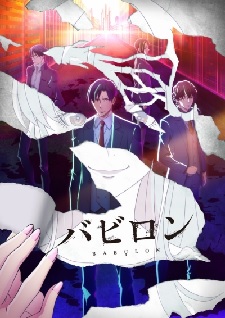
Anime Review: Babylon (2019)

TL;DR – what starts off as a crime thriller devolves into a philosophical mess where many threads are left unanswered and an ending that most viewers will find disappointing. You have been warned.

Review (warning: spoilers)

I will try to keep this short. My score of three out of ten is based on the first three episodes being quite engrossing and then the rest falling apart. There are actually twelve episodes in total and if I scored this out of twelve, I would still give it a three.

The setting for Babylon is in the fictional city of Shiniki, a district created next to Tokyo designed to trial new political policies, ideas and systems. Enter Zen Seizaki, a public prosecutor, investigating a dodgy pharmaceutical company, and in the process, discovering a dead anesthetist and a document stained with blood, hair and the letter “F” written repeatedly all over the page by an author who has clearly gone insane.

Further investigation leads to individuals involved in election tampering (the usual stuff such as bribes, prostitution etc. to secure votes for an upcoming mayoral election). However, when Zen’s fellow prosecutor, Atsuhiko Fumio, who has been helping Zen, commits suicide by hanging, the story takes a dark turn leading to Zen confronting their primary suspect, a beautiful woman named Ai Magase.

Ai has a mysterious power where she only needs to whisper into another person’s ear and they will want to commit suicide. This also happens to coincide with one of the mayoral candidates wanting to introduce a ‘suicide law’ that permits an individual to commit suicide if they want to.

Suicide is a hot button topic, especially in Japan, and I wonder if Mado Nozaki (author of the Babylon novels) came up with this story because he wanted to explore the topic in a meaningful way, or he wrote it for the controversy and knew it would get an audience. Either way the anime series made me regret investing my time beyond the third episode.

There’s a kind of Death Note feel to the beginning. Like the Death Note anime series, we have two characters that face off against each other. One character whose thinking is unconventional and criminal under standard laws, and the other character trying to catch them. It delves into what is considered right vs wrong, good vs evil in a way that does make you think. The scene where Zen interrogates Ai and how their roles reverse by the end with Ai asking philosophical questions of Zen is riveting and quite suspenseful.

But that’s all the praise I can laud. The story starts going off in too many directions: a political debate around the suicide law, election fixing, the ongoing hunt for Ai Magase who can change her appearance, other nations adopting the law, and a G7 summit where world leaders wax lyrical about what is ‘good’ and how do you define it. With the story being pulled into multiple threads, it all comes undone.

Ai becomes a one-dimensional character. Her motives never explored. For all intents, she is evil for evil’s sake and no other reason. The suicide law is never revealed as being accepted or not in Shiniki or anywhere else. And Zen’s fate is also left ambiguous, the climactic scene leaving it open as to whether he is alive or dead.

A post credit scene reveals Ai meeting up with Zen’s son, who returns her hat because it gets blown off her head. She smiles at him as he gives the hat to her and she says, “Good boy”. I’m sure there’s meant to be some deep meaning to this ending other than seeing what appears to be evil triumphant but it evades me. In the end, I can’t help feel that Nozaki tied his story in so many knots he was not able to undo them, so instead, he simply cuts all the threads in anti-climactic fashion and not giving a damn about the viewer.

3 out of 10