Book Review: Big Little Lies by Liane Moriarty

TL;DR – Three mothers become friends and discover the deep pains they hide beneath the surface. They want to be good wives and loving mothers, but they first have to be true to themselves and that means confronting lies that have taken on a life of their own.

Summary (warning: spoilers)

Jane is a single mother. Her son, Ziggy, is a result of being raped. Jane is angst riddled and nervous about trying to be a single parent and she secretly worries that some sort of violent DNA is inside Ziggy because of her past trauma. Her fears appear self-fulfilling as Ziggy is accused of bullying another child.

Madeleine has turned forty-years old and is not quite sure how to deal with that milestone. She is a go-getter of a woman, divorced once, married twice, and gave birth thrice. Her eldest daughter, Abigail is now fourteen and is from her previous marriage to Nathan. Nathan did a runner on Madeleine when Abigail was a baby but has returned, apparently a reformed man, and remarried to Bonnie, a Zen-like yoga instructor, and they have their own child who happens to be going to the same kindergarten as Madeleine’s five-year old daughter, Chloe. It is difficult enough that Madeleine has to confront Nathan frequently but things become more challenging when Abigail starts idolising Bonnie. Jealousy and past pains arise.

Celeste is married to Perry, a rich banker, and has twin boys – Max and Josh. Celeste is a stunner, lives a life of luxury, has a handsome husband (with whom she still has hot sex with), and appears on the surface to have the perfect life. But as we all know, appearances can be deceiving.

Together these three develop a bond that will see them through some of the toughest and most horrific situations they will ever have to face including… murder.

Review

To be clear, the summary above makes it sound like the three main characters conspire to commit a murder. This is not the case.

However, the book opens with a school trivia night for parents that ends with someone dead and the police make it clear that it is being treated as a murder investigation. What events transpire that results in the trivia night transforming into a bloody disaster is revealed through subsequent chapters of the book. After chapter one, we are taken back six months prior to the trivia night and are introduced to Jane, Madeleine and Celeste.

Liane Moriarty captures Sydney suburbia and the daily trials and tribulations of motherhood with an ease that makes me jealous. It demonstrates the effectiveness of her writing and makes Big Little Lies an effortless page turner. The distinct voice she gives to her three main protagonists propels the reader into their minds and how they see their world. Their lives connect you and you want to find out where they end up and what choices they make.

This is the greatest strength of the story, and while there is an underlying mystery (i.e. who got murdered on the trivia night? why were they killed? and how?) that assists in driving the reader forward, it is how Moriarty captures the characters so well that it is engaging and engrossing.

Big Little Lies is all about how lies fester and damage us, and how truth can set you free. Nowhere is this more evident than with Celeste, who appears to have everything on the outside but behind closed doors, she is actually trapped in an abusive relationship. Moriarty captures this domestic violence situation with authenticity and shows us how Celeste convinces herself (essentially she is lying to herself) about her husband, Perry.

Moriarty then builds up the story to create a believable connection between Jane and Celeste (who, initially, appear to be polar opposites in terms of lifestyle and where they are in their lives). Astute readers will see the connection before it is revealed in the climatic scene at the trivia night, but you should still be rewarded with how it unfolds. I certainly was riveted by how Moriarty reveals that Perry turns out to be not only an abusive husband to Celeste but also Jane’s rapist. Madeleine is the glue that keeps the trio together, a bond that allows them to rely on each other even in the face of this horrific revelation.

But the icing on the cake comes from an unexpected source. An action by a character that I doubt many readers will foresee. That character is Bonnie, the level-headed, Zen-centred, loving-wife/mother that has filled Madeleine with jealousy and angst for most of the book. The final revelation is not that Perry is Jane’s rapist, it is that Bonnie grew up in a domestic violent family as well; Bonnie’s father would beat her mother. The life she has led has sought to bury her childhood and counter all that trauma. Though the story does not delve into Bonnie’s history more than this, one can only assume that Bonnie never sought to let this go or seek help for the trauma she experienced witnessing her mother being abused. Thus, when the trivia night occurs, and Bonnie witnesses the revelation that Celeste is in an abusive marriage and that Perry was the man who raped Jane, the calm demeanour vanishes, and the explosion is immediate. Bonnie attacks Perry with years of pent up rage and pushes him off the balcony to his death.

It is a brilliant piece of writing because 1) it actually makes sense and 2) you believe Bonnie’s hidden pain is as real as the pains the other three mothers have hidden. When she screams at Perry, “Your children see!” it is a pure reflection of her own childhood and completely believable. That is, the fact that in domestic violent situations, the children also see and absorb the abuse even if they are not the direct victims. This is a clever bit of writing indeed because Bonnie is a supporting character that we, the reader, believe has her head screwed on right and is there only as a focal point for Madeleine’s jealousy and insecurity. If you want to read any of Liane Moriarty’s work, then this is one you will not regret.

4.5 out of 5.
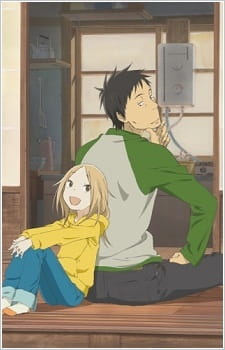
Anime Review: Usagi Drop (2011)

TL;DR – When Daikichi discovers that his deceased grandfather has left behind an illegitimate daughter, he is thrown out of his bachelor life comfort zone and learns about a greater purpose in life (i.e. taking care of a child) and the challenges and rewards that comes with that responsibility.

Review (warning: spoilers)

Imagine you have a stable job, currently single, and you hit thirty without quite knowing where all the time went. Your life is not entirely fulfilling but you are also not unhappy with where you are and what you are doing. There is a simplicity to your life that is not bad, even though every now and then there is that little niggle that you want to do something more.

Now, imagine you receive the news that your grandfather passes away. You attend the funeral and return to the family home to pay your respects only to discover a six-year old girl who is being shunned by the rest of the family. You initially have no idea who this girl is or why she is being looked like some sort of blight, but you soon discover that she is the illegitimate child of your grandfather. The family debates who will look after the child (seen as a constant reminder of the shame your grandfather has brought onto the family), yet you realise it is not the girl’s fault that she was born. Why should she be ostracised when her very existence was beyond her control? Do you take the step and be this girl’s guardian and parent?

This is what confronts Daikichi Kawachi in this delightful, funny, emotionally touching anime series Usagi Drop. When Daikichi takes that step (much to the surprise of his other family members), he knows he does not have the faintest clue of what it means to be a parent.

The little girl, Rin, embraces the kindness shown by Daikichi and starts living with him. The series showing the day-to-day interactions between the pair with both hilarious and poignant results. What makes this work is how Daikichi evolves from an individual who only thinks of himself to an individual who has a loving, nurturing parent-child relationship with Rin. The way the anime conveys Daikichi seeing through the eyes of a child and thus learning from Rin (as much as Rin learns from Daikichi) is marvelous.

Whether it is the simple act of holding hands, buying Rin clothes, and making onigiri rice balls, or dealing with the more challenging situations such as Daikichi juggling work with life, Rin entering elementary school, and wetting the bed due to her fear of death, these are all examined in thoughtful ways that will connect the viewer to this story.

If you have a heart of stone then this anime will not be for you. For everyone else, it is pure magic.

10 out of 10

Movie Review: The Tomorrow War (2021)

TL;DR – Soldiers from the future travel 30 years back in time seeking to recruit the help of humanity to fight against aliens. Dan, ex-military soldier come scientist, is drafted to take the perilous journey into the future. There he discovers his daughter, grown-up and also a scientist. Together can they come up with a way to stop the aliens killing every last human being on earth?

Review (warning: spoilers)

Dan Forester (Chris Pratt) drives home while talking on the phone for what appears to be an interview for some science job in a lab. He mentions he has leadership experience from doing military tours and running two combat missions in Iraq. He is in the final round and desperately wants to be chosen even if it means missing out on watching the game with his daughter and abandoning his wife to a house full of guests because they are hosting a Christmas party. It is December 2022 but there will be no early presents for Dan as the selection panel informs him that they have gone with someone else. Dan takes out his disappointment on a rubbish bin knocking it over.

Entering the house dejected, and in no mood for partying, it is his daughter, Muri (Ryan Kiera Armstrong), who comforts him by saying she wants to be the best like he is the best at science. He then tells her daughter that to be the best you have to say, “I will do what nobody else is willing to do.”

The game on television is a World Cup soccer game, and it is at this moment that everything changes as (play ominous background music) a portal opens in the middle of the field and a bunch of soldiers emerge. Lieutenant Hart (Jasmine Matthews) taps into the stadium speakers (using some sort of advanced sci-fi tech) and announces to everyone at the stadium and all the viewers watching the game around the world that they are from the future. Thirty years to be exact. She announces that she comes from a future where humans are fighting a war against aliens called Whitespikes and they are losing. She has come back in time to recruit people to take back to fight the war and concludes, “You are our last hope”.

Thus, the introduction to Tomorrow War completes. Soldiers in 2022-23 start making the jump into the future but the casualties are high and most do not make it back. This leads to two things: 1) the global announcement for a worldwide draft involving civilians that will be sent to fight the future war and 2) rise of anti-war protests across the globe.

Dan is found teaching biology in high school and all his students have lost hope. They do not see the point in going to school and learning if they all wind up dead in thirty years time. Dan says there is still hope, but it will require scientists to come up with a solution and to continue to innovate to find a way to defeat the aliens.

He is then called to a building where he undergoes tests for conscription. By shoving his arm into a device that scans his DNA and shows his future, he is told that he will die in seven years time. You find out later that to avoid some sort of time travel paradox, people who go that far into the future are already dead and those from the future who travel to the past are not already born (thus avoiding the situation of oneself meeting oneself in another time). The machine then fuses a metal band, that reminded me of those gladiator wrist bands, to his arm that allows the government to track him wherever he is and perform the portal jump (he is also informed that any attempt to tamper with the band or evade the draft will result in his imprisonment or his spouse or his dependent of legal age taking his place). Happy days…

Things do not go as planned when he makes the jump into the future along with an army of other civilians-turned-soldiers. Dan manages to survive the jump out of sheer luck along with a small group of others and is contacted by Colonel Muri Forester (Yvonne Strahovski) over comms. Yes, little Muri is now all grown up and a Colonel battling the Whitespikes though Dan does not know this yet. Muri orders Dan and his makeshift group of soldiers on a rescue mission to save a group of scientists and retrieve a dozen vials of some sort of blue liquid. Suffice to say, by the time, Dan and his crew find the scientists they are not alive, but he does manage to get the dozen vials.

The action sequences are pretty impressive and the Whitespikes are suitably monster-like and ruthless. Where the film struggles is the idea of civilians who receive little to no combat training are thrown into the future against aliens that are very good at killing. Why the government and the people from the future think that throwing more humans into the meat grinder is a good idea is beyond me. But plot hole aside, and with the body count rising exponentially, Dan manages to survive his first encounter with the Whitespikes and meets Colonel Muri.

The emotional pull in the film is meant to be between father and daughter. A now adult Muri, tells her father that by the time she turns twelve, he separates from her mother, then at fourteen he files for divorce and then on her sixteenth, he was in a car accident and died in hospital. This revelation is met with confusion and disbelief. Dan is adamant he would never leave her and her mother. That is pretty much all that gets revealed. Muri does not explain why he leaves the family other than to indicate that he was never happy. The inference is that he was driven more by his career but never achieved success in this space and thus Muri and her mother suffered as a result.

Queue more alien swarms, big explosions and endless gunfire. The rest of the film has Muri coming up with a toxin that can wipe out the Whitespikes and when she succeeds she tells Dan he needs to go back in time with the toxin and mass produce the stuff. Dan says he will but will come back to this future to wipe out the Whitespikes and save her, but the good Colonel Muri is swarmed by aliens as he teleports back to his own time.

The helicopter views of the alien swarms are impressive. The closer quarter fight scenes between Dan and company and the Whitespikes are more mixed; some sequences are well done such as when they capture the “mother” alien, other sequences like when they are trying to escape from the Whitespikes is not so effective because watching civilians act like soldiers beggars belief. The film is not helped by the premise that the entire world in 2022 agrees to send as many people as they can into the future to fight a war they do not know actually happens. Governments suddenly all get along and unite to send soldiers (and then later civilians) into the future war. This happens as a series of news clips in a space of a couple of minutes at the beginning, so you have to suspend all belief in quick time because the director thinks you are not interested in any exposition, and you just want to see aliens being blown up and humans having their bodies dismembered.

Sadly, action does not equal plot.

6 out of 10

Book Review: Eleven Rings by Phil Jackson and Hugh Delehanty

TL;DR – Phil Jackson coached two teams – the Chicago Bulls and Los Angeles Lakers – to a combined eleven NBA titles. No other NBA coach has won more. This is his story of how he achieved such success with a group of professional athletes with huge egos.

Summary

Between 1991 to 1998, the Chicago Bulls won six titles (two sets of 3-peats), and between 2000 to 2010, the Los Angeles Lakers won five titles (one 3-peat and one back-to-back title). Those two dynastic teams were built around superstars Michael Jordan (Chicago Bulls) and Kobe Bryant (Los Angeles Lakers). They are arguably considered the two greatest scorers in the history of the NBA and were renown for taking on opposing teams by themselves in order to win.

But basketball is a team sport and there were plenty of other players and egos on those teams. As head coach, Phil Jackson had to be the central voice and present a road map and strategy that the players would buy into. How he managed to achieve this is detailed in this book and demonstrates that beneath the sport, the training, the games, the skills, is the essential need to understand human relationships.

Review

Like all professional sports, the need to win often overshadows everything else. Accomplishments achieved prior to taking that final step over the finish line are not given the credit they deserve because media and memories tend to focus only on whether the team (or individual) lifted up the championship trophy or won a gold medal. Just ask the Buffalo Bills (NFL American Football Team) who went to four straight Super Bowl finals but lost all four. To date, no other team in the NFL has ever reached four Super Bowls in a row and that achievement should be celebrated but instead all anyone looks at is the fact that they never won the Super Bowl in those four attempts.

However, unlike the Bills, the Chicago Bulls of the 1990s and the LA Lakers of the 2000s did obtain success in “winning terms” but their true success was blending together players and coaching staff into a cohesive unit. More importantly, they were not just championship teams, they became family (or as Jackson puts it a “tribe”). And because we are talking about humans and not robots playing a sport, the personalities, passions and conflicts all arise.

It is these narratives that make for fascinating reading (not the games themselves). Generally, my favourite read is in the fantasy/sci-fi genre, but I will read anything if it engages me. Non-fiction is not something I normally gravitate towards and Eleven Rings being about basketball is helped if you, the reader, understand the game. But there is enough in this book to show that some of the best stories revolve around real life people.

Phil Jackson was also unusual as a sports coach as he embraced approaches involving meditation, mindfulness and combining it with psychology and Native American philosophy. Players on Jackson’s teams reacted to his methods in varying ways. As you would expect some did not find meditation and mindfulness all that useful, while others embraced these alternate ways of improving team chemistry and performance on the basketball court. Jackson was coined the “Zen Master” in basketball circles and was considered quite unorthodox compared to other NBA coaches during that time.

The insights into how Jackson worked with and managed players such as Jordan, Scottie Pippen, Dennis Rodman, Kobe, Shaq etc. allows the reader to understand the challenges he faced and how leadership can blossom in different ways. The bonds formed and the chemistry that comes about if those relationships are allowed room to grow shows that even on the basketball court, creativity, understanding and trust can flourish.

Jackson, himself, is not immune from ego or internal struggle. I kind of wished he explored that more in this book regarding his own foibles, doubts and weaknesses, but overall he delves into the adventure undertaken during those years. That journey rivals any good fantasy quest or sci-fi saga and thus is worth a read even for non-basketball or non-sporting readers.

4 out of 5.

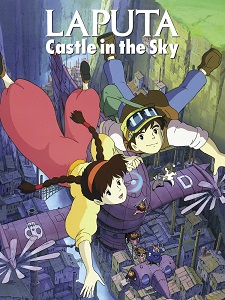
Anime Review: Laputa: Castle in the Sky (1986)

TL;DR – Sheeta owns a mystical amulet that contains the power to levitate. She is targeted by both government agents and air pirates seeking the power of the stone. With the help of a boy named Pazu, the pair go on an adventure to find the flying castle, Laputa, and the origins of Sheeta’s amulet.

Review (warning: spoilers)

Before there were big furry creatures and cat buses (Tonari no Totoro), before young witches tried to make their mark (Kiki’s Delivery Service) and pigs flew seaplanes (Porco Rosso), before forest gods and girls that rode on giant wolves (Princess Mononoke), there was Laputa: Castle in the Sky. Hayao Miyazaki’s masterpiece brought steampunk fantasy to the masses and spawned numerous steampunk anime and manga to follow including the likes of Fullmetal Alchemist and Miyazaki’s later work, Howl’s Moving Castle.

I have said in my previous anime reviews of Miyazaki’s work that the man is a storyteller of the highest calibre and has an attention to detail that creates worlds that are full of depth. In anime (and indeed animation) circles, Miyazaki’s ability to capture the little things on the screen while depicting multi-layered characters and fascinating story plots is second to none.

Laputa: Castle in the Sky follows young orphan Sheeta aboard an airship who has been captured by government agent Muska. The airship is attacked by pirates led by Dola, and Sheeta attempts to escape only to lose her footing scaling the outside of the ship and plunges to her death. Or so we think…

Instead, a glowing blue light bursts forth from an amulet around Sheeta’s neck slowing her descent. We are then introduced to Pazu, a boy who works in a mining town, who sees an unconscious Sheeta floating down from the skies. The animated physics of the characters grabbed me immediately and the scene where a confused Pazu opens his arms to “catch” Sheeta and as soon as she is in his arms the power of the amulet turns off is both funny and charming. Pazu’s legs buckle as Sheeta’s full weight has been released by the stone and he strains to lift and carry her to safety.

He takes her to his home to recover. His home, an odd construct of wood and stone with several floors connected by ladders, reminded me of a cross between a castle tower and a hobbit house. The scene where he wakes the next morning to release doves into the valley and play his trumpet to greet the new day is divine.

But their peace is short lived as Sheeta reveals to Pazu those seeking to hunt her down, a race between government agents and pirates to get a hold of Sheeta first. When action is triggered, it is thrilling and filled with complexities that boggles the mind when you think this was done all through traditional cell animation techniques back in the 1980s (way before CGI became common place). One such sequence is when Pazu and Sheeta are escaping on a train and being chased by the pirates and army. The explosions and collapsing of bridges where the train tracks run is nothing short of brilliant. Like something out of Looney Tunes Road Runner cartoon but with way more detail and care.

Through the twists and turns, Sheeta is eventually captured again by Muska while Pazu joins forces with Dola and her pirates. They manage to rescue Sheeta but at the cost of the amulet which falls into Muska’s hands. The climatic final act involving the discovery of Laputa (a giant floating castle that has at its centre a giant levitation crystal) and a series of sentinel robots that can be activated to defend the castle or wage war. This is Muska’s end game. He wants to take control of Laputa and its robot army and take over the world. It is only through Sheeta and Pazu’s actions that they prevent this from happening, and watching the disintegrating Laputa is horrifying, mesmerising and truly epic.

An adventure film that is essential viewing. One to be watched and re-watched.

10 out of 10

Movie Review: Onward (2020)

TL;DR – In a magical world where magic has been largely forgotten, two elven brothers seek to find their way in life. They believe the key will be resurrecting their dead father for one day. When the magic they cast goes sideways, they set off on a quest to complete the spell and in the process discover that their growth can come from each other.

Review (warning: spoilers)

Onward sets the premise of a world where magic exists but no one can be bothered to learn it because technological advancements supplant the need to conjure spells. Before if you wanted to illuminate a dark room, you cast a spell to create a ball of light, now you simply use a lightbulb and switch it on.

While magic has faded away, replaced by technology, the varied creatures in this world still exist. Elves, trolls, centaurs, fairies, mermaids etc. co-exist in a world that now has smartphones, televisions and indoor plumbing.

On his sixteenth birthday, we meet Ian Lightfoot (Tom Holland), a teenage elf going through confidence issues. His mother, Laurel (Julia Louis-Dreyfus) gives him a gift from his late father, Wilden (Kyle Bornheimer) who passed away before Ian was born. The gift is a wizard staff, a phoenix gem, and a letter that contains a spell that will allow Ian to resurrect his father for one day.

Ian has an older brother, Barley (Chris Pratt) who loves role-playing games and has an enthusiasm for the mystic arts that tends to mess things up at the wrong time. It is somewhat amusing seeing an elf obsessed with Dungeons & Dragons (or in this case, the “Quests of Yore” (QoY) role-playing game) in a world filled with fantasy creatures. I am sure there is some deeper meaning about imagining a mystical world within a mystical world, but I digress.

QoY-loving Barley goes bananas over Ian’s gift and seizes the staff, gem and spell to try and cast it but without success. Later that evening, Ian laments that the magic didn’t work as he wants nothing more than to meet his dad. He reads over the letter and whispers the words of the spell and presto, the staff and gem activate. Ian grabs the staff, magic coursing through it, and slowly his father begins to emerge. Starting with his feet in purple socks and leather shoes and moving upwards. Barley appears at Ian’s bedroom door and sees Ian is struggling to maintain control of the staff, he rushes in saying he can help only for the spell to be interrupted, shattering the phoenix gem. The brothers discover that Wilden has only been partially resurrected, up to his waist.

This is Pixar in true form. The process of a half-resurrected Wilden and his ability to communicate to his sons given his top half is missing (along with their sons being able to communicate to him) is cleverly done through drumming his feet. It also opens up for any number of comic moments as Wilden’s lower half fumbles his way along with his sons in search of another phoenix gem to resurrect the rest of him.

For all of its action and adventure, however, Onward is at its heart a coming-of-age film that examines the importance of reflecting on the past, looking to the future, while living in the present. For Ian, he creates a list of the things he wants to do with his dad – “play catch”, “take a walk”, “have a heart to heart”, “laugh together”, “driving lesson” and “share my life with him”. By the end, he discovers he has achieved all these things with his brother. He realises the most important thing (that he has taken for granted, or indeed treated with contempt) is the bond he has with Barley.

The film is also just as much about Barley’s growth as it is Ian’s coming-of-age. Barley’s exuberance, optimism and boundless energy masks are deep pain. A pain of regret over not being able to say goodbye to his dying father due to fear even though he was afforded the opportunity. Ian gifts his older brother the opportunity to say goodbye and Barley is able to finally move forward also.

Onward is a slice of Pixar magic worthy of repeat viewing.

8 out of 10

Book Review: Shadow and Bone by Leigh Bardugo

TL;DR – Alina serves the Ravka army as a mapmaker. Assigned to cross the Shadow Fold, an expanse of darkness filled with demonic winged monsters, she almost dies but discovers a long dormant power that allows her to summon light and fend off the creatures. This discovery leads to a chain of events where Alina is thrown into the world of politics and manipulation to try and save her country from its enemies. Fans of young adult fantasy will devour this story.

Summary

Alina Starkov and Mal Oretsev are raised in an orphanage in Keramzin. Thick as thieves, the pair grow up together with a bond that is stronger than blood. When they come of age, they enlist in the First Army of Ravka. Alina is a mapmaker and Mal is an expert tracker. Their regiment journeys to Kribirsk where they see the Shadow Fold.

The Shadow Fold, also known as the Unsea, is like a gaping wound that runs south of Ravka to the border of Shu Han and all the way north to the border Fjerda. It is filled with demonic flying creatures known as the Volcra. Cut off from the coast, East Ravka struggles to survive and must often send soldiers through the Fold in order to access West Ravka so they can access the imports it receives from other countries that cross the true sea. Ravka has been at war with Shu Han and Fjerda for over a hundred years, and the Fold is a blight that traps the country between two enemies.

When Alina and Mal board a sandskiff and commence the perilous journey through the Fold, they are set upon by a swarm of Volcra. Among the blood and chaos, Mal becomes badly wounded and Alina rushes to his side. When a Volcra swoops down and latches on Alina to carry her away, all looks lost until she unleashes a blinding white light that destroys all the nearby Volcra. Alina loses consciousness in the process and awakens to find herself back at Kribirsk and is escorted unceremoniously to meet the Darkling.

The Darkling is the leader of the Second Army of Ravka. While the First Army are non-magical, the Second Army is comprised of Grisha (humans capable of conjuring magic). When the Darkling confirms that Alina is not only a Grisha but has the rare ability to summon light, she is whisked away to the Little Palace to commence training in the Grisha arts. There she is plunged into the political machinations and internal power struggle between Ravka royalty and Grisha. Alina is anointed the Sun Summoner, a being capable of freeing Ravka from the Fold, reuniting east and west, and finally making the country whole once more.

Will she save Ravka from its enemies (and itself) or destroy it?

Review

Book 1 of the Shadow and Bone trilogy introduces the world of Grisha, masters of the small science, who are capable of conjuring magic. Corporalki are able to manipulate the human body; they can heal and harm with a wave of their hand. Etherealki control the elements wind, fire and water. Materialki are inventors that have powers to change compositions of various chemicals and substances such as steel, glass and textiles. Collectively, they are known as the Second Army of Ravka.

Leigh Bardugo has built a fantasy world that establishes firmly magical arts that follow a set of rules. She then surrounds this fantastical element with real life common themes that humans see, experience and struggle with. Whether it is the emotions of love, joy, envy and jealousy experienced by the main characters or the broader impacts of war and political backstabbing, readers will identify with these as the familiar and thus be fascinated by the fantastical.

The greatest strength of Shadow and Bone comes not only from the character relationships between Alina, Mal, the Darkling and supporting cast but also from the established prejudices, suspicions, and power struggle between non-magical humans and Grisha. Ravka is ruled by a king and queen who are non-magical. The King has the First Army, soldiers who use armour and weapons to wage war against the northern Fjerdans and the southern Shu Han. The First Army is seen as the protectors of the country, the Second Army supports the First Army, and Grisha are perceived to be secondary. They all serve the King.

This does not sit well with the leader of the Second Army, the Darkling, who seeks to establish a world where Grisha are on equal footing. Actually, that’s not true, the Darkling wants to establish a new order where he is the ruler of Ravka and Grisha are respected as the higher beings. Forget equal footing, the Darkling wants to not only free Ravka from the Fold, the Fjerdans and Shu Han, but he also wants to be rid of serving a King that he perceives as inept.

This leads to what I felt was the greatest weakness of Shadow and Bone. The story that unfolds reveals that the King really is inept, he treats Grisha (including the Darkling) as servants. He surrounds himself with riches and comforts while the rest of Ravka starves and struggles to survive. Both he and the Queen are largely figureheads who hold parties and live lives of indulgence. Why the soldiers of the First Army along with all the non-magical peasants and serfs of Ravka follow the King is bewildering. There is no insight as to how the King holds on to his power, how he utilises it to control the Darkling and the Grisha. I can only assume that the King’s ancestors were wiser, stronger, and more powerful rulers, but this is never mentioned in the book.

Instead, I am left baffled why the Darkling and the Grisha put up with any of this nonsense. The Darkling could do away with the King in any number of ways and establish a new order, but he chooses not to. The only inference in the book is that he mentions to Alina that the age of Grisha power is coming to an end, and weapons technology of the First Army is advancing and will surpass Grisha power. From what I can tell, the Grisha population is substantially less than the non-magical population, so by pure numbers the Second Army cannot defeat the First Army.

Bardugo even goes even to the point of saying through one of her characters that everyone (including the Ravka First army and the non-magical people) knows who is the real leader and that’s the Darkling.

Still, putting this aside. Bardugo delivers a wonderful character in Alina and captures her naivety and eventual transformation into maturity well. Arguably, it is as much a coming-of-age story about Alina as it is a fantasy adventure. The interactions between her and the Darkling, and her and Mal, carry the story through to the end.

Plenty of symbolism will also have readers chomping at the bit. Alina is the Sun Summoner, the Darkling is the Shadow Summoner, who will prevail? Who can Alina truly trust while she is at the Little Palace training to use her power? Is it Genya, the Grisha tailor who Alina feels a genuine friendship because she is like a slave to the King? Is it Baghra who tries to teach Alina how to use light summoning magic? Is it Botkin, a former Shu Han mercenary, who teaches Alina in hand-to-hand combat? Is it the Apparat, a priest and spiritual advisor to the King who totally creeps Alina out because he seems to be stalking her? Or can Alina actually trust the Darkling and what he seeks to do (i.e. reunite Ravka)?

The one constant, Mal, is not with her. He has been sent off north to track down a mysterious stag that can act as an amplifier for Alina’s powers. Their separation is both heart wrenching and a driver for the story because you want them to reunite. And you know they will reunite, it is just a matter of when and under what circumstances.

Shadow and Bone closes in a dramatic but satisfying fashion and a key realisation for Alina comes in the form of an act of mercy. The writing flows easily and while aimed at young adult readers, it is imminently enjoyable for older ages who enjoy fantasy also. I look forward to reading book two – Siege and Storm.

4 out of 5.

Anime Review: Fumetsu no Anata e (2021)

TL;DR – a powerful being creates an orb. The orb is featureless and emotionless. As it interacts with other creatures, it takes on the form of that creature and slowly learns what it means to be alive.

Review (warning: spoilers)

The series opens with a narrator known as the Beholder, who creates an orb that can capture the reflections of many things and can transform as a result. The Beholder releases the orb onto the Earth to observe it. The orb initially turns into a rock, then a wolf (achieving consciousness), then a boy, then a bear, then a girl… you get the idea. It receives the name Fushi (meaning ‘undying’) and slowly acquires speech and feelings. This includes pain, so while he is immortal, if he gets stabbed by a knife he will feel it.

Why Fushi is released to experience the world does not become apparent until later in the series when the Beholder reveals himself and tells Fushi that its purpose is to preserve the world and that there are creatures that are looking to destroy it.

Fumetsu no Anata e is an existential journey that sees Fushi learn about the things that living creatures experience and being taught that growth comes from suffering. His ability to transform only occurs when the subject Fushi develops a connection with dies. As such, you better grab the tissue box because practically all the story arcs involve suffering and death among the spattering moments of love and joy.

Each story follows an individual that Fushi develops a connection with. Each individual is young and have their lives cut short in tragedy. By the time you reach the final story arc, the formula is set and nothing that happens will be a surprise. Thus, in my opinion, Fumetsu no Anata e gets weaker as the series moves on. I struggled to complete the final story arc because the gravitas of the earlier episodes becomes diluted. By the time, I see Fushi befriending a group of kids on a prison island, I had lost empathy.

Even the primary enemy to Fushi is abstract. The creatures that are seeking to destroy the world rather than preserve it is a plant like creature, called Nokkers, that can steal Fushi’s forms and memories. It can also invade both living and dead human beings and turn them into violent zombies. In its natural form, it looks like an orbital brain and if killed in that form, it perishes. Why the Nokkers exist or how they came to exist is not revealed in this first season, which added to the feeling of dissatisfaction rather than anticipation.

Fushi’s other enemy is a female character named Hayase. She has no qualms in killing others if it means she can get her hands on Fushi. Her goal is much clearer, she wants Fushi all to herself. I assumed she wishes to acquire his immortality, but I find out later that she supposedly loves him. She is one sandwich short of a picnic because on one hand she confronts a Nokker and tells it that it can not bend Fushi to its will through brute force, yet she uses brute force and slays the people Fushi cares about to get closer to him. This is not love, this is a psychopath, and thankfully Fushi knows better and stays away from her.

Season one ends without resolution with season two slated for release in October 2022. At this stage, I do not know if I will go to the effort of investing into the second season. For all of its emotional pull, I did not enjoy this anime as much as I had hoped. The lack of direction and the formulaic cycle that Fushi experiences with each person he meets, left me feeling flat and disengaged. I also found the Beholder (narrator) initially interesting but then obtuse; he is more an observer who decides to interject in Fushi’s life when he see fit (why he acts the way he does is not revealed). Perhaps, all the answers will be given in season two but I am not holding my breath.

6.5 out of 10

Movie Review: Wonder Woman 1984 (2020)

TL;DR – As per the title, get ready for 80s music, fashion and the ageless Wonder Woman seeking to stop a man who has become a genie that can grant wishes for himself by granting wishes to others.

Review (warning: spoilers)

Wonder Woman 1984 opens with a tournament on Themyscira where a very young, Diana Prince, competes against older Amazons in a race involving obstacles, horse riding, and archery. It is a splendid opening act against a mythical backdrop, with Diana almost winning the race except she cheats and is thus disqualified.

Moral lesson is then imparted by Antiope who says, “You took the short path. You cheated, Diana. That is the truth. That is the only truth and truth is all there is… You cannot be the winner, because you are not ready to win, and there is no shame in that. Only in knowing the truth in your heart and not accepting it, no true hero is born from lies.”

This is a long-winded way of saying that anything that is worth obtaining is done so honestly and with no shortcuts. This is the theme that runs through the rest of the film.

Fast forward to 1984 and we see Diana (Gal Gadot) swinging into action as Wonder Woman and saving people at a shopping centre where a robbery is occurring. When she is not doing the hero-schtick, she works at the Smithsonian Institution and lives a pretty lonely existence. She does not allow herself to connect with anyone and is still heartbroken from losing Steve Trevor (Chris Pine), the army pilot who sacrificed himself in the prequel Wonder Woman movie.

The two primary antagonists are then introduced into the film. First, we have Barbara Minerva (Kristen Wiig), an awkward, shy geologist and cryptozoologist who just started working at the Smithsonian. Barbara has confidence issues and is largely ignored and forgotten by anyone she interacts with. That is until she meets Diana, who treats her with respect and dignity.

Next, we meet Maxwell Lorenzano (Pedro Pascal), a man striving to be at the top by creating a Ponzi scheme involving buying up land to drill for oil (only to discover there is no oil). People who have invested and trusted in him are now pulling the plug, and he is on the brink of bankruptcy.

When Barbara shows Diana an artefact known as the ‘Dreamstone’ and Diana reads an inscription on it that says it will grant the holder one wish, you know things are going to go sideways. Remember the only things worth obtaining are done so honestly and with no shortcuts. The fine print on the Dreamstone is that it will grant your wish but you have to pay a price unless you renounce the wish.

Both Diana and Barbara (inadvertently) and Maxwell (intentionally) make wishes. Diana wishes Steve was back; Barbara wishes she was like Diana; and Maxwell wishes to be the Dreamstone.

Steve comes back to life in another man’s body. It is an unintentionally funny moment which reminded me of the movie Ghost where Patrick Swayze’s character goes into Whoopi Goldberg’s character so Demi Moore can see him. The price Diana pays is she slowly loses her powers.

Barbara starts gaining strength and beauty like Diana. The price she pays is she slowly loses her humanity.

Maxwell becomes the genie and can grant anyone’s wish while at the same time being able to fulfil his own wishes. The price he pays is that his body starts shutting down.

Like the first film, power that corrupts is found from the gods. The DC comics showed that Wonder Woman’s powers came from the Greek gods. In the first film, Wonder Woman faced off against Ares, the god of war, in this film, she indirectly faces off against Molos, the god of mischief who created the Dreamstone.

As Wonder Woman gets weaker, and Barbara and Maxwell get more powerful, none seek to renounce their wishes even though they see the cost is not just impacting on them but the world over. Eventually, Wonder Woman does the right thing and lets Steve go. Meanwhile, Barbara turns into the villain, Cheetah, and Maxwell uses satellites to beam his message across the world telling people to make a wish and in turn he wishes for their lifeforce as payment (thus staving off his own mortality).

Wonder Woman saves the day not through brute strength but by appealing to the world’s humanity and revealing the truth. The fact that part of life is suffering but there is also goodness and hope. And that truth is all that matters. Through her lasso, she communicates through Maxwell and pleads for everyone to be a hero by renouncing their wish, to see the chaos they have unleashed, and making them realise this is the truth in order to save the earth.

While the message is noble, I found the film did not quite deliver. Maxwell is more misguided than villain. The scene where he gets the US president to make a wish is comical rather than gripping (and what the president wishes for is not ‘world peace’ but ‘more nuclear weapons’… who voted for this guy?) Barbara, on the other hand, is a character whose transformation is well done if not for the fact that Kristen Wiig cannot hope to make herself look awkward and invisible to others by merely wearing glasses and baggy clothing. And bringing back Steve via inhabiting another human being… the moral implications of that do not get explored at all.

There’s also some real holes in the plot. For example, when Maxwell beams his face all around the world and gets people to make wishes, his son Alistair wishes simply for his dad to return to him. But nothing happens, Maxwell continues on his megalomaniac wish consumption ways and Alistair is left wandering through a city that has erupted into chaos. I guess he didn’t wish loud enough?

Another example is where Steve and Diana steal a plane. Forget the fact they simply walk into a hangar and jump into a ready fuelled airplane, Steve also happens to choose a fighter jet and somehow fumbles his way to knowing how to start and fly it when his training as a pilot involved flying planes in 1918 (not 1984). Maybe the body he got resurrected into is a modern day pilot?

The film’s action sequences also come up short. The first Wonder Woman film’s scene where Diana charges across ‘No Man’s Land’ to capture an enemy trench is masterful, beautifully cinematic and adrenaline pumping. There is nothing like that in Wonder Woman 1984 and what action there is looks a bit silly; one particular sequence where Diana saves two children by lassoing a missile and then a windmill to then swing down is so blatantly green screen that you will think you are watching an old Tarzan movie. Unfortunate.

5 out of 10

Book Review: The Handmaid’s Tale by Margaret Atwood

TL;DR – dystopian, speculative fiction about a world where freedoms have been overrun and women have lost all rights including the control of their own bodies. A disturbing look into a society that has lost all its humanity.

Summary

The Republic of Gilead (RoG) is a patriarchal, military dictatorship that has taken control of the United States. Set in a time where environmental pollution has caused the bulk of the female population to become infertile, the RoG restructures society based on extremist interpretations of the Old Testament, which results in human rights (especially those for women) being restricted or removed entirely.

The Handmaid’s Tale tells the story of Offred (not her real name) who becomes a ‘handmaid’ with the express purpose of having children for RoG commanders she is assigned to. This is her story, her journey to survive, to find freedom.

Review

What is there to say that has not already been said about The Handmaid’s Tale? Margaret Atwood has created a work that will likely stand the test of time and has cemented her as one of the great writers of the 20th century. I will not attempt to dissect all of this story’s messages, symbolism, and commentary on how it reflects on human society today. You can read any number of articles that do deep dives into Atwood’s work and/or you can just watch the TV series. Regardless, it is deserving of all its accolades, awards, and critical acclaim.

Instead, all I will say is what I felt when I read this book and whether I enjoyed it.

It achieves what it intends, a level of realism that disarms you and causes you to fall into a world that makes you think, “This could really happen.” Atwood’s mastery of the language places you deep inside Offred’s mind and you feel all her strengths and weaknesses as if they are your own. Atwood flourishes details as viewed from Offred in ways that hits close to home (or too close to home as it may be).

It is a world full of fear, where even those in power (i.e. the Commanders and, to a lesser degree, the Commanders’ wives) are also under the microscope for any signs of going against the established doctrine and system. For example, the Commander that Offred is assigned to invites her in to play Scrabble and gives her magazines to read. This would be seen as an act of treason. Offred is merely a vessel, whose sole purpose is to be impregnated. She is not meant to be seen as a human being with her own thoughts and intellect.

Every interaction and emotion described in this book demonstrates Offred’s humanity in an inhumane world. The fact Offred is able to see this humanity even in her captors demonstrates Atwood’s ability to create a world that is real and far from black and white. Disturbing and horrifying in parts mixed with moments of genuine tenderness and hope creates a roller coaster ride where I found myself having to reach the end.

But did I enjoy it? In short, no.

It is a brilliant piece of work, no doubt about it. Yet, ‘enjoyable’ is the last word I would use to describe it. Why? Because it is a dystopia that focuses on the very worst that we can become. Remember, how I said it can hit too close to home? I see enough dystopian behaviour on the news, in social media, and in day-to-day reality that I do not need to immerse myself in it through a story.

However, is it worth reading? In short, yes. It is worth reading because of how effecting it is and how it leaves impressions and thoughts that will make you ponder long after the last page is read.

But enjoyable, no, and as an avid reader that counts for a lot in my books.

2.5 out of 5.