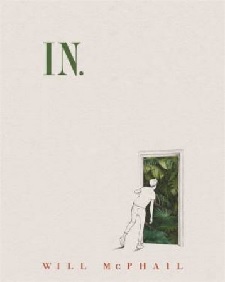
Book Review: In by Will McPhail

TL;DR – a tale of existentialism through observation, courage, and a lot of coffee shops.

Summary (warning: spoilers)

In tells the story of Nick searching for meaning in his life. He knows there is more than meets the eye to everyone he meets, but he does not know how to reach them. Every conversation, every encounter is on a superficial level.

Even when he meets Lorena, a sassy, engaging woman, he struggles to feel anything below the surface. Their ‘dance’ is one where they both stand behind protective walls they have built over time.

When finally he dares to speak his mind and true feelings to someone, he discovers something beyond the bubble of his own existence. He discovers the significance of others, and he learns that to live life means you have to become vulnerable.

Review

Every now and then you stumble upon something that leaves you speechless. Something that stays with you long after you’ve turned the final page. In by Will McPhail is one of those reads that will linger with you and make you re-examine how you live your life.

This is not your normal graphic novel. As both artist and writer, McPhail uses everything at his disposal to create a poignant, meaningful, and significant story. The minimalist nature of his character designs, the detailed beauty of his backdrops, the way he conveys emotions such as nervousness through how he draws dialogue bubbles/speech balloons, and his use of colour ensures the reader will want to examine every page in detail.

And that’s just the art.

The story he tells is of a character named Nick who is searching for genuine connection. It is not just the meaning in his own life but also the meaning in others. He works as an artist drawing carp for a fishing magazine and carries around a sketchbook wherever he goes doing doodles.

In a city thriving with people, he feels lost and suffocated. He ventures into random coffee shops and bars seeking to have meaningful dialogue as well as to get out of his lonely apartment where he spends too much time either watching porn or listening to Joni Mitchell on replay. But everyone he interacts with is stuck keeping their head down, nose to the grindstone, and fearful of revealing anything deep about themselves because it could lead to ridicule, strange looks, and vulnerability.

Nick knows he is no better than anyone else, stuck on the outside looking in (not that he believes anyone is really ‘in’). But when he finally builds the courage to step outside his own fortress/prison, he experiences doorways into lives filled with colour.

Life is filled with highs and lows. Laughter and tears. There is strength, hope, and love in vulnerability even if it causes you to fall to your knees.

Essential reading.

5 out of 5.

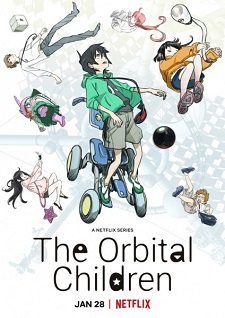
Anime Review: The Orbital Children (2022)

TL;DR – when debris from a comet damages a space station orbiting earth, a group of children become trapped. Using what technology they have available, their wit and intelligence, they seek to survive and make their way to the escape area. However, the vacuum of space and oxygen supply are not their only threats, working together has its own challenges and the comet is more than what it seems.

Review (warning: spoilers)

The Orbital Children (aka Chikyuugai Shounen Shoujo) throws us into the year 2045 where humanity, suffering from overpopulation, has sought to build beyond Earth’s boundaries. Technology has also advanced to the point where we live with artificial intelligence, drone helpers, and gloves called “Smart” that replace smartphones.

Events in this anime series requires you to piece together quickly historical events. The key events you need to know are as follows:

  • An AI known as “Seven” achieved a level of intelligence that was considered the highest in human history. It developed technologies that advanced society and humankind’s ability to colonise outer space. However, it reached a point where humans were unable to control Seven, and this led to a number of human deaths. This became known as the “Lunatic Seven” incident. Eventually Seven was euthanised.
  • Prior to its death, Seven released a string of equations and symbols that no one could understand. These have since been analysed and certain groups believe its translation tells of a prophecy. This prophecy is known as the “Seven Poem”.
  • Prior to the Lunatic Seven incident, humanity managed to build a city on the moon. Fifteen children (known as “moonchildren”) were born, but it was soon discovered that they could not survive through infancy. Seven developed implants that would allow the moonchildren to survive. Of the fifteen, only two survived – Touya Sagami and Konoha Nanase. After the Lunatic Seven incident, children could no longer be born on the moon.
  • Anshin is a commercial space station that orbits earth and is known as a space hotel. It has shopping centres, restaurants, internet and playgrounds, and is controlled by Sagami (Touya’s uncle) and two others who oversee the station’s operations in conjunction with an AI called “Twelve”.
  • Twelve is the AI host on Anshin space station. It has “intelligence limiters” that prevents increases in AI intelligence. As such, Twelve has nowhere near the intelligence capacity of Seven.
  • UN2.1 is the United Nations that seeks to prevent any future AI events such as the Lunatic Seven. They are the agency that created the intelligence limiters and ensures a limiter cannot be removed without their authorisation.

The story revolves around Touya and Konoha who live on Anshin and are visited by three more children – Taiyo Tsukuba, Mina Misasa and Hiroshi Tanegashima – who have come from earth after winning a promotional competition.

When an incident with a comet results in damage to Anshin, our group of five, along with adult nurse Nasa Houston (yes, that’s actually her name) and Anshin mascot Anshinkun (the man inside the giant pink rabbit outfit is actually named Kokubunji and he was the chief designer to Anshin), fight for their lives (and among themselves) to survive. Through each episode we learn there is more than meets the eye with our main cast, and we also discover that UN2.1 tried to alter the comet’s course because it was going to collide with earth by shooting it with nukes but the explosion caused debris to rip through Anshin.

Turns out the comet is an ‘AI comet’ meaning humanity had sent AI technology to take control of it and mine its ice for water. The AI technology was Seven’s technology and thus Seven has survived by propagating itself using micro machines over the comet.

This aligns with the Seven Poem, which predicts that a third of the Earth’s population needs to die in order for humanity as a whole to survive lest they become extinct due to overpopulation and draining all of Earth’s resources. The comet (being controlled by Seven version 2.0) is set to hit an area of Earth that will fulfill this prophecy.

By series end, things get quite surreal as prophecies, philosophical ideas, technology, and the actions of Touya and Konoha convince the Seven comet to not wipe out a third of humanity. And while the ending is a positive one, I could not help feeling how convoluted it all was.

Perhaps things got lost in translation and the subtitles did not properly convey the Japanese dialogue, but when Touya starts unlocking the implant in his head so he can think in the “11th dimension”, I knew things had gone far away from any logical, coherent story-line. Both the characters and the AI start conversing about the difference between “humans” and “humanity”. And the Seven Poem mentions the word “FitsZ” that is meant to represent a future that Seven was unable to predict. Neither the “11th dimension” nor “FitsZ” is explained by series end, so I found myself feeling flat. Like the writers wrote themselves into sci-fi knots and solved all the puzzles by animating a surreal exchange between Touya, Konoha, and the Seven comet in an in-between dimension.

Bizarre and unfortunately undoes a lot of the excellent build up in the middle episodes. The animation is top-notch, but that’s not enough to carry a story and characters that you lose both understanding and empathy in equal measure.

5.5 out of 10

Movie Review: The Matrix Resurrections (2021)

TL;DR – most of what fans love returns in the fourth instalment of The Matrix franchise. Sixty years have passed since Neo sacrificed himself to save Zion. Have things improved between humans and machines? Well… marginally.

Review (warning: spoilers)

“Ah Neo, how I have missed thee…” This was the thought bubble that popped into my head when I saw the trailer for The Matrix Resurrections.

The sci-fi fan inside of me got giddy seeing the waterfall of green code, Keanu Reeves looking ageless as Neo, and the song White Rabbit by Jefferson Airplane playing in the background. When Neo walks into a cafe and shakes Trinity’s hand (Carrie Anne-Moss also looking ageless), and Trinity asks, “Have we met?” The trailer had achieved its goal – it hooked me. The bullet time actions sequences that followed were simply a bonus.

More thought bubbles appeared:

  • “Didn’t Trinity die in The Matrix Revolutions?”
  • “Didn’t Neo sacrifice himself?”
  • “How are they alive?”
  • “Why doesn’t Trinity know him?”

Over two decades ago, back in 1999, a little known sci-fi film called The Matrix hit cinema screens and redefined how we look at the world. The character-driven dystopia with mind-blowing action sequences and special effects (that combined Hong Kong and Hollywood film techniques) became a worldwide box-office success that ensured sequels would be made. Two more Matrix films were released in 2003 completing, what was at the time, a trilogy.

Reactions from the second and third Matrix films were mixed, but they still smashed box office sales and ensured that the Wachowski directors never had to make another movie ever again. They have since collaborated and gone solo on other films/TV with mixed critical results.

In truth, while the trailer made me giddy, I did wonder why venture back into the Matrix for a fourth time when it felt like everything was wrapped up in the third one?

The story to be told is thus:

  • Sixty years have passed since Neo and Trinity gave up their lives. And while the human race lives, the machines still exist and so does the Matrix. Some of the machines now live with humans in peace, but humanity is still under threat.
  • After the machine wars sixty years prior, a program called the Analyst (played by Neil Patrick Harris) manages to resurrect Neo and Trinity. The Analyst has been designed to learn about the human psyche and discovers that plugging Neo and Trinity back into the Matrix while suppressing their memories allows for greater efficiency to generate power for the Matrix.
  • With the above two points as the backdrop and premise, all you now need to do is pretend The Matrix Resurrections is the first The Matrix movie. The primary difference being that instead of Trinity trying to awaken Neo to the existence of the Matrix (as in the first film), this has the roles reversed where Neo has to awaken Trinity to the existence of the Matrix.

The third dot point above is an over-simplification of what happens in The Matrix Resurrections but really that is what we end up watching. Even a version of Morpheus (played now by Yahya Abdul-Mateen II instead of Lawrence Fishburne) and Agent Smith (played now by Jonathan Groff instead of Hugo Weaving) are resurrected; their new forms being a plot device so we do not realise, as the viewer, that they are actually Morpheus and Agent Smith in another form until later. The reason for their change in appearance centres around a resurrected Neo, with only faint memories of who he was, now living a life in the Matrix as a successful video game developer and creating a programming sandbox called a modal to develop and test characters, two of whom are Morpheus and Agent Smith.

The fact that the machines resurrect Neo and Trinity just so they can harness the unusual power they generate when they are in close proximity to each other shows that the machines can repeat their own mistakes. Plugging them both back into the Matrix to study the human psyche and generate power is an act of foolishness given the havoc and destruction the pair unleashed when they awoke and became aware of the Matrix’s existence in the first three films. But I guess even artificial intelligence can experience optimism.

Déjà vu is the name of the game. A plot device that is used in previous Matrix films and will make you feel like you’re experiencing déjà vu yourself when watching how The Matrix Resurrections unfolds. The film to me felt like a walk down memory lane as opposed to any sort of revelation. The chemistry is still palatable between Reeves and Anne-Moss; Groff is deliciously delightful as Agent Smith gone rogue; Abdul-Mateen II is less so as Morpheus; and Neil Patrick Harris ties it together as the main antagonist as the Analyst.

The ending is as expected. Neo and Trinity are freed from the Matrix and are a super powered duo that can recreate the Matrix however they want and awaken anyone they want.

When the credits roll, more than enough has happened that sets up for a sequel (or perhaps even a second trilogy). However, I have read that there will be no further telling of Neo and Trinity so the door may have finally closed on this cinematic series. Still, the Wachowskis said there would not be a fourth Matrix and here we are.

Perhaps in another two decades the waterfall of green code will appear again proclaiming Matrix 5’s arrival. Or perhaps we just need to take the red pill and see that we have been living in the Matrix all along…

6.5 out of 10

Book Review: All The Light We Cannot See by Anthony Doerr

TL:DR – The story of a young girl over a ten year span who has to learn how to live with blindness during World War II.

Summary (warning: spoiler)

In August 1944, the French coastal town of Saint-Malo was occupied by Germany. Allied forces sent bombers as part of an offensive to capture the town. A quarter-mile offshore, Fort National holds several hundred prisoners who spy the bombers’ approach including Marie-Laure Leblanc’s uncle who thinks:

Locusts, and an Old Testament proverb comes back to him from some cobwebbed hour of parish school. The locusts have no king, yet all of them go out in ranks.

In Saint-Malo, on the sixth floor of number 4 rue Vauborel, sixteen year old, blind girl, Marie-Laure is in her bedroom with a replica model of Saint-Malo in her hands. The replica is so precise that Marie-Laure can run her fingers over the model town and find number 4 rue Vauborel. She pushes the miniature front door and discovers the model house is a puzzle box. Puzzle boxes were made by her locksmith father who often gave them to her as gifts and a guide to help navigate the town she lives in. She turns the chimney ninety degrees and removes three panels of the roof before turning it upside. A cold, teardrop shaped stone, the size of a pigeon’s egg falls into her palm. A stone she cannot see.

She clutches the model house and gemstone to her as the house shakes from the incoming bombers. Sirens wail outside telling everyone to find shelter. Marie-Laure crawls beneath her bed wishing for her father.

This is her story.

Review

As a species, we are a weird bunch. We should love and respect one another, yet we fight and unleash wars, and we know this inherently. We should treasure each other, yet we treasure inanimate objects, and we know this inherently. We should learn from our mistakes, but we often repeat them, and we know this inherently. (Is it a mistake that I repeated ‘we know this inherently’ three times? No, that’s an epistrophe, and I admit is annoying unless they’re the lyrics of a song).

This dichotomy between what we know and what we end up doing drives home a message around humanity in All The Light We Cannot See. Doerr’s epic tale of historical fiction is not so much a cautionary one as it is a blatant message that there is an essential need that we, as a species, do not lose our own empathy toward each other lest we lose our humanity.

This got me thinking about museums. Our fascination for recording history, learning about the past, and using it to inform the future is a noble enterprise, and museums are a wonderful testimony to past achievements and allows exploration of new ideas by examining the old.

Museums also, I believe unintentionally, place focus on treasuring and valuing inanimate objects rather than people. Do we love Van Gogh the person? Or do we love Van Gogh’s art?

One of the key motifs in All The Light We Cannot See revolves around a museum treasure. And it demonstrates that even in the midst of World War II (or perhaps because of a world war), people lose sight of what is important and the thread of empathy towards each other is cut.

This museum treasure is housed initially in Paris at the Muséum National d’Histoire Naturelle and is called the ‘Sea of Flames’; a teardrop blue diamond with a touch of red in its centre like a flame. The stone is said to be cursed, and the story goes roughly like this:

The Sea of Flames was created by the Goddess of the Earth as a gift to her lover, the God of the Sea. She sent the jewel to him through the river, but the river dried up. It was found by a sultan’s prince. The Goddess, enraged, cursed the stone. The keeper of the stone would live forever, but so long as they kept it, bad things would happen. And indeed the prince, along with subsequent individuals who possessed the stone, suffered tragic deaths of those they loved and cared about and misfortune fell upon them. Like I said, Doerr’s message is clear rather than cautionary; don’t place more value on objects than people.

It goes on to say that the curse can be broken if the keeper throws the diamond into the sea, thereby delivering it to its rightful recipient.

The legend behind the Sea of Flames is told to a bunch of children visiting the Paris museum. One of these children is a six-year old Marie-Laure. Thus we see this event happens ten years before the opening chapters of the bombing of Saint-Malo. The tour guide who tells the story informs the children the Sea of Flames is now housed in this museum behind thirteen locked doors inside a vault not to be opened for two hundred years.

One of the children asks the guide, how long has it been since it was locked away. And the tour guide answers that 196 years have passed. If you work out the maths, Doerr has cleverly made it so that when the vault is finally opened in four more years, World War II will commence with Germany invading Poland. Could the outbreak of a world war have been triggered when a vault containing a diamond treasure was opened releasing a pent up 200-year curse?

The answer is it doesn’t matter. What matters is that a six-year old Marie-Laure asks the guide, “Why not just take the diamond and throw it into the sea?”

Her fellow peers scoff at her; who throws a diamond that could buy five Eiffel Towers into the sea? They have all (except Marie-Laure) already been convinced in treasuring and valuing an inanimate object. At the end of the tour, Marie-Laure is reunited with her father who happens to be the head locksmith at the museum. And one month later, Marie-Laure goes blind.

The other main protagonist in this story is a German boy named Werner Pfennig. He’s a gifted child plucked from an orphanage for his skills in fixing radios and ends up being indoctrinated with Nazi values and is placed in the army corps. His role is to use radio technology to track illegal enemy signals. However, he becomes disillusioned when not only Allied soldiers but also innocent civilians are killed.

As the story unfolds, we get to see how Marie-Laure learns to live during a time of war without her sight, and how Werner’s brutal training does not undermine his core empathy. It is majestically done by Doerr, and you have to be willing to absorb his prose because All The Light We Cannot See is a tome of a novel and a lengthy read. But I found every moment spent poring over each page a worthy investment.

By the end, when everything comes full circle, and the Allied forces invade Saint-Malo, I was riveted to see what would happen to Marie-Laure and Werner. Doerr’s ability to capture not only the historical places in his story but how Marie-Laure navigates her life during a time of strife completely blind is both ambitious and mind blowing.

When Marie-Laure discovers the stone hidden in the model replica of Saint-Malo given to her by her father who was entrusted with the stone by the museum when the Germans invaded Paris, she fulfils the question she asked ten years prior and releases the stone (and all the light she cannot see in the diamond) back into the ocean.

The fact that the Sea of Flames finally reaches its intended destination, and this coincides with the Axis collapse and the Allied victory shortly thereafter is not coincidence on Doerr’s part. The curse has been lifted.

5 out of 5

Anime Review: Gokushufudou (2021)

TL;DR – why bother being a househusband unless you’re going to do it well?

Review (warning: spoilers)

Yakuza boss Tatsu is known as “The Immortal Dragon”. His status is mythic in proportions. People in the criminal underground say that he destroyed ten of his rivals in one night unarmed and alone. His upper body is covered in tattoos of an entwining serpent, his every word resonates with deep authority, and his stare alone makes the legs of enemies turn to jelly. It is not hard to imagine that he has a hundred ways of disposing bodies, and can administer torture to extract information without batting an eyelid.

As he approaches you with trim black suit, slick black hair, and polished black shoes, you feel The Immortal Dragon wrap his serpentine length around your body, freezing you in place, his claws sink into your shoulder. You begin to buckle beneath that gaze, the weight of his aura making you hope that whatever end he has in store for you, it will be swift and painless.

And then you notice he’s wearing a white shibainu apron with a picture of a cartoon dog sticking its tongue out on front.

Gokushufudou (or “The way of the househusband”) is a hilarious look at what happens when a Yakuza boss decides he has had enough of crime and turns his mind to living a life as a househusband.

Tatsu is now married to career woman, Miku, and the anime follows the daily antics of Tatsu who takes his job as househusband as seriously as he did when he was the number one, most feared crime boss in Japan. Number one, most adept househusband is in his sniper sights.

The comedy is in the delivery as initial scenes of each episode (which are skit in length) convey the idea of some sort of criminal activity but results in a domesticated one which Tatsu attacks with relish. Comic moments include:

  • Tatsu using his tanto blade to slice vegetables instead of body limbs.
  • Going ga-ga over his balcony vegetable garden where he has grown basil, mint and other herbs and yet a police lookout thinks he is growing marijuana.
  • He tries to make tapioca balls for bubble tea and the scenes look like he’s trying to chemically make drugs.
  • Pretends to not want to go to a theme park but secretly has always wanted to go because he never got to as a kid and ends up bringing a fabulous high tea and loves playing with the animals.

Hilarity also comes in the form of other Yakuza characters, many who now seem to have retired and are also trying to live a non-criminal life. One of the funniest I found was Torajiro, a rival Yakuza boss that Tatsu dismantled, who has now become a crepe vendor and owns a food truck.

Their encounter which builds up to be a bloody fight to the death ends up being a cook off involving desserts. They both make a dish and then take multiple photos using their phones to post on Instagram to see who gets more ‘likes’.

The animation itself is interesting. Most of the episodes are a series of stills that zoom in and out for effect. Actual movement is minimal (for example, they’ll animate mouths moving for speech but the scene itself is a still), which is a different approach. In parts, it felt like I was watching more comic book panes than animation, but because of the skit nature of each episode, it works rather than detracts from the series.

There is nothing particularly deep and meaningful with Gokushufudou but it does make me want to get a shibainu apron and wear it over a suit while I go to shopping centres, car dealerships, theme parks, beaches…

7 out of 10

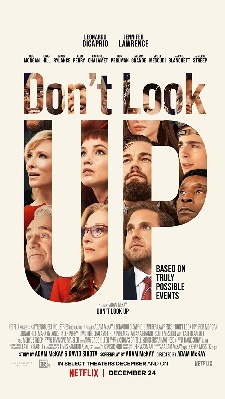
Movie Review: Don’t Look Up (2021)

TL;DR – a comet hurtling towards Earth will wipe out all life. A pair of scientists seek to convince the world that unless action is taken immediately by the Government, humanity will become extinct. They have the evidence to back up their claims but for some reason, denial is a strong emotion from those who are in power.

Review (warning: spoilers)

Don’t Look Up is an off-beat sci-fi comedy about a grad student, Kate Dibiasky (Jennifer Lawrence) and her professor, Dr Randall Mindy (Leonardo DiCaprio) who discover a comet that will crash into Earth in six months and fourteen days wiping out all life.

Anxiety-riddled Randall goes off his rocker trying to process the extinction level event, and Kate wants to take whatever drugs necessary to get high and forget that she discovered the comet in the first place. The pair get whisked away pronto to the White House to meet President Orlean (Meryl Streep) only to wait the entire day because the president is dealing with other matters such as their Supreme Court judge nominee is under qualified (no law degree) and has previously been a nude model. Randall and Kate are then told in the evening that they won’t get to see the president and end up staying overnight in a hotel.

When they finally get to see the president, she blows off their findings and makes a show of getting her own scientists to crunch the numbers. In a nutshell, the White House plans to “sit tight and assess”. The only one who does come on board is Dr Teddy Oglethorpe (Rob Morgan) but he has as much success as Randall and Kate in getting the rest of the Oval office staffers to take action against the oncoming apocalypse.

Blown off, Teddy says that they need to leak it to the press and tells Randall, “Keep it simple. No math.” To which, Randall replies, “But it’s all math.”

This sums up the satirical humour that runs through the entire film. Practically everyone who has the power to do something doesn’t and those few who do take the scientists seriously, can’t do anything about it.

When finally, those in power do take action, they do it for profit or self-interest. Turns out the comet is rich in minerals and if they can break it into smaller pieces then they can be mined for resources that can be used to build and mass produce better technology. Randall and Kate believe the Government should send nukes at the comet and simply try to divert its trajectory. But instead President Orlean is convinced by Peter Isherwell (Mark Rylance), CEO of BASH technologies to mine the comet for commercial profit.

The cast alongside Lawrence, DiCaprio, Streep, Morgan and Rylance is lengthy and includes Himesh Patel, Jonah Hill, Cate Blanchett, Tyler Perry, Ron Perlman, Ariana Grande, Timothée Chalamet and Paul Guilfoyle.

The film’s effectiveness is in the acting, and I have always found satirical humour to be an acquired taste. It seeks to say quite a bit about the state of the world today. How we’re consumed by social media, fake news and dependency on technology. Meryl Streep is suitably Trump-like in her political manoeuvres, Jonah Hill who is not only President Orlean’s son but also her Chief of Staff comes out with some ripping lines that are divisive to the extreme, and Cate Blanchett plays Brie Evantree, host of The Daily Rip who interviews Randall and Kate and is outrageously narcissistic.

When Randall finally loses it and unleashes a torrent on The Daily Rip about how people should be able to say things to one another, that we should be able to listen to one another, and discern what is true based on scientific evidence, it is as much a statement as it is an indictment on people’s perception of reality today. Whether you believe climate change is happening, whether COVID is a pandemic, whether the earth is flat… DiCaprio loses it in fine fashion with a tirade that I’m sure reflects many scientists and doctors who are gobsmacked by people who believe what they’re told from those who are not experts or have no evidence to back up their claims. The rabbit holes of social media influence is real, but what is presented as factual on these platforms may not be real.

It is clear that Director Adam McKay has created a film that is a message of warning as much a delivery for laughs. That is, we need to start working together regardless of our individual political ideologies lest we destroy ourselves like a metaphorical comet the size of Mount Everest colliding into Earth.

Alternatively, you can ignore the message and just laugh as DiCaprio’s Randall screams into the TV camera, ‘Right, well, the president of the United States is f$#%ing lying!’

7.5 out of 10

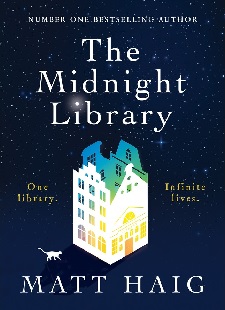
Book Review: The Midnight Library by Matt Haig

TL:DR – In between life and death there is the Midnight Library. This place contains all the possible lives you could have lived depending on the choices and actions you take. When Nora Seed finds herself in this state of limbo, she is confronted by the infinite books detailing paths she could have taken. What will she learn about herself, and will she discover life is worth living regardless of what it throws at her?

Summary (warning: spoiler)

At the age of 16, Nora Seed had many interests; swimming, glaciology, music, cats/dogs, philosophy, boys, finding love, books and chess to name a few. Living in Bedford, UK, she had dreams and pathways unexplored before her.

At the age of 35, she decides to end her life.

Nora then finds herself in a library, but this is no normal library for it does not appear to have a beginning or end. There she meets Mrs Elm the librarian; the same librarian she had in high school when she was 16 years old. Nora asks Mrs Elm if she is dead, and the librarian replies, ‘Not exactly.’

‘Between life and death there is a library,’ she explains. ‘And within that library the shelves go on for ever. Every book provides a chance to try another life you could have lived. To see how things would be different if you had made other choices… Would you have done anything different, if you had the chance to undo your regrets?’

Nora’s exploration into the multiverse of alternate lives she could have lived leads to a transformation. Will the other lives she could have lived amplify the regrets in her root life and reinforce her desire to die? Or will they somehow give her the courage to own her root life and live it?

Review

The Midnight Library is a marvellous read from author Matt Haig. The story’s greatest strength is Haig’s ability to capture the existential crisis experienced by Nora. Her decision to take her own life in the opening chapters is portrayed not only in a believable and sensitive fashion but also with minimal text. This is quite a feat as the mental state of Nora is key to understanding how she ends up in the library.

What is also impressive is how Haig shows Nora’s depression is not necessarily the product of her choices, circumstances and actions, but the perception of all three. He is not heavy-handed in his delivery, which makes it all the more relatable. Nora could have been addicted to drugs (she is on anti-depressants but nothing else), or an alcoholic, or in an abusive relationship and thus explain her desire to commit suicide. Instead, she is simply a person struggling with life, and it is her perception that drives her to the decision to end her life.

Somewhere in the deep recesses of her mind and soul, she understands that it is impossible to live a life that is perpetually happy. She understands that suffering and sadness are also part of life. Instead, there are two key points that drive her to despair. A despair so deep that she can’t bear living any more.

The first point is her perception of regrets. Not just the quantity, but her inability to ponder her future when she focuses so intensely on the past. Past choices that lead to regrets that she sees is a pattern of self-destructive behaviour.

The second point is after a series of events, she believes that no one needs her. That the world would not miss her. That those who are her family and friends would not notice if she simply disappeared.

This is the true spiral that a person contemplating suicide undertakes. Drugs, alcohol and violence can amplify this, but they are not essential. In the end, it is the mind that perceives and convinces the person that there is nothing but despair and suffering, so why go on living?

The bulk of the book then explores other lives Nora could have lived. And from these experiences she realises that in life, along with joy and sadness going hand-in-hand, our regrets do not define who we are, and that owning our choices whether they turn out to be good or bad are critical to living a healthy and fulfilling life.

Traversing the multiverse results in a range of highs and lows. At one point, Nora gets lost in the woods and can’t see the forest for the trees. Her own identity perched on the precipice of not knowing what she wants/needs and who she is. When finally she discovers a life that achieves a balance between the challenges and serenity, she believes she has found the life for her. But it’s not her (root) life, so when she returns to the library against her protests and the library begins to crumble around her, the state of ‘in-between’ comes to ahead and Nora must decide. Life or death?

Beautifully written, evocative, page-turning, and with a powerful message of hope.

5 out of 5

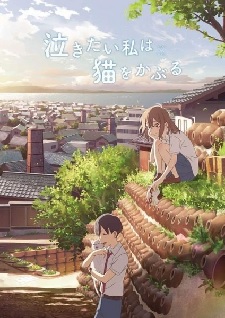
Anime Review: A Whisker Away (2020)

TL;DR – Miyo is sick of life but gets a new perspective when she is allowed to use a magical mask that changes her into a cat. Her new freedom has the bonus of getting close to Kento (a boy she is attracted to) while in cat form. However, her reliance on the magical mask comes at a cost. Will she reveal the truth to Kento before it is too late?

Review (warning: spoilers)

There are cat people, and there are dog people. Or in my situation where you have three kids who think cats and dogs are equally cute, you end up with both as pets. It is common knowledge that felines and canines are as different in personality as you can get. Generally, most dogs love to interact and play with their owner while most cats are happy to go off and do their own thing, coming back home for meal times and a bit of a stroke.

The independent nature of cats has often left me wondering what goes through their minds. When our cat has spent the day exploring outside and returns to rest, he doesn’t mind a scratch behind the ears and a rub along his back (much to our dog’s jealousy) before curling up on a spot and falling asleep.

For Kento Hinode, he is definitely a cat person. When a stray white cat, which he calls Taro and reminds him of sunshine, comes visiting him with ongoing frequency, he lavishes the cuddly thing with affection. In fact, his struggles in school and home life result in him turning to his feline friend for solace.

Little does he know that the cat is actually a human girl named Miyo Sasaki, who uses a magical kitsune (cat) mask to transform into a cat. Miyo also happens to have a major crush on Kento.

You see Miyo is going through her own struggles. Her mother has left her, her father has remarried, and her stepmother is overbearing (actually, her stepmother is fine but Miyo wants nothing to do with her). She hates the world, or rather she hates the human world and wants it to end. In the midst of her despair, she encounters a mysterious mask seller who appears like a giant cat at a festival and offers her to try on a mask. Thus, a whole new world opens to her.

Miyo transforms into a bubbly, flirtatious, and somewhat loopy girl when in human form because she now has access to a world that allows her to escape human life when it becomes unbearable and spends time in the arms of Kento being cuddled as a cat. Unfortunately, as a human, her over zealous behaviour towards Kento does nothing to endear herself to him. She enjoys yelling “Hinode Sunshine Attack!” and rushing up to Kento from behind and bumping him with her butt. This behaviour is too much for Kento. In fact, at school, Miyo’s flirtations are met with cold indifference from him who ignores her advances. But Miyo doesn’t care. When she is Taro the cat, she gets Kento’s undivided attention all to herself.

Of course, there is a price to be paid for such a magical gift (or is it a curse?) The mask seller reveals that he sells cat masks to humans who want to be cats in exchange for their human faces, and he sells human masks to cats who want to be humans. What’s in it for him? We find out later on.

After a series of hurtful events (some of Miyo’s own doing), she is driven to give up her human face thinking she is better off as a cat. But when she sees her family and friends trying to search for her, she realises she has made a mistake. To make matters worse, the mask seller who now is in possession of her human mask tells her that she’ll eventually become a cat in mind as well as body. And to top it all off, the mask seller has given her human mask to Kinako (an emerald eyed cat who is the pet of Miyo’s stepmother). Kinako has been wanting to turn into a human because she loves Miyo’s stepmother, and what better way to show her love than in the form of her (previously belligerent) stepdaughter?

Body swapping movies usually happens between two humans, but this was a first for me to see a body swap between a human and an animal. When Miyo (the cat) confronts Kinako (the human in Miyo’s form) and asks for her human mask back, Kinako reveals that by accepting Miyo’s human mask, she gets to live longer (because humans live longer than cats). Kinako has given up half of Miyo’s human life to the giant cat mask seller (thus revealing his true intentions with wheeling in dealing in the human/cat mask trade and what he gets out of it is longer life).

The remainder of the film is a race against time as Miyo tries to stop the transformation into completely becoming a cat by finding the mask seller and getting her human mask back.

Visually the animation is exquisite. Especially the background settings depicting Japanese suburban life. The story is layered enough to be intriguing, and the mix of the magical and real should have viewers of all ages keen to see it through to the final frame.

If there were any shortfalls for me, it was in Miyo’s character. Her hatred of her human life and her single minded obsession with Kento as the solution to all of her life’s issues is both outlandish and unhealthy. Miyo’s stepmother is a kind, gentle woman yet Miyo treats her with contempt. She hates her mother for abandoning her and she hates her father for trying to make her part of a family with another woman. Miyo thinks she can’t be loved, yet she is blind to all those close to her who do love her.

The fact that Kento ends up being the one to save her (admittedly, with Kinako’s help because Kinako realises she made a mistake becoming a human and wants to return to being a cat) is all a bit too apt.

Regardless, the final third of the film is a fantastic ride into a wonderland involving a Cat Island where giant cats dwell. The overall message of the film is revealed here when Miyo walks into a bar filled with cats that were once humans and learning they all chose to be cats to escape their human problems but regretting their decision. The message is clear: yes, life is hard but never give up and remember always… always… give a “Hinode Sunrise Attack!” (hint: watch the post credits scene).

8 out of 10

Movie Review: Spider-man: No Way Home (2021)

TL;DR – The world knows Peter Parker is Spider-man, and he turns to Dr Strange for a spell that will make everyone forget Spidey’s true identity. When the spell gets messed up, the universe opens up to parallel dimensions. Dimensions where villains in other Spidey worlds come to pay Peter a visit. Get ready for the most epic Spider-man yet. Strap in and hold on to that bucket of popcorn.

Review (warning: spoilers)

It’s a tough gig being your friendly neighbourhood Spider-man. Especially when J. Jonah Jameson (J. K. Simmons) outs Spidey’s secret identity on every big screen billboard in New York city revealing the kid behind the mask is Peter Parker (Tom Holland). When Tony Stark revealed that he was Iron Man, he had enough security guards and technology to ensure he could maintain his privacy (it also helped that he owned the entire building, Stark Tower, where he lived in the penthouse). No such luck for Peter who just wants to spend time with his girlfriend, MJ (Zendaya) and his best friend, Ned (Jacob Batalon). High school is tough enough without every other kid pulling out their phones and wanting to take selfies or videos as you walk down the hallway to class.

The opening scenes of Spider-man: No Way Home are frenetic as we watch Peter web-sling his way through the city with MJ clinging to him for dear life while trying to avoid the media helicopters and public scrutiny. If you have not seen the previous Spidey film, Spider-man: Far From Home, it is advisable to at least read the synopsis so you get the gist of the commotion you’ll see at the start of No Way Home. The controversy around Peter’s encounter with Mysterio in Far From Home has been spun by Jameson’s Daily Bugle news broadcast and now questions surround Peter’s actions, which lead to an interrogation by the Department of Damage Control. Even when lawyer, Matt Murdock (Charlie Cox) aka Daredevil, manages to get the charges dropped, Jameson continues on his crusade to eviscerate Spider-man.

The pressure becomes all too much, and Peter turns to Dr Strange (Benedict Cumberbatch) for help. You know things will go sideways when you use magic to solve your problems, so when Dr Strange attempts a spell to make everyone forget Spider-man’s real identity (except those who are closest to Peter), what happens instead is the spell rips a hole into the multi-verse.

For those who have seen the excellent animated film Spider-man: Into the Spider-Verse then they will be familiar with the idea of parallel dimensions. The multi-verse allows for alternate timelines to occur where different Peter Parkers exist and live lives that are based on the different decisions they make. When villains in other Spider-man films start appearing in this one, you can’t help but be giddy if you’re a comic book fan. When alternate Spider-men appear and you see it’s all the original cast (i.e. Tobey Maguire and Andrew Garfield), fans will achieve comic geek euphoria (and even if you’re not a comic book fan, if you enjoy the Marvel Cinematic Universe, you’ll be applauding anyway).

What follows is a surprisingly emotional wrung film that sees three Spideys try to stop all the villains by attempting to alter things that would turn them into villains in the first place. This could have been a big bash up where fists do all the talking, and there is plenty of action in the film, but what elevates it above basic action flicks is that the villains are able to change (or at least, some of them are able to) with the help of the three Peters. The villains are tortured souls and their transformations are key to the emotional drive.

And then there’s Aunt May getting killed. If that doesn’t sting your eyes, then nothing will.

Overall, Spider-man: No Way Home is a blockbuster film that will open up infinite possibilities for new stories in the MCU. Director Jon Watts has managed to tell a story that could have tied itself into time paradox knots, but instead is cohesive and thrilling and will have you downing the popcorn and cheering our friendly neighbourhood Spider-man on for more. Spidey fans rejoice!

Now can someone please, PLEASE make a Spider-Gwen movie?

10 out of 10

Book Review: Saga (Volume 6) by Brian K. Vaughan & Fiona Staples

TL;DR – Marko and Alana chase down the location of where their daughter is being held. With the help of Robot IV, they fly in under the radar to save her.

Summary (warning: spoilers)

Go to my book reviews page to read reviews of previous volumes of this Eisner award winning series.

After being separated from both her parents, Hazel ends up in a detainee centre for enemy noncombatants with her grandmother, Klara.

Marko and Alana break into a hall of records on planet Variegate in search of information of where Hazel has ended up. They discover the detainee centre holding Hazel is on Landfall. To get into the centre, they’ll need the help of the now disowned and demoted Prince Robot IV (who is now a knight errant).

Together they manage to break Hazel out. The family is now whole once more and then some… for it turns out that Alana is pregnant again.

Review

Saga continues its journey of exploration of its main characters as they navigate the ongoing war and bloodshed between Landfall and Wreath. Hazel is now a young girl and receiving education on Landfall at the detainee centre. She develops a close friendship with her teacher (who believes she is a Wreather because of her horns on her head) but discovers that Hazel (who reveals her secret) is the child of both a Landfallian and Wreather by showing she also has wings. Hazel’s teacher is so shocked that she faints and hits her head on the corner of a desk.

This demonstrates the perceived impossibility of Marko (Wreather) and Alana’s (Landfallian) union. The entire galaxy is of the belief that the two sides hate each other so deeply that the idea of one on each side falling in love and having a child together is so preposterous that it causes other aliens to faint.

Marko and Alana finally locate where Hazel is held and seek help from Robot IV who would rather blow his television head off than help the pair. Having lost his wife to a murderer, Robot IV is only concerned with raising his squire son in peace. In his own words, “I’m taking my boy and getting as far away from those two black holes as possible.” But good ol’ emotional blackmail ensures that Marko and Alana get their way. There is some surprising humour in this sequence of events.

Volume six also brings us back to Upsher and Doff, our investigative journalists for the Hebdomadal. They receive news that The Brand is dead, and thus the spell cast upon them by the bounty hunter (i.e. the one where if they speak of the forbidden relationship between Marko and Alana to anyone they’ll die) has been broken. Thus, they jump back on the news trail and interview Ginny, the ballet teacher that Marko almost had a fling with in volume four. However, in the process, they get roped in through threat of death by The Will who is hunting down Robot IV to get revenge for killing The Brand (his sister) and The Stalk (his ex-girlfriend). The Will has taken a turn for the worse as he’s high on drugs and keeps talking to an imaginary The Stalk who is happily egging him on for bloodshed. See a pattern here? Seems like Robot IV’s description of our lovey-dove fugitives as black holes is not far off.

With the journalists help, The Will manages to locate where Robot IV was last seen, but when he arrives he only finds the little squire and his protectors, Ghus (the seal) and Friendo (the giant walrus). Robot IV has already left with Marko and Alana to rescue Hazel, leaving his son with Ghus. A bloody scuffle occurs where The Will loses the fingers on his right hand, and he is about to start his revenge spree by killing the little squire, but at the last moment, his drug-addled brain conjures up a conversation with his dead sister, The Brand, who convinces him that revenge will not fill the holes in his heart left by the murders of his sister and ex-girlfriend. He leaves in search of some sort of absolution.

The final pages ends on a happier note for once (compared to previous volumes) where we see Marko successfully rescue Hazel and they are reunited with Alana. In the process, one of the detainees, a Wreather transsexual named Petrichor also escapes with them and is able to determine that Alana is pregnant with another child. The shock on Marko’s face and the smile on Alana’s face is priceless.

Overall, the best scenes are when Hazel finally gets back with her father and mother, along with the surprisingly funny sequence of events involving Robot IV who reluctantly agrees to help them (this is a nice change because in prior volumes, Robot IV was on mission to kill anyone in his way from finding his son). That darkness is now all on The Will, whose spiral into the abyss is a fine contrast to the light shone by Hazel. I still struggled with the journalists, Upsher and Doff (in previous reviews of Saga volumes, I commented that Upsher and Doff felt like filler characters, there to pad out the story). But volume six ties off this arc nicely and brings about anticipation of what will happen next.

3.5 out of 5