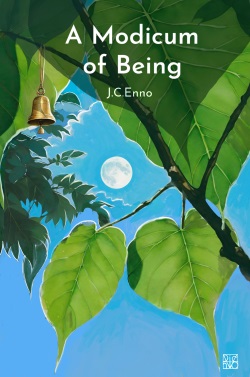
A Modicum of Being by J.C.Enno

Composing the perfect photograph means more than cameras, angles and lighting to Ash, it means capturing a moment that will evoke an emotion or feeling forevermore. A way of preserving a memory. But when you spend your life looking through a lens, there is a risk of losing sight of the most important details. And it is the important details that Ash needs in order to discover what it truly means to be alive.

Book 3 of the “Forgotten Gestures” series. Available now on Amazon.

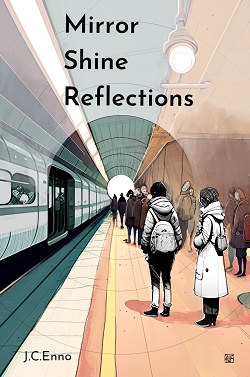
Mirror Shine Reflections by J.C.Enno

It’s the school holidays, and Joey isn’t seeking fun like the rest of the kids. Instead, he’s earning some coin by setting up an old fashioned service that most people have forgotten. Through his business, he encounters people from all walks of life and learns what it means to walk in another’s shoes. However, what he really wants is for someone to understand him as he desperately seeks to repair what has been broken. But how do you repair something that has been lost forever?

Book 2 of the “Forgotten Gestures” series. Available now on Amazon.

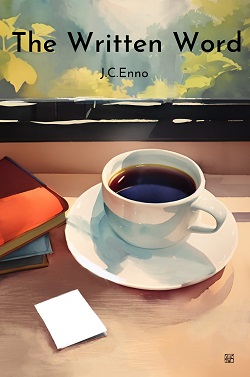
The Written Word by J.C.Enno

For Chloe, finding a good book is like discovering a place you never knew existed. The Beanstalk café bookstore is the type of hidden gem nestled in West End, Brisbane, that is the perfect place to hide away with a novel and drink coffee. All the locals who visit The Beanstalk know Chloe’s love for the written word. And when she starts receiving mysterious notes left for her, she begins to wonder whether she will discover that which she has found most elusive of all… love.

Book 1 in the “Forgotten Gestures” series. Available now on Amazon.

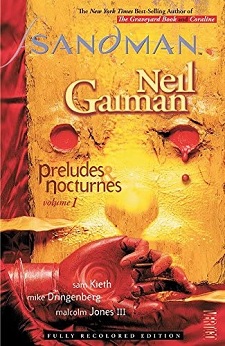
Book Review: The Sandman (Volume One) “Preludes and Nocturnes” by Neil Gaiman, Sam Kieth, Mike Dringenberg and Malcolm Jones III

TL;DR – The impacts on reality when the Lord of Dreams is caught and caged by a man obsessed in conquering death.

Summary (warning: spoilers)

He is known to many as “The Sandman”, to others he is called “Morpheus”, and those closest call him simply “Dream”. He is the ruler of the realm of possibilities and impossibilities, his creations assigned to generate hopes and nightmares. He is one of the Endless; a family that comprises of “Desire”, “Despair” and “Destiny” to name a few.

When Dream is accidentally captured by Roderick Burgess, a magus obsessed with achieving immortality and wanting to capture “Death”, he finds himself in the unusual situation of being the captive, when for most of his existence he has been the captor. Three objects that contain an abundance of Dream’s power is taken from him. A pouch of sand, a ruby and a helm.

Trapped inside a magical cage, Dream watches as Burgess uses his tools for his own selfish ends. In the process, the world is struck by an epidemic known as the sleeping sickness; a disease that causes people to fall asleep and never wake up. Others turn into a zombie-like state where they can’t fall asleep. Dream knows that irreparable harm is striking humans everywhere, and he also knows his own Dream realm is being ruined.

Several decades pass. When Dream finally escapes, he begins a quest to hunt down his pouch, ruby and helm. His goal is to restore his realm and the human world. But everything has changed, including himself.

Review

Neil Gaiman’s imagining of The Sandman/Morpheus/Dream is nothing short of brilliant. Combined with the sublime and ethereal illustrations of Sam Kieth, Mike Dringenberg and Malcolm Jones III, volume one is a treasure trove of wonderful stories that will leave you pondering long after you’ve read the last page.

Dream is a wonderfully complex character who undergoes transformations and struggles with conflicts of his own identity and being. He can be magnanimous and ruthless, compassionate and cruel, aloof and familiar. His connection to the human world and his rule over his own realm are filled with the contradictions of his own persona. One minute he can be empathetic, the next he can be disconnected.

As a being that appears to exist eternally, Dream is remarkable in that he undergoes changes in emotions and perceptions that make him fascinating. He is not some god-like creature that presents himself as immune to human feelings and expressions.

If anything he witnesses the inhumanity of humanity through characters such as Roderick Burgess and later John Dee (a.k.a. Doctor Destiny), who escapes from Arkham Asylum, and responds in ways you would not expect for a being of the Endless.

Volume one contains the first eight issues published by Vertigo Comics and largely follows Dream’s quest to retain his pouch of sand, magic ruby and helm. It is not the objects themselves that are of interest but the hands in which the objects have fallen into and how they have been used.

By far the most riveting sequence is when Dream faces off against John Dee who is in possession of the ruby. Issue #6 titled “24/7” is nothing short of captivating as we watch Dee use the ruby to manipulate the staff and patrons in an American Diner and revealing all the wonderful and wretched sides of human beings. He ultimately concludes that humanity should be driven mad and he will be the ruler of this mad world. When Dream seeks to intervene, Dee attempts to destroy Dream and take over his realm also. When Dee’s machinations backfire and he is defeated, I expected Dream to dole out swift and brutal justice. But instead, I was surprised by the actions Dream took in concluding Dee’s fate. It is not that Dee ends up back in Arkham Asylum, but the interactions Dee has with Dream leading up to him being incarcerated once more.

And while “24/7” was probably the most riveting, the most thought-provoking in volume one was the last issue titled “The Sound of Her Wings”. In a totally unexpected turn of events, we see Dream sitting on a park bench feeding the pigeons. He has accomplished his quest and retrieved all his lost power, but unexpectedly we find him listless and melancholy. It is here, Gaiman introduces Death, Dream’s older sister. Their interactions are surprisingly familial, and Gaiman’s portrayal of Death is as layered and complex as Dream. They are wonderful foils for each other and their actions and thoughts will change your own perspective of the real and unreal, life and death.

You’ll never look at your dreams in the same way ever again.

5 out of 5.

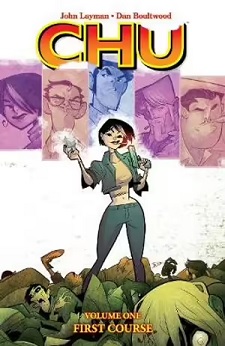
Book Review: Chu (Volume One) “First Course” by John Layman and Dan Boultwood

TL;DR – An essential read for those who have read the Chew series.

Summary (warning: spoilers)

From the deranged and brilliant mind of John Layman comes Chu, a prequel to the Eisner award winning series Chew.

Saffron Chu and Tony Chu are siblings. Saffron is a cibopar; a food-power that allows her to read minds and obtain secrets from those she eats with. Tony is a cibopath; a food-power that allows him to obtain psychic impressions of what he eats.

If Saffron eats the same burger in the same room as someone else, she can access their thoughts and secrets.

If Tony eats a burger, he gets images of where the meat came from, how the cow was killed, where the vegetables were grown and how the bread was made. If Tony were to take a bite out of say, a murder victim, then he’ll get images of the killer. The only food that Tony does not get psychic impressions from are beets.

Saffron is a thief and in a relationship with Eddie Molay, fellow thief and expert locksmith. Tony is a detective.

When a job Saffron and Molay undertake goes sideways, Tony is asked to investigate setting the course for brother and sister to collide.

For those in the know (i.e., that have read Chew), this series is set when the onset of the avian flu that wipes out millions around the world starts.

Let the games begin!

Review

This delectable piece of work is to be savoured. Devoured slowly by examining each panel, digesting each beautiful morsel and then re-read for all its grandeur. I promise that’s the end of my culinary metaphors.

If you haven’t already, I strongly recommend you read Chew first. Even though Chu is a prequel, you will appreciate the references more if you have finished the epic body of work that is Chew by Layman and Rob Guillory.

This time Layman has teamed up with artist Dan Boultwood. There is both a familiarity and unique style to Boultwood’s art that I found delightful. I’m a huge fan of Rob Guillory, and his art in Chew is slightly grittier than Boultwood, but that doesn’t mean Chu’s art is any less effective. It’s a refreshing, clean take by Dan who uses angles, close-ups, and bird-eye views to capture all the action, comedy, violence and emotional angst of its characters while staying true to the Chew canon.

As for the Chu story, Layman has concocted a wonderful prequel that connects many dots that lead into Chew. We get to see how Tony Chu and John Colby first meet; John’s hairdo and cowboy moustache is hilarious, and I didn’t realise it was him until he said his name. It was great to see how these two became life long partners in crime fighting.

We also dive into more of Tony’s family and learn about the twins Saffron and Sage Chu, as well as learning the disconcerting history of Ong Chu, their grandfather, who turns out was a total bad-ass.

Saffron must have got her criminal tendencies from her grandpa as she uses her food-power to read other people’s minds as information reconnaissance for jobs. She’s in deep with Eddie and together they get hired to do a job by a guy named “The Boss” to rob from the number one mobster in the city. However, things do not go according to plan when the team they work with starts getting serious food poisoning from eating chicken; their sniper man and strong woman both go down vomiting. This is a reference to the avian flu that will wipe out millions and leads into the Chew story arc.

As a result of the botched job, the mob come targeting Saffron and Eddie and want their pound of flesh (or their heads will work too). The juggling between Saffron performing her criminal hi-jinks with spending time with her family is cleverly done, and all the while, Tony is slowly piecing together what is going on.

For some readers, the climax of the collision between Saffron and Tony will be hard to swallow (okay, that’s the last culinary metaphor I swear). Tony’s actions appear extreme when in the context of the fact that Saffron is his sister. He doesn’t give her much chance to explain her actions but for those who have read Chew, they will know this is exactly what Tony’s character is like. He’s not just a detective but he sees things as black and white, and it is this perspective that ultimately becomes his undoing in both Chu and Chew series.

Though Saffron is arrested and ends up serving time in prison, she continues to use her food powers to absorb all the knowledge of her fellow prison inmates. So when she is released, she is now much more dangerous than before. Much to Tony’s chagrin. Like I said, it’s his undoing.

There’s a second volume to Chu but my library hasn’t got it yet. I might just have to bite the bullet and buy both volumes. Okay, okay, I lied about the “last” culinary metaphors. But can you blame me? John Layman uses it on practically every page.

5 out of 5.

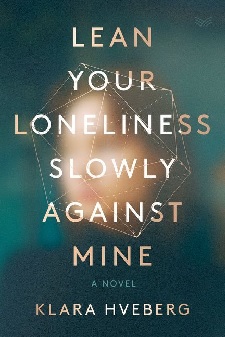
Book Review: Lean Your Loneliness Slowly Against Mine by Klara Hveberg

TL;DR – a story about how even the most rational minds can be consumed by the irrational that is called ‘love’.

Summary (warning: spoilers)

Rakel is a mathematics genius. She also has a passion for literature, music and art. In these things, she embodies herself completely. Her passions are a focus of such intensity that it often comes at the expense of everything else that is happening around her. Whether it is a mathematical problem, an evocative poem, a classical piece of music or a painting, if Rakel finds herself drawn to it then her whole focus is consumed by that which she has turned her mind toward. In doing so, it triggers emotions that ripple through her entire body and soul.

When she meets Jakob, her mathematics professor, a spark is ignited between them. Unfortunately, he’s married and has children, but Rakel can’t help herself. Her focus is only on him, and it threatens to consume her.

Review

According to the Myers-Briggs Type Indicator, the character Rakel is an INTJ (Introversion, iNtuition, Thinking, Judging). In one of the chapters, she examines this personality type and is described under Myers-Briggs as one of the rarest personalities; a combination of innovative, independent, strategic, logical, reserved, insightful, and driven by their own original ideas to achieve improvements.

In short, Rakel prioritises rationality and success over politeness and pleasantries.

Her honesty can be interpreted as being blunt to a fault. But it is this outlook, combined with her intellect, that attracts Jakob to her. He identifies in her all the brilliance and wonder that is contained within her mind’s eye and soul. When her attention is focused on him, and she demonstrates a sharpness of wit that surprises him, Jakob finds he cannot help but be drawn in to her orbit.

Being married with kids doesn’t stop Jakob from falling in love and sleeping with Rakel. And Rakel can’t stop herself from reciprocating. Jakob then makes a promise that after eight years (when his kids are old enough), he will leave his wife and they can be together. Rakel, of course, holds on to this promise like it is the sole purpose of her existence.

Stories of students falling in love with their teachers or vice versa is a universal minefield. Where Lean Your Loneliness Slowly Against Mine is effective is the in-depth dissection of Rakel’s thoughts and feelings towards Jakob.

Hveberg does this, not only through directly placing you in Rakel’s mind but also through the real life story of Sofia Kovalevskaya, who was a pioneer for women in mathematics and considered the greatest known woman scientist before the twentieth century. Sofia received private tutoring from Karl Weierstrass, a famous German mathematician, and speculation abounds whether the pair had a romantic relationship.

Capturing Rakel’s contradictory nature is impressively done by Hveberg (who on the back cover earned a PhD in mathematics and makes me wonder how much of the author is in Rakel). In one sense, Rakel is logical, insightful, and ambitious, in another sense, she is emotional (at times, overly so), clueless, and stagnant. Her interactions with Jakob summarise this dichotomy. One moment, their interactions are intelligent and witty, and other moments, Rakel comes off as clingy and jealous.

Thus demonstrating that even if you’re an INTJ personality type, you are not immune to the desire and actions of love, which can override everything that is fundamental to how a person perceives themselves. For example, Rakel is willing to wait the eight years even though the loneliness (when she and Jakob are apart) begins to manifest in psychosomatic ways. Rakel becomes so ill that she is bedridden for excruciatingly long periods of time. You can almost see her soul shrivelling before your eyes.

It will come as no surprise that Jakob breaks his promise. Nearing on the eight year mark, he confesses to Rakel that he won’t leave his wife, and he attempts to explain why. The title of the book is said from Jakob to Rakel as part of the explanation. Two lonely souls coming together to try and alleviate their loneliness. But when Jakob finally sees that he is not alone when he is with his wife and that he still loves her, it is only Rakel that is left alone.

The story is an existential piece of work that is clearly personal to Hveberg and confirmed by the author’s notes at the end of the novel. For some readers, they will identify and be consumed by Rakel and what she experiences because they have experienced something similar. For others, they will likely not get past the first few chapters because they will want to slap Rakel and yell at her to dump Jakob’s sorry ass and get over it.

For myself, I found the last third of the novel to be a struggle as it becomes repetitive both in the ongoing investigation into Sofia Kovalevskaya’s life and Rakel’s ruminations. Rakel also comes to love another man named David, who works with mechanical puzzles (like Rubik’s cubes), and when she realises that she’s fallen for him (note: David is also married), she lets him go. Thus, demonstrating that she will not make the same mistake twice. However, I personally did not think it was necessary to include David’s character.

When Jakob reveals he won’t leave his wife, it would have been sufficient to then lead into Rakel’s process to move on and how she goes about it. The insertion of David into the story just felt like dragging out an already pretty depressing story.

The ‘hope’ at the end, comes in the form of Rakel writing her own novel. A process of catharsis. She talks about the structure of her book being in two parts – gold and granite – and repeating it over and over so there are multiple parts all made up of gold and granite. She concludes that even though there might be more granite, overall there will be a gold sheen because the gold will stand out more.

I don’t know about that. The granite seems to definitely come to the forefront and weigh heavy in Lean Your Loneliness Slowly Against Mine. Rakel’s luminous moments are sucked in by the black hole that forms by her longing and subsequent break-up with Jakob. She uses the black hole metaphor throughout the story.

And though there are theories that suggest that certain things can escape a black hole, and we are given the impression that Rakel is able to escape hers by story’s end, it does not feel like she will ever be whole again.

In the end, a quote from the story sums it up: The irrational always wins over the rational in this world. And thus is love captured in many a story because of this.

2 out of 5.

Book Review: Y: The Last Man (Book Five) by Brian K. Vaughan, Pia Guerra & Jose Marzan Jr.

TL;DR – the origins of the plague are revealed, and Yorick reunites with Beth. But will they live happily ever after?

Summary (warning: spoilers)

Click here for reviews of previous books of this Eisner award winning series.

The concluding volume is packed. The highlights are as follows:

  • Dr Allison Mann undergoes surgery at a bioethics institute in order to save her life from internal bleeding caused by a previous miscarriage. There she discovers her father, Dr Matsumori, is actually still alive (making Yorick not the last man on earth).
  • Dr Matsumori reveals he was not attempting to clone himself. Instead, he managed to create clones of his daughter (Ayuko Matsumori aka Dr Mann). It is his belief that the moment he was able to successfully create a female clone, the plague struck (see further detail below in the ‘review’ section). Dr Matsumori is killed by Dr Mann in order to protect Yorick.
  • Dr Mann and Rose stay in China while Yorick and Agent 355 move on to Paris to find Beth. Yorick keeps having dreams about a decaying Beth telling him not to come find her. These dreams are a subconscious red flag, but Yorick ignores them. It is also clear that after four years of being together, and the countless times Agent 355 and Yorick have had each other’s backs, that the pair have feelings for each other. But Yorick has made a commitment to Beth (proposing to her prior to the plague) and is determined to find her.
  • Hero (Yorick’s sister), Beth II (the second Beth who seduced Yorick in Cooksfield, California), Beth II’s child (who is also called ‘Beth’… I kid you not… and is Yorick’s daughter), the female astronaut Ciba and her son, and the Russian agent Natalya journey to Paris also to find Yorick.
  • Alter is also converging on Paris to find Yorick. The reason she gives to her soldiers is that they need to secure the last man for Israel (to ensure its future). In reality, she wants to die a soldier’s death and be killed by a man (as opposed to a female soldier). Her reasons for this are explained below.
  • Agent 355 locates Beth and organises for her and Yorick to reunite. Her ‘mission’ complete, Agent 355 slips away unnoticed (burying her feelings for Yorick) and deciding to live a life as a civilian.
  • Yorick and Beth are initially happy and spend a night in a hotel. However, when they start talking, the past and Yorick’s dreams come to the fore. Beth wants to discard everything that has happened in the past, but Yorick argues that the past is important. He asks her what she was going to tell him over the phone the day he proposed to her (the phone line cut out when the plague hit, so Yorick never heard her response). Beth confesses she was going to break up with him and tries unsuccessfully to convince Yorick that she has changed and does want to marry. When Yorick leaves to think things over, Beth is left waiting. Hero and company arrive, and when Beth II and baby Beth meets Beth, a lot of confusion occurs.
  • Yorick spends the whole night thinking and eventually hunts down Agent 355. There he confesses his feelings to her, and she acknowledges she feels the same way but says it’s a mistake and that he should try to work things out with Beth. It is then he reveals the vision he saw during his suicide intervention in Colorado with Agent 711 (refer book two review). The vision was of Agent 355 wrapped in the green scarf she has been knitting for years (and that she actually gave to Yorick as a parting gift). After more conversation, Yorick convinces Agent 355 that they should be together.
  • Agent 355 finally whispers her real name in Yorick’s ear, and they appear that they will move forward hand-in-hand. However, the moment is short lived as Alter shoots Agent 355 in the head with a sniper rifle.
  • Alter confronts Yorick. In the ensuing melee, Yorick manages to get Alter’s gun. Alter tries to convince Yorick that the cause of the plague was actually the Culper Ring (which Agent 355 worked for) and that the American government had developed a chemical weapon that was used against China that was meant to make all the women unable to conceive boys but instead it wiped out 99.99% of all men instead. Yorick doesn’t believe her. Alter then reveals she is responsible for assassinating Yorick’s mother. She yells at Yorick for him to pull the trigger, and he realises that what Alter wants is to commit suicide (just as he did before his intervention in Colorado by Agent 711), but she wants to do it as a soldier killed by a man. Yorick cuffs her instead, brings her outside where Alter’s soldiers are waiting, throws her on the ground in front of them, drops the gun and walks away.
  • The epilogue reveals a number of things detailed in the ‘review’ section.

I told you the final volume was packed.

Review

The conclusion to Y: The Last Man does not disappoint. The sense of devastation when Agent 355 was shot hit me like a sledge hammer. Both the art and script were brilliant throughout, but the scenes leading up to Yorick finally finding Beth, their subsequent fall-out, and Yorick and Agent 355 coming together were by far the most impactful.

There would be no happy ending for Yorick.

While it is an amazing accomplishment the body of work Vaughan, Guerra and Marzan have generated, there are some bits that didn’t quite work for me.

The first is the revelation that Dr Matsumori is alive. Everything works up to a point. The doctor reveals that he successfully cloned his daughter a number of times. And when he heard that his ‘original’ daughter, Dr Allison Mann, was close to creating a clone, he wanted to sabotage her by sending Ampersand with a serum in his body that would infect and kill Allison’s unborn child. Through chances of fate, Ampersand got mixed up with another monkey and ended up in Yorick’s hands. Further, the serum that Dr Matsumori injected into Ampersand turned out to shield both monkey and Yorick from the plague. This same serum protected Matsumori. However, he then goes into this theory about morphic resonance and that’s where things go a tad sideways.

Morphic resonance is a pseudoscience described in this volume as the “socio-biological interconnectedness of species”. An example is monkeys on one island learning to wash their food, and the practice spread to another tribe of monkeys on another island that have never interacted with the first group of monkeys. Morphic resonance is the idea of almost spontaneous transmission of data at a genetic level. Matsumori posits that as soon as the first female clone was born, men no longer served any use, so Mother Nature (through morphic resonance) wiped out everyone with a Y-chromosome. By all intents, Dr Matsumori was mentally ill at this point and intended to complete the evolution by killing Yorick and then himself. It kind of works up to the morphic resonance bit. Then it’s up to the reader as to whether you believe it’s true (or even possible).

This truth is further debated based on Alter revealing later that she found government documents that showed the plague was caused by a chemical agent released in China (i.e., it had nothing to do with morphic resonance). This ambiguity is intentional by Vaughan et al. And you, the reader, are left to form your own conclusions.

The second thing that didn’t quite work for me is Alter’s true intentions. The wanting to commit suicide but doing it by having a man kill her like a soldier was quite the twist. All along you believe her mission to secure Yorick as the last man for Israel and protect him from other countries is her only objective. But really her motives are entirely selfish, which feels like quite a swing in her character. The amount of collateral damage she inflicts through all five volumes to reach the point where Yorick is holding a gun at her is extensive. Alter did not hesitate to kill those women closest to her (that have served her faithfully) and manipulating events to convince her soldiers to continue to follow her. All so that she could have a man shoot her? I don’t know, I’ve gone over the pages a number of times now and I’m not sure it works.

The third nugget is Yorick’s reaction to the revelation that Beth had intended to break up with him when he proposed. It is not the revelation itself that is unbelievable. It is more Yorick’s reaction. Beth explains that at the time, they were moving in opposite directions. This was true. She was working to be an Anthropolgist and had a clear purpose, while Yorick seemed to be sailing along listlessly working to be an escape artist/magician. She then goes on to say, however, that he has now completely changed since the plague struck. He has grown, and she believed he was still alive even though all evidence showed that the plague wiped out every male.

Yorick focuses on the fact that she was going to dump him, rather than everything she says afterwards. He’s hurt and devastated, which is understandable. But for him, to just let it all go to find Agent 355 was a struggle for me to believe. I have nothing against him and Agent 355 coming together. It was simply the transition felt hurried. And let us not forget that Yorick is far from flawless (recall he got Beth II pregnant). Yet, he holds on to this fact that Beth intended to break up like that means they’re irreconcilable and that the only reason she now wants to marry him is because he’s the last man on earth.

Lastly, it is never revealed why Beth travelled from Australia to France to find Yorick. The previous volume said that there was meant to be some special meaning between Beth and Yorick about Paris even though Yorick, himself, didn’t know what that significance was. This little plot hole was left unexplained.

Others may view the above as nit-picking. And truth be told, none of the above sways me from saying this was one of the best graphic novels series I have ever read. Y: The Last Man is a must read for fans of dystopian fiction. Intelligent, thought-provoking and killer art.

5 out of 5.

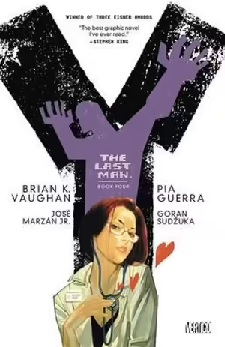
Book Review: Y: The Last Man (Book Four) by Brian K. Vaughan, Pia Guerra & Jose Marzan Jr.

TL;DR – Yorick reaches Australia after three years since the plague hit. Will he finally find Beth?

Summary (warning: spoilers)

Click here for reviews of previous books of this Eisner award winning series.

Having arrived in Sydney aboard an Australian submarine, Yorick is determined to find Beth. Though Agent 355 accompanies him and tries to watch his back, he’s found by a reporter who takes a photo of him with all his man bits on display so she can publish the news to the world and win a Pulitzer.

Agent 355 finds the reporter but fails to retrieve the film. Yorick is able to convince her to let the reporter go and allow the photo to be published because it’s a tabloid paper as opposed to a ‘real’ newspaper, and no woman will believe the tabloid photo.

Returning to his search, Yorick discovers that Beth has left for Paris to search for him. Paris is meant to hold some special meaning between the pair, but Yorick has no idea what that might be and why she would journey to France in search of him.

Meanwhile, Ampersand the monkey has arrived in Yokogata and managed to escape from the clutches of Toyota, a Japanese ninja (never thought I’d write a sentence like that…)

Review

Conflicting agendas are the name of the game at the start of book 4 of Y: The Last Man. Agent 355 and Dr Mann want to head to Yokogata to rescue Ampersand. On the other hand, Yorick has finally reached Australia and wants to find Beth. Agent 355 agrees to giving him 24 hours to see what he can find about Beth and her location and then it’s destination Japan.

Though he ends up getting photographed nude and published in a tabloid newspaper, he discovers that Beth has left the Land Down Under for the lights of Paris, which makes absolutely no sense to Yorick.

A lot of threads continue to get tugged as we follow Yorick’s journey. As the reader, we get to jump all around the world and see what is happening to the various people Yorick has interacted with previously. A number of surprises include:

  • The Beth who lives in Cooksfield, California that seduced Yorick is now pregnant with a baby girl. She is visited by Hero and joins her. Together, they head to Kansas to meet up with the Hartle twins.
  • In Washington, Yorick’s mother, Jennifer (aka Secretary Brown) discovers the tabloid and photo of him and realises he is still alive. Unfortunately, she is visited by Alter, the Israeli rebel, and is murdered.
  • More backstory on Agent 355 and how she came to work for the Culper Ring. The surprise being that she ended up killing her teacher, who attempted to assassinate the president after joining the splinter group, Setauket Ring.
  • The origins of Ampersand and his immunity are shown. He was a test monkey and injected with mysterious serum and was meant to be shipped off to Dr Mann’s laboratory. In transit, however, he ended up escaping and getting mixed up with another monkey that was destined for “Helping Hands” (an organisation that trains monkeys to help disable people). When Yorick applied at Helping Hands, he was assigned Ampersand.
  • Alter interrogates the Hartle twins and finds out that Yorick is making his way to Paris. We learn more of Alter’s origins, and there’s small surprise that she joined the army not to seek revenge for her sister’s death (who we thought was killed by Palestinians) but because she believes the world will always have war and operates on bloodshed. We discover that Alter’s sister was actually killed protesting against the destruction of Palestinian homes by an Israeli Defence Forces bulldozer.

However, the juiciest pieces of the puzzle come forth from Dr Allison Mann as we get several flashbacks to her upbringing. As a child, she learned her father, Dr Matsumori (a radical bioengineer) was having an affair with his research assistant, Dr Ming. We also learn he and Dr Ming were also studying cloning.

It then jumps to when Allison was a young adult, living in America with her father and falling in love with another woman named Mercedes. When her father announces that they will be moving to China, Allison refuses and accuses her father of wanting to get back together with Dr Ming. The dissolution of her relationship with her father leads her to move in with Mercedes. However, their relationship does not last, which leaves an indelible mark on Allison.

Jumping forward to where she is now a lecturer in genetics at Harvard, she receives the news that her father is a few years away from cloning himself. Refusing to allow her father to achieve such a scientific breakthrough, Allison seeks to clone herself and dangerously self-impregnates with the help of her assistant Sunil. This then leads into the events we see in book one where she is rushed to hospital because something is wrong with the baby and then the “instant” plague hits killing every man on earth except Yorick.

These flashbacks bring us full circle to the present where Allison is back on the submarine in her cabin and starts haemorrhaging. The complications of her failed birth to her clone has clearly left damage that is now coming back to haunt her.

If there are any shortfalls with book four, it lies in a feeling of repetitiveness. There is even dialogue between Yorick and Agent 355 that reflects that they just seem to jump from one dangerous situation to the next. Agent 355 is at wits’ end and lets out a number of expletives at how hard it all is, while Yorick tries to console her. However, when you you’re the last man on earth, there were always going to be several countries of women looking to find him. You can always trust politics or misplaced religious beliefs to ensure little agreement as to who should “secure” Yorick.

With only one volume remaining, it will be interesting to see what will be the fate of Yorick, Ampersand, Agent 355 and Dr Mann.

4 out of 5.

Book Review: Y: The Last Man (Book Three) by Brian K. Vaughan, Pia Guerra & Jose Marzan Jr.

TL;DR – The answers to saving humanity rest on the shoulders of one man, Yorick Brown, or so we thought…

Summary (warning: spoilers)

Click here for reviews of previous books of this Eisner award winning series.

Yorick, Agent 355 and Dr Mann reach San Francisco to Mann’s backup lab where they hope to finally get some answers as to why Yorick was the only man that survived a mysterious plague that wiped out every other man (and mammal with a Y chromosome) on earth simultaneously.

He and his pet monkey, Ampersand, are the only males known to be alive after this apocalyptic event.

While they undergo tests, Yorick and Agent 355 explore what has become of the city. They eventually are found by three different parties, all with different motives.

There is Hero, Yorick’s sister, who has been deprogrammed and is battling her brainwashing as an Amazon (a group of women who believe men were the oppressors and the world is better without them) and desires to find her brother to seek his forgiveness for killing a woman Yorick cared for in Marrisville (refer book two).

Then there is a splinter group known as the Setauket Ring that is looking to obtain the Amulet of Helene taken by Agent 355. There is a myth around the amulet that should it ever be removed from Jordan, a catastrophe would befall the world (refer book one). The Setauket Ring believe it is this amulet that caused the plague to occur.

Last, is a Japanese ninja named Toyota. She has been following the trio for some time but her target is not Yorick, Agent 355 or Dr Mann. She’s after Ampersand and has been hired by a mystery person named “Doctor M” to retrieve the monkey.

When Dr Mann finally obtains what she believes is the reason why Yorick survived the plague, it coincides with the above three groups colliding into them and not everyone coming out alive or unharmed. Dr Mann believes that Ampersand has some sort of mutation in him, and the monkey has a penchant for throwing its faeces at Yorick, who in turn obtained protection from the plague.

Toyota successfully captures Ampersand and heads to Japan, which results in Yorick, Agent 355 and Dr Mann boarding a cruise ship that supposedly is transporting medical supplies but turns out is tons of heroin, and they end up in a sea battle with an Australian submarine. In book one, it was revealed when 2.9 billion men were wiped out, Australia, Norway and Sweden were the only countries that had women serving on board submarines at the time.

Through all of this, we see flashbacks of Yorick and how he came to fall in love with Beth.

Speaking of Beth, we finally get to see what she has been up to in the Australian Outback since the outbreak. Suffice to say, she is going through her own trials.

Review

The third volume in Vaughan’s series is chock full of plots and sub-plots that examines the multitude of perspectives from characters living in a world where all men except one have been wiped out.

It should be noted that while Yorick is the last man, the future of humankind does not rest solely on his shoulders as it is revealed that the female astronaut (from book two) has successfully given birth to a baby boy in a hot suite (basically, a medical bubble that provides protection from all external germs). However, the boy will most certainly die if it steps outside the hot suite, thus the need to find a vaccine.

A lot of themes continue to be examined including religion, sexuality, identity and purpose, and gender roles. One of the more interesting examinations is at the beginning of volume three, where Yorick enters a Catholic church in Cooksfield, California, and encounters a woman named Beth (no, not his girlfriend Beth who is stuck in Australia but a ‘new’ Beth). It seems Yorick wants to confess his sins but Beth reveals technically it’s no use because only auricular confessions (i.e., confessions made to a priest) can be heard and thus forgiven. This dilemma is short-lived, however, as Yorick’s conscience mustn’t be too heavy cause he ends up being seduced by Beth.

While a lot goes on, thankfully, it appears a number of sub-plots also get tied up. The Amulet of Helene turns out to be just a sandstone figurine with no magical powers. It gets smashed by the Setauket Ring who blackmail Agent 355 into giving it to them.

Hero achieves forgiveness and reconciliation with her brother, and she even manages to get over the mind games of her deceased Amazonian leader, Victoria. She ends up heading back east to tell their mother that Yorick is safe.

Ampersand is revealed as being the ‘miracle’ (not Yorick) containing a mutation that protects mammals with the Y chromosome from the plague. But the celebrations are short lived as Ampersand is monkey-napped by Toyota the Japanese Ninja.

It becomes clearer that Agent 355 is harbouring feelings for Yorick. Things get complicated when she ends up sleeping with Dr Mann because she thinks Yorick is sleeping with the captain of the cruise ship heading to Japan.

All in all though, the most interesting revelations in book three revolve around Yorick’s supposed true love, Beth (yes, the ‘Beth’ that is stuck in Australia). For the first time, we get to see her side more and the memories she has of her relationship with Yorick. These flashbacks lend much needed depth to her character, which up until now was only portrayed as an attractive blonde who looks good in a bikini and hiking boots (yes, in book one she is shown to be an anthropologist studying Aboriginals in the Australian outback, but really all you get is a character that is good-looking with a pretence at depth).

Will Yorick and Beth reunite? Only two volumes remain to find out.

4.5 out of 5.

Book Review: The Tales of Beedle the Bard by J. K. Rowling

TL;DR – a companion piece to Rowling’s hugely successful Harry Potter series.

Summary (warning: spoilers)

A collection of short stories that have been passed down through generations of witches and wizards that demonstrate that for all the benefits magic can bring, it can also cause just as many problems.

Review

I have been debating for some time whether to write a review of each of Rowling’s Harry Potter books. Their success and reach worldwide (along with the multitude of reviews already written on the series) has held me at bay. I devoured the seven-book journey of young Harry when they were first published; the first book alone I have read at least eight times. But venturing into writing a book review seems somewhat superfluous when I’m sure millions have already dissected the series.

So, while I continue to have this inner monologue with myself, I decided instead to write a review on The Tales of Beedle the Bard which is a collection of short stories written from the wizarding world of Harry Potter. The introduction outlines its genesis. The collection was read at bed time to young witches and wizards as often as fairy tales like Cinderella and Sleeping Beauty have been read to Muggles (i.e., us non-magical folk).

For centuries they have been told and re-told, and this latest incarnation has been “translated from the original runes by Hermione Granger” and has the added benefit of having additional notes written by Professor Albus Dumbledore himself.

One particular distinction between Muggle fairy tales and The Tales of Beedle the Bard are that in Muggle fairy tales, magic is usually the source of the hero/heroine’s problems, while in Beedle the stories tell of characters that can perform magic themselves but discover it is just as hard to solve their problems with magic as we do without magic.

In this way the morals in The Tales of Beedle the Bard are similar to parables and cautionary tales that have been written and shared through human history.

What makes this read a little different are the added notes by Albus Dumbledore after each story. He provides insight into how these tales link to the world of Harry Potter, Voldemort, the Malfoys and other famous witches and wizards and the historical prejudices that exist between the magical and non-magical worlds. It also underpins the division between those witches/wizards that believe they are superior and should rule over Muggles versus those who believe they should co-exist with Muggles.

Of the tales themselves, “The Fortune of Fair Fountain” is probably one of my favourites along with “The Tale of the Three Brothers” which is prophetic in nature and will be familiar to those who have read the Harry Potter series.

For die-hard fans who can’t get enough of all things Harry Potter, The Tales of Beedle the Bard will be a necessity for answering those obscure Potter trivia based on Rowling’s creation.

3.5 out of 5.